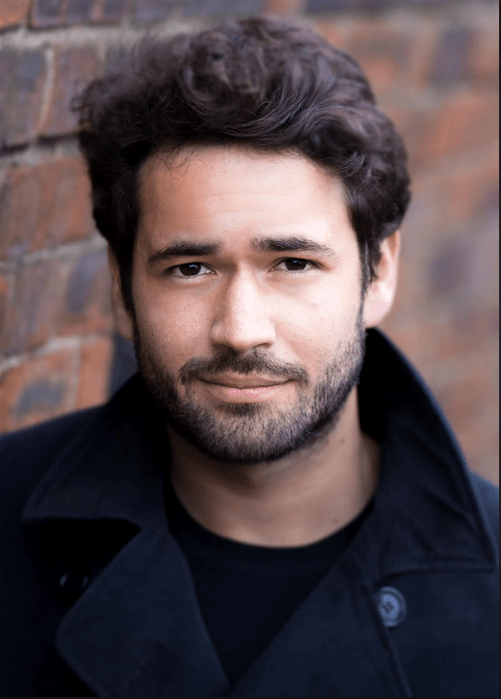
Richard Gray has directed movies such as Robert the Bruce, Broken Ghost and Sugar Mountain. His latest film, MURDER AT YELLOWSTONE CITY, is the first feature length film to have been shot at the new Yellowstone Film Ranch outside of Pray, MT.
In this interview, we discuss the challenges of filming during Covid; his partnership with Livingston’s Carter Boehm and Chico Hot Spring proprietor, Colin Davis, in building the Yellowstone Film Ranch; their efforts to help pass The Montana Economic Development Industry Advancement (MEDIA) Act; and prospects for the Montana Film Industry after its passage.
The Bozeman Film Society will be premiering MURDER AT YELLOWSTONE RANCH on Friday, July 22 at the historic Ellen Theater. They post this at their website: The once peaceful and booming Yellowstone City has fallen on hard times, but when a local prospector strikes gold, things seem to be turning around. Any hope is soon shattered when the prospector is found dead and the Sheriff quickly arrests a mysterious newcomer. But nothing is so simple in this sleepy western town, and more than a few of the locals have secrets to keep and reasons to kill. As the brutal murders continue, pitting neighbor against neighbor, Yellowstone City goes down a bloody path to a final showdown that not all will survive. 123 minutes. NR. Starring: Gabriel Byrne, Thomas Jane, Isaiah Mustafa, Anna Camp, Aimee Garcia, Emma Kenney, with Nat Wolff, and Richard Dreyfuss.
We interviewed director/producer Richard Gray on July 11, 2022.
Jamie Susskind is a British barrister and the author of the multiple awards winning bestseller, FUTURE POLITICS: LIVING TOGETHER IN A WORLD TRANSFORMED BY TECH.
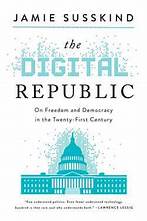
His latest book is THE DIGITAL REPUBLIC: ON FREEDOM AND DEMOCRACY IN THE 21st CENTURY, published on July 5, 2022 by Pegasus Books.
In it he addresses questions like: Is it possible to “democratize” digital technology? What kinds of rules and standards should govern important algorithms? Should powerful figures in the tech industry be regulated, like doctors or lawyers, or even hair salon workers? Is anti-trust law fit for the purpose? What rules should govern the use and abuse of personal data? Can we regulate social media without stifling freedom of speech?
With more and more news reports of the damage that digital technology is doing to individuals as well as our democracy, Jamie Susskind’s insights into the problems and challenges to reforming this largely unregulated industry are helpful for citizens grappling with the many issues with which we are faced.
Norman Eisen is a senior fellow in Governance Studies at The Brookings Institution and an internationally recognized expert on law, ethics, and anti-corruption. He served as special counsel to the House Judiciary Committee from 2019 to 2020, including for the impeachment and trial of President Trump, which he wrote about in his 2020 book, A CASE FOR THE AMERICAN PEOPLE: THE UNITED STATES VS. DONALD J. TRUMP. From January 2009 to January 2011, he worked in the White House as special counsel and special assistant to the president for ethics and government reform. Norman Eisen served as the U.S. Ambassador to the Czech Republic from 2011 to 2014. In 2003, He co-founded Citizens for Responsibility & Ethics in Washington (CREW), a government watchdog organization.
His most recent book, OVERCOMING TRUMPERY: HOW TO RESTORE ETHICS, THE RULE OF LAW AND DEMOCRACY, is published by The Brookings Institution Press. We spoke with him on June 21, 2022.
Unfortunately our interview was cut short due to technical issues, but this allowed us to share excerpts from the June 23, 2022 session of the House Jan. 6 Committee featuring former Acting Attorney General, Jeffrey Rosen, Deputy Attorney General, Richard Donoghue, and Steven Engel. It is chillingly relevant to our discussion of overcoming Trumpery. In fact, their testimony recounting their united refusal to enable efforts by Donald Trump and his minions to orchestrate a coup d’état, using the Department of Justice to add credence to his baseless assertions of fraud in the 2020 presidential election was riveting. The hearing came one day after the FBI executed a warrant to search former DOJ employee, Jeffrey Clark’s, residence. The hearing revealed that he was the lone member of the DOJ who was willing, even eager, to serve Donald Trump instead of DOJ process or policy. Their testimony, illustrate how radically norms and policies were violated.
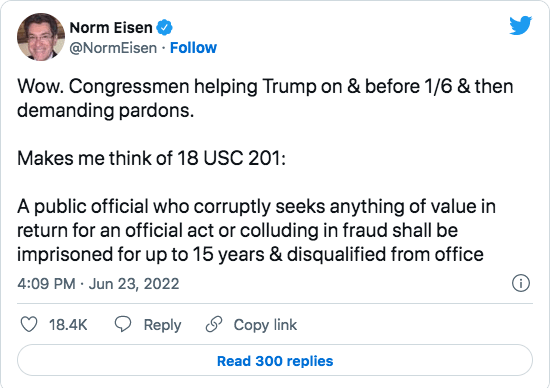
In response to news of Matt Gaetz’s 1st Tweet after his request for a general pardon was made public (see below), Norman Eisen responded:
In February of 2022, we interviewed John Leshy about his book, OUR COMMON GROUND: A HISTORY OF AMERICA’S PUBLIC LANDS. That interview can be heard on the forthright.media website. And in fact, the history of America’s public lands is an evolving story. It has always been a tale of competing interests and ideologies with tremendous consequences for not only American citizens, but all of Nature on this continent and as we learn more and more, the entire biosphere.
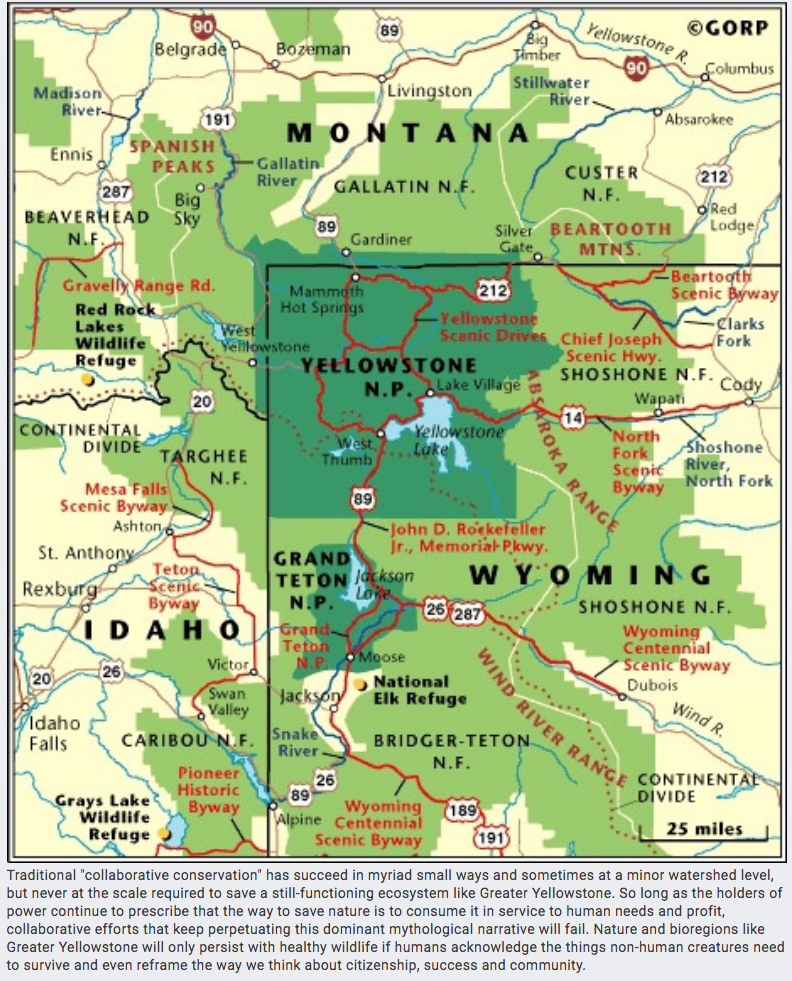
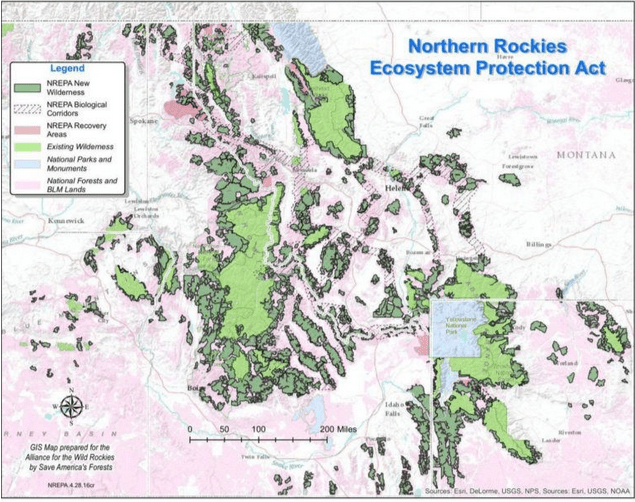
Our guest today on Forthright Radio, environmental writer, activist and psychoanalyst, Joseph Scalia, III, brought to our attention what’s at stake in the recent revision of a National Forest Service Plan that affects the area bordering the north of Yellowstone National Park.
Joseph Scalia writes, “The Gallatin Range is the last crucial, and wholly unprotected yet indispensable wild country in the northern reaches of the Greater Yellowstone Ecosystem, a vast wild land of some 20 million acres, a true rare find in today’s world of diminishing wild country. Here lives all of the fauna of its pre-1492 conditions.”
“In the Rocky Mountain West, in addition to the despoliation of wild lands by extractive industries as well as misguided efforts at “forest management” – which itself has become a hotly contested and too-often perverted concept, recreation has proved to be a major threat to both the ecological and the aesthetic or spiritual values of these lands. Over and over and over, we have carved up wilderness for another and yet another “use” that degrades its integrity. The policy that has dominated this unending subdivision that eschews rigorous reflections on both ecological science and conservation aesthetics and losses of opportunities for quietude has been known as “collaboration and compromise.” “This model has been promoted by neoliberal capitalist or, one could accurately say here, predatory capitalist corporate foundations on whose grants most Big Green environmental groups have grown dependent for their survival. This is Cornel West’s “the commodification of everybody and everything.” It’s not just that monetary reward drives decisions, but more that corporatization has been unfettered and ubiquitous in its social engineering that has us, as a collective, thinking we can go on indefinitely and with impunity in such acts as the unending subdivision of nature.”
He asks: “What if environmental leaders did not acquiesce to putatively dominant unfriendliness to Wilderness designation? What if they didn’t conform to the story that’s publicly delivered? What if, instead, they got out in front, and argued forcefully – with all the big-money resources they have to potentiate such efforts – what if they argued passionately, persuasively for broad Wilderness protections that are based upon ecosystem considerations, without succumbing to what Aldo Leopold called political and economic expediency? Expediency. A good word: “The quality of being convenient and practical despite possibly being improper or immoral; convenience.”
Journalist Todd Wilkinson, who has also been our guest, called it “industrial-strength outdoor recreation,” supported by “the outdoor recreation industrial complex” and its consumptive consumerism.
The program ends with excerpts from Judi Bari’s talk at an event recorded at the Berkeley Fellowship of Unitarians on April 23, 1993, and a poem by Dr. Ian McCallum, “Wilderness,” (links to both below). We recorded this interview on June 6, 2022.
Here are links to articles pertinent to this interview:
The film, WE BURN LIKE THIS, is a debut feature written, directed and produced by Alana Waksman.
It’s a coming-of-age story of historical trauma, survival, and healing. When 22-year-old Rae, a descendant of Holocaust survivors, is targeted by Neo-Nazis in Billings, Montana, her ancestors’ trauma becomes real. It’s inspired by true events and features a terrific ensemble cast of largely Montana actors, as well as film crew.
director’s statement I never met my grandparents. They were taken from their homes near Radomsko, Poland in 1942 and survived forced labor camps as young teenagers in Russia. I have been told that my grandfather survived a period of time by eating grass. After the war, my grandparents found themselves at a displaced persons camp in Germany. This is where my dad was born, and two years later they were able to immigrate to Brooklyn, New York. My grandparents were proud to be Americans, but my father grew up ashamed of his immigrant and Jewish identities as it was often the reason he was singled out, threatened, and bullied. The day after the 2016 election, Neo-Nazi pamphlets showed up on the doorsteps of Har Shalom Synagogue in Missoula, Montana where I was living at the time. For the first time in my life, my family’s history was suddenly very real. I made this film in order to sort through my thoughts about my identity, the inherited effects of historical trauma, and what self-acceptance and self-love looks like. We Burn Like This is my debut feature, which I have been developing for the last seven years. It is my contribution to the greater healing of Jewish bigotry, which continues to be even more important, timely, and urgent. The storming of the capitol on January 6th was a continued reminder after an exhausting and frightening four years that we are living beside much hatred and rage, and our new administration does not erase the true colors and feelings of our fellow Americans. I believe that it matters to share this story and inspire discussion about Jewish identity and historical trauma in present day America. May we find a way to forgive, accept, and love ourselves and others. May we find the perfection even in the darkest times and in the darkest memories. May this film be a part of that process, and may we all radically heal. -Alana Waksman
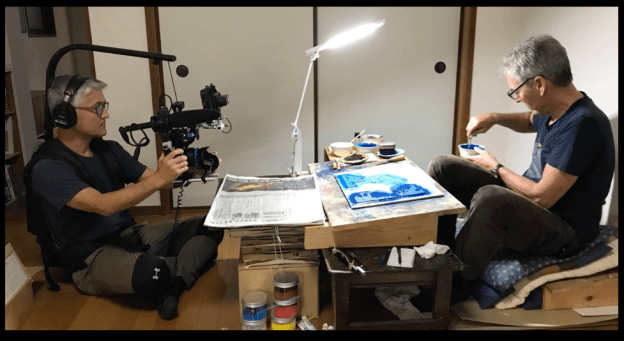
Chikara Motomura produced, wrote, directed, edited, and did the cinematography & sound in his film, JOURNEY TO HOKUSAI, which follows Marin County artist, Tom Killion, from his northern California studio to Kyoto, Japan, to study with 5th generation master print makers to learn how to print in the Japanese wood block tradition of Katsushika Hokusai.
In but four and a half days, he produced beautiful wood block prints using the ancient techniques on paper made by “Living National Treasure,” Ichibei Iwano, ninth generation master papermaker.
Sara Dosa wrote, directed and produced the extraordinary documentary, FIRE OF LOVE. It premiered at this year’s Sundance Festival as the Day One film in the US Documentary Competition, & won the Jonathan Oppenheimer Editing Award for Erin Casper & Jocelyne Chaput’s superb editing, as well as raves from critics. Her work has won a Peabody Award for AUDRIE & DAISY and an Emmy Award for REMASTERED: TRICKY DICK AND THE MAN IN BLACK.
National Geographic Films acquired FIRE OF LOVE for release in 2022. It screens at the Mendocino Film Festival audiences on June 3rd & 4th at the Coast Cinemas.
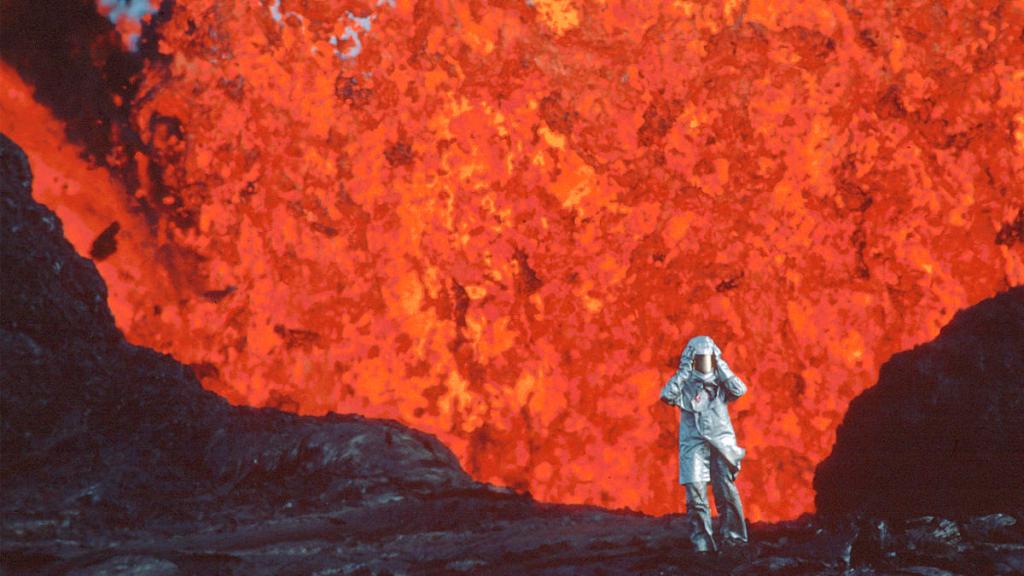
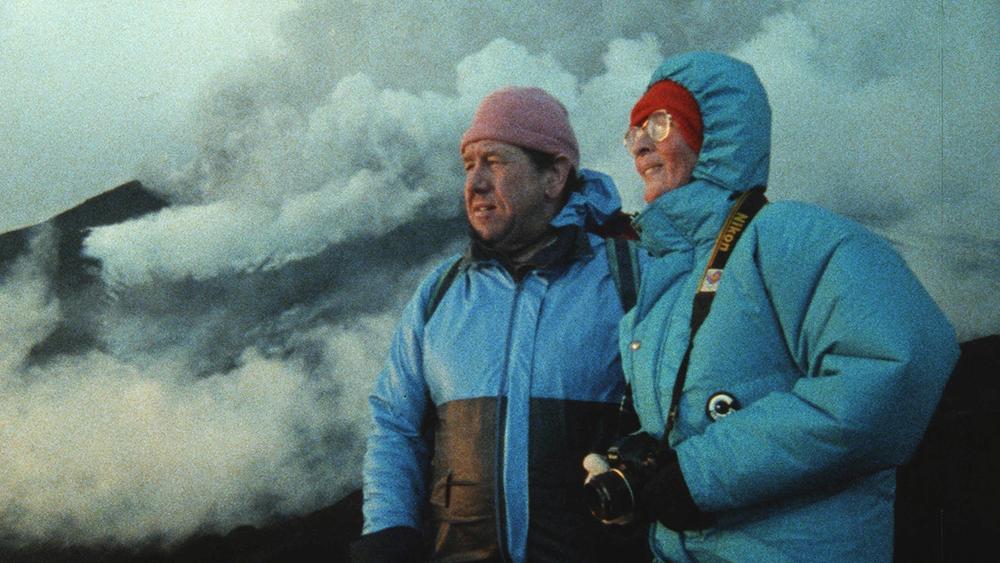
FIRE OF LOVE recounts the love between, and work of, two young French volcanologists, Katia and Maurice Kraffts, whose courageous exploration and documentation of volcanoes revolutionized our understanding of Earth processes. They dedicated their lives to trying to answer questions like “what forms & re-forms the world.” and “What is it that makes the Earth’s heart beat, her blood flow?”
They were one in their obsession with volcanoes, but they were complementary in their approaches and division of labor, which certainly advanced the success of their work. When asked if they were the only volcanologist couples in one of their many media appearances, Maurice said he “doesn’t think there are any other couples, & if there are, I pity them, because it’s very hard for volcanologists to live together – it’s volcanic…. We erupt often.”
FIRE OF LOVE is dedicated to the 43 people who lost their lives on Mt. Unzen on June, 3, 1991, which is when Katia and Maurice Krafft were finally consumed by that eruption they were studying.
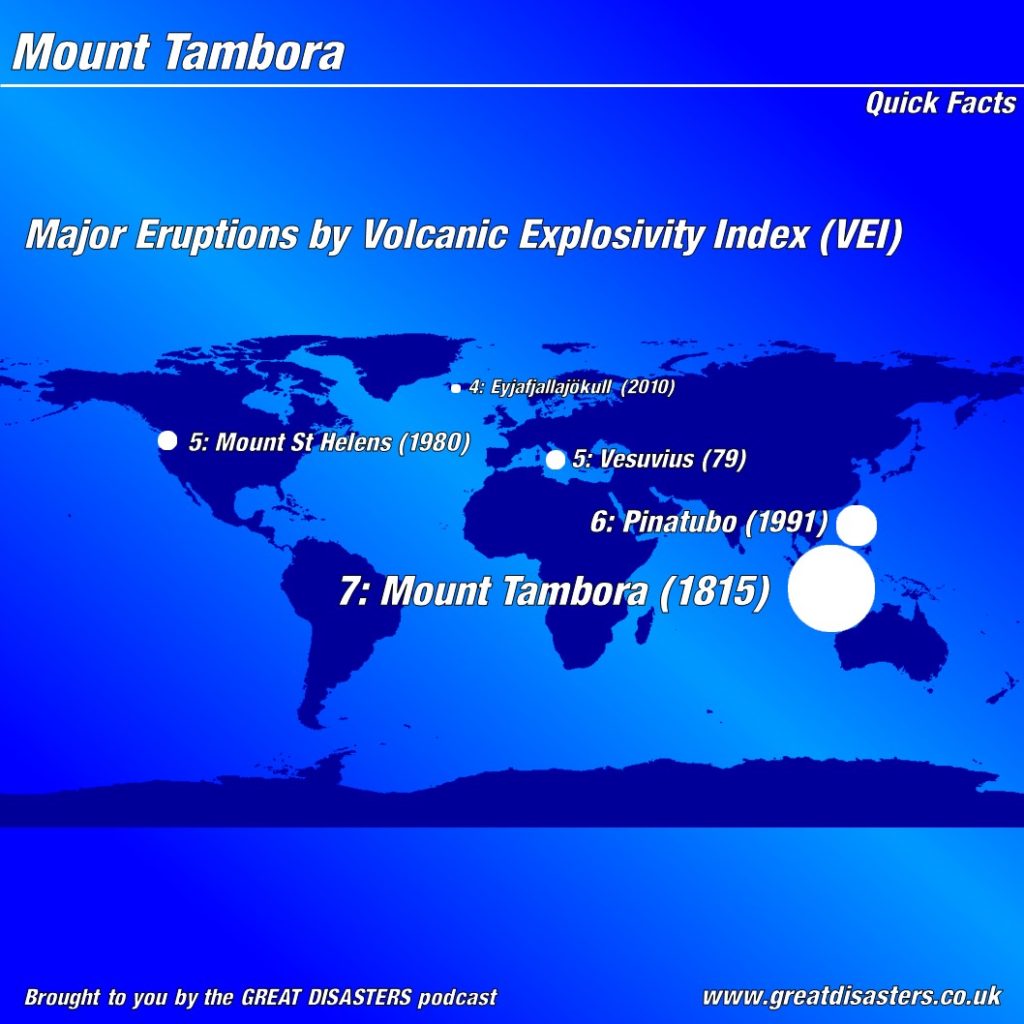
This interview with Gillen D’Arcy Wood was originally broadcast on June 10, 2015. His book, TAMBORA: THE ERUPTION THAT CHANGED THE WORLD, had just been published by Princeton University Press.
“Out of sight and out of mind, Tambora was the volcanic, stealth bomber of the early 19th century. Be it the retching cholera victim in Calcutta, the starving peasant children of Yunnan, China or County Tyrone, Ireland, the hopeful explorer of a North West Passage through the Arctic Ocean, or the bankrupt land speculator in Baltimore, the world’s residents were oblivious to the volcanic drivings of their fate.”
In 2015, it was 200 years after Tambora erupted cataclysmically with extremely dire global consequences. What can we learn from this event as we face our own challenges in a rapidly changing climate?
Gillen D’Arcy Wood is a professor of English and an environmental historian at the U. of Illinois at Urbana-Champaign, where he directs The Sustainability Studies Initiative in the Humanities. Gillen D’Arcy Wood has written extensively on the cultural and environmental history of the 19th century, and is the author of The Shock of the Real: Romanticism and Visual Culture, 1760-1860 (Palgrave, 2001), Romanticism and Music Culture in Britain, 1770-1840: Virtue and Virtuosity (Cambridge UP, 2010), an historical novel, Hosack’s Folly (Other Press, 2005).
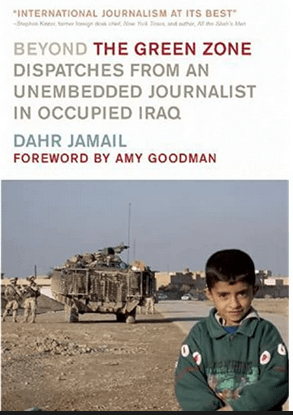
We were already in production to rebroadcast this archived edition of Forthright Radio from April 25, 2005, featuring un-embedded journalist, Dahr Jamail, with documentary filmmaker and humanitarian assistance worker, Mark Manning, recounting their experiences relating to the two battles of Fallujah waged by the United States military in Iraq in the Spring and Fall of 2004. – when former President Bush made this statement in a speech at his presidential library on May 18, 2022:
“Russian elections are rigged. Political opponents are imprisoned or otherwise eliminated from participating in the electoral process. The result is an absence in checks and balances in Russia, and the decision of one man to launch a wholly unjustified and brutal invasion of Iraq …… I mean of Ukraine …. “
Mark Twain noted that history doesn’t necessarily repeat itself, but sometimes it rhymes.
And we were struck by certain similarities between the selling of the U. S. invasion of Iraq to the American people in April of 2003, and the Russian invasion of Ukraine in February of 2022. In both cases, the leaders asserted that the military actions by their vastly larger, stronger and wealthier nations were purely defensive in nature. In the case of the US, the administration claimed that Iraq’s alleged possession of weapons of mass destruction (which was later proven to be entirely false, and were known to be false at the time) required immediate preemptive military force, and that “we must fight them over there to prevent having to fight them here.” Russia justified their military actions by claims of NATO provocations by encroaching on its border and the potential of Ukraine joining NATO.
Saddam Hussein, who had formerly been an ally of the US in the 1980s against Iran, now had to be subjected to regime change, because of the brutal nature of his dictatorship. The Russian excuse was the Ukraine government was rife with Nazi fascists.
Each government maintained tight control over information, and the mainstream media in both countries were slavish in delivering their governments’ messages of the righteousness and necessity of their respective invasions, assuring their populace that their soldiers would be welcomed as liberators and the military actions would be over quickly. The popularity of both these leaders and their military actions initially rose in polls.
Many Americans are amazed that Russians support Putin’s aggression, forgetting how enthusiastically they watched the “Shock and Awe” spectacle delivered by all major American media, at least in the early days of the Iraq War. In Russia protest and demonstrations against the invasion are put down swiftly, and those who even refer to the situation with the word “war” are subject to lengthy prison terms.
Before the invasion of Iraq, in major world capitals, some of the largest peace demonstrations in world history were either ignored or dismissed as mere “focus groups” by the Bush administration.
As we view with horror the senseless destruction of Ukraine villages and cities and the wanton civilian deaths, we find this interview with Dahr Jamail and Mark Manning instructive of our own nation’s responsibility for similar acts.
Indigenous artisans, cooks and farmers tell us this story (in Spanish and in their own languages) about the origins of indigenous corn and how their ancestors have guided the evolution of seeds from the dawn of agriculture to the 21st century; a collective effort that spans more than 350 generations.
To their voices are added those of community leaders, scientists, cooks and many others whose knowledge and activism are committed not only to the defense of food sovereignty and genetic integrity, diversity and the collective property of indigenous seeds, but also for the defense of an enduring cultural legacy and way of life.
Filmmaker and Chair of the FIlm & Digital Media Department at UC Santa Cruz , Gustavo Vazquez, brings us to Oaxaca to experience the wisdom of various indigenous communities, as they explain that “Corn was not domesticated by man – Man was domesticated by corn.”
Professors Ignacio Chapela (UC Berkeley) and Alan Bennett (UC Davis) discuss the merits and dangers of genetically modified organisms, and the characteristics of different landraces of corn that have co-evolved with the people of Oaxaca – continuing co-evolution vs. exploitation for patenting and profit.
Susana Harp, Senator from Oaxaca, works to protect the heritage and health of her region, and to respect the validity of their approach. “Corn & its surrounding rituals are tied to the cosmology of the indigenous people – by extension, the essence of being Mexican, linking our lives to corn.”