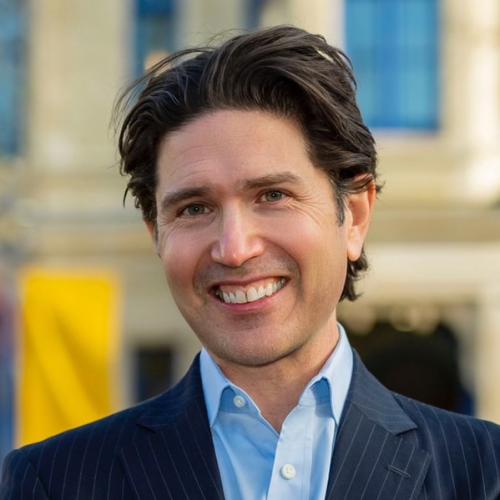
Christopher Marquis is Sinyi Professor of Chinese Management at the Judge Business School of The University of Cambridge.
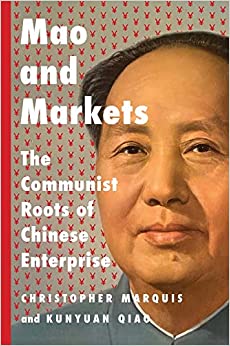
He and his co-author, Kunyaun Qiao, have written the book, MAO AND MARKETS: The Communist Roots of Chinese Enterprise, published by Yale University Press. It explores the seeming contradiction of capitalism under Chinese Communist Party rule. Part history, part economics, it uses the tools of academic data analysis to assess how China’s economic success is being shaped by the ideology and philosophy of Chairman Mao Zedong.
Professor Marquis’s interest in China began while he was in high school, when he did an independent research project on the role of Confucianism in contemporary China. He first traveled there in 1996, and he has marveled at the speed with which the mudflats across the Huangpu River from Shanghai’s waterfront became the city of Pudong, the financial capital of China, where three of the tallest buildings in the world now stand encircled by 20 miles of high rises. He spoke with entrepreneurs from many regions of China and brings their very human stories to his narrative.
His earlier book, BETTER BUSINESS: HOW THE B CORP MOVEMENT IS REMAKING CAPITALISM, focused on the ways companies can effectively shift from a shareholder to stake holder orientation.
We spoke with Christopher Marquis on November 21, 2022.
After learning of President Xi’s early life experiences – his being “sent down” from Beijing to manual labor in a remote, rural area for 7 years after the purging and arrest of his father, Xi Zhongxun, during the Cultural Revolution, made me think of his contemporary, Ai Weiwei, and his early life experiences. Born in 1957 in Beijing, he was exiled in 1958 when his father, poet Ai Qing, was accused of “rightism”. How differently the two men influence the world today. One, a ruthless authoritarian consolidating close to absolute control over the lives of 1.4 billion people, and the other undaunted, despite brutal state repression, in his artistic expression of beauty, creativity and human rights.
We end this edition of Forthright Radio with excerpts from an interview with Ai Weiwei from Oct. 9, 2017 on Democracy Now! You can link to the full interview here: World-Renowned Artist Ai Weiwei on His Childhood in a Labor Camp, Art, Activism, Prison & Freedomhttps://www.democracynow.org/2017/10/9/world_renowned_artist_ai_weiwei_on
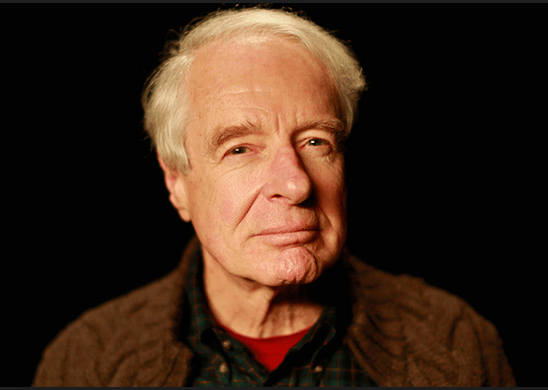
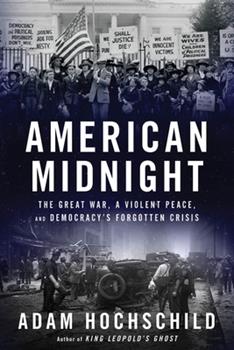
Award winning author and journalist, Adam Hochschild, is the author of eleven books. He returned to Forthright Radio to discuss his latest book, AMERICAN MIDNIGHT: THE GREAT WAR, A VIOLENT PEACE, AND DEMOCRACY’S FORGOTTEN CRISIS, published by Mariner Books.
While a college student in the early 1960s, Adam Hochschild worked on an anti-government newspaper in South Africa, and he was also a civil rights worker in Mississippi. He was a writer and editor for Ramparts magazine, and a co-founder of Mother Jones. He has been a lecturer in the UC Berkeley School of Journalism for many years. In 2014, he was elected a fellow of the American Academy of Arts and Sciences.
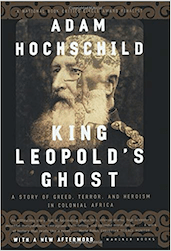
In our earlier interviews, he discussed his books, BURY THE CHAINS: PROPHETS AND REBELS IN THE FIGHT TO FREE AN EMPIRE’S SLAVES, and KING LEOPOLD’S GHOST: A STORY OF GREED, TERROR AND HEROISM IN COLONIAL AFRICA.
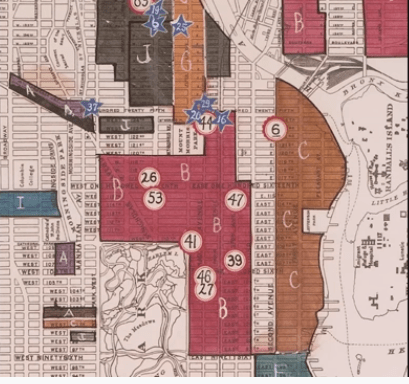
Military Intelligence Chief for NYC and virulent anti-immigrant proponent, John B. Trevor’s, “ethnic battle map” of upper Manhattan. Red for Jews, brown for Italians, grey for Blacks, blue for Irish. Circles are meeting halls. Stars are publication offices.
We spoke with him via telephone from his home in the Bay Area on October 25, 2022.
Broadcaster, journalist, author, and four time winner of the Project Censored Award, Thom Hartmann returned to Forthright Radio with his latest book in The Hidden History Series: THE HIDDEN HISTORY OF NEOLIBERALSIM: HOW REAGANISM GUTTED AMERICA AND HOW TO RESTORE ITS GREATNESS.
This is number eight in the series, and it joins his more than thirty other books.
After the interview with Thom Hartmann, we share excerpts from a speech by Bernie Sanders at a rally of the National Union of Rail, Maritime and Transport Workers in the UK on August 31, 2022.
Returning to Forthright Radio, award winning science journalist, broadcaster and author, Gaia Vince, has a new book out from Flatiron Press, NOMAD CENTURY: HOW CLIMATE MIGRATION WILL RESHAPE OUR WORLD.
Her first book, Adventures in the Anthropocene: A Journey to the Heart of the Planet We Made, won the 2015 Royal Society Winton Prize for Science Books, making her the first woman to win that prize outright.
We spoke with her via Skype on August 22, 2022.
The original broadcast included audio excerpts from the 100th birthday programs honoring James Lovelock, whose Gaia Theory revolutionized the way we approach global crises. Links to the full programs can be found below.
Articles/videos pertinent or referred to in the program can be found here:
Assistant Professor of Political Science at the University of Washington, Jacob M. Grumbach, is a Faculty Associate with the Harry Bridges Center for Labor Studies. His research focuses on the political economy of the United States, with an emphasis on public policy, racial and economic inequality, American Federalism, health policy, climate change and statistical methods.
His book, LABORATORIES AGAINST DEMOCRACY: HOW NATIONAL PARTIES TRANSFORMED STATE POLITICS, which investigates the causes and consequences of the nationalization of state politics since the 1970s, is published by Princeton U. Press.
Richard Gray has directed movies such as Robert the Bruce, Broken Ghost and Sugar Mountain. His latest film, MURDER AT YELLOWSTONE CITY, is the first feature length film to have been shot at the new Yellowstone Film Ranch outside of Pray, MT.
In this interview, we discuss the challenges of filming during Covid; his partnership with Livingston’s Carter Boehm and Chico Hot Spring proprietor, Colin Davis, in building the Yellowstone Film Ranch; their efforts to help pass The Montana Economic Development Industry Advancement (MEDIA) Act; and prospects for the Montana Film Industry after its passage.
The Bozeman Film Society will be premiering MURDER AT YELLOWSTONE RANCH on Friday, July 22 at the historic Ellen Theater. They post this at their website: The once peaceful and booming Yellowstone City has fallen on hard times, but when a local prospector strikes gold, things seem to be turning around. Any hope is soon shattered when the prospector is found dead and the Sheriff quickly arrests a mysterious newcomer. But nothing is so simple in this sleepy western town, and more than a few of the locals have secrets to keep and reasons to kill. As the brutal murders continue, pitting neighbor against neighbor, Yellowstone City goes down a bloody path to a final showdown that not all will survive. 123 minutes. NR. Starring: Gabriel Byrne, Thomas Jane, Isaiah Mustafa, Anna Camp, Aimee Garcia, Emma Kenney, with Nat Wolff, and Richard Dreyfuss.
We interviewed director/producer Richard Gray on July 11, 2022.
Jamie Susskind is a British barrister and the author of the multiple awards winning bestseller, FUTURE POLITICS: LIVING TOGETHER IN A WORLD TRANSFORMED BY TECH.
His latest book is THE DIGITAL REPUBLIC: ON FREEDOM AND DEMOCRACY IN THE 21st CENTURY, published on July 5, 2022 by Pegasus Books.
In it he addresses questions like: Is it possible to “democratize” digital technology? What kinds of rules and standards should govern important algorithms? Should powerful figures in the tech industry be regulated, like doctors or lawyers, or even hair salon workers? Is anti-trust law fit for the purpose? What rules should govern the use and abuse of personal data? Can we regulate social media without stifling freedom of speech?
With more and more news reports of the damage that digital technology is doing to individuals as well as our democracy, Jamie Susskind’s insights into the problems and challenges to reforming this largely unregulated industry are helpful for citizens grappling with the many issues with which we are faced.
In February of 2022, we interviewed John Leshy about his book, OUR COMMON GROUND: A HISTORY OF AMERICA’S PUBLIC LANDS. That interview can be heard on the forthright.media website. And in fact, the history of America’s public lands is an evolving story. It has always been a tale of competing interests and ideologies with tremendous consequences for not only American citizens, but all of Nature on this continent and as we learn more and more, the entire biosphere.
Our guest today on Forthright Radio, environmental writer, activist and psychoanalyst, Joseph Scalia, III, brought to our attention what’s at stake in the recent revision of a National Forest Service Plan that affects the area bordering the north of Yellowstone National Park.
Joseph Scalia writes, “The Gallatin Range is the last crucial, and wholly unprotected yet indispensable wild country in the northern reaches of the Greater Yellowstone Ecosystem, a vast wild land of some 20 million acres, a true rare find in today’s world of diminishing wild country. Here lives all of the fauna of its pre-1492 conditions.”
“In the Rocky Mountain West, in addition to the despoliation of wild lands by extractive industries as well as misguided efforts at “forest management” – which itself has become a hotly contested and too-often perverted concept, recreation has proved to be a major threat to both the ecological and the aesthetic or spiritual values of these lands. Over and over and over, we have carved up wilderness for another and yet another “use” that degrades its integrity. The policy that has dominated this unending subdivision that eschews rigorous reflections on both ecological science and conservation aesthetics and losses of opportunities for quietude has been known as “collaboration and compromise.” “This model has been promoted by neoliberal capitalist or, one could accurately say here, predatory capitalist corporate foundations on whose grants most Big Green environmental groups have grown dependent for their survival. This is Cornel West’s “the commodification of everybody and everything.” It’s not just that monetary reward drives decisions, but more that corporatization has been unfettered and ubiquitous in its social engineering that has us, as a collective, thinking we can go on indefinitely and with impunity in such acts as the unending subdivision of nature.”
He asks: “What if environmental leaders did not acquiesce to putatively dominant unfriendliness to Wilderness designation? What if they didn’t conform to the story that’s publicly delivered? What if, instead, they got out in front, and argued forcefully – with all the big-money resources they have to potentiate such efforts – what if they argued passionately, persuasively for broad Wilderness protections that are based upon ecosystem considerations, without succumbing to what Aldo Leopold called political and economic expediency? Expediency. A good word: “The quality of being convenient and practical despite possibly being improper or immoral; convenience.”
Journalist Todd Wilkinson, who has also been our guest, called it “industrial-strength outdoor recreation,” supported by “the outdoor recreation industrial complex” and its consumptive consumerism.
The program ends with excerpts from Judi Bari’s talk at an event recorded at the Berkeley Fellowship of Unitarians on April 23, 1993, and a poem by Dr. Ian McCallum, “Wilderness,” (links to both below). We recorded this interview on June 6, 2022.
Here are links to articles pertinent to this interview:
This interview with Gillen D’Arcy Wood was originally broadcast on June 10, 2015. His book, TAMBORA: THE ERUPTION THAT CHANGED THE WORLD, had just been published by Princeton University Press.
“Out of sight and out of mind, Tambora was the volcanic, stealth bomber of the early 19th century. Be it the retching cholera victim in Calcutta, the starving peasant children of Yunnan, China or County Tyrone, Ireland, the hopeful explorer of a North West Passage through the Arctic Ocean, or the bankrupt land speculator in Baltimore, the world’s residents were oblivious to the volcanic drivings of their fate.”
In 2015, it was 200 years after Tambora erupted cataclysmically with extremely dire global consequences. What can we learn from this event as we face our own challenges in a rapidly changing climate?
Gillen D’Arcy Wood is a professor of English and an environmental historian at the U. of Illinois at Urbana-Champaign, where he directs The Sustainability Studies Initiative in the Humanities. Gillen D’Arcy Wood has written extensively on the cultural and environmental history of the 19th century, and is the author of The Shock of the Real: Romanticism and Visual Culture, 1760-1860 (Palgrave, 2001), Romanticism and Music Culture in Britain, 1770-1840: Virtue and Virtuosity (Cambridge UP, 2010), an historical novel, Hosack’s Folly (Other Press, 2005).
Indigenous artisans, cooks and farmers tell us this story (in Spanish and in their own languages) about the origins of indigenous corn and how their ancestors have guided the evolution of seeds from the dawn of agriculture to the 21st century; a collective effort that spans more than 350 generations.
To their voices are added those of community leaders, scientists, cooks and many others whose knowledge and activism are committed not only to the defense of food sovereignty and genetic integrity, diversity and the collective property of indigenous seeds, but also for the defense of an enduring cultural legacy and way of life.
Filmmaker and Chair of the FIlm & Digital Media Department at UC Santa Cruz , Gustavo Vazquez, brings us to Oaxaca to experience the wisdom of various indigenous communities, as they explain that “Corn was not domesticated by man – Man was domesticated by corn.”
Professors Ignacio Chapela (UC Berkeley) and Alan Bennett (UC Davis) discuss the merits and dangers of genetically modified organisms, and the characteristics of different landraces of corn that have co-evolved with the people of Oaxaca – continuing co-evolution vs. exploitation for patenting and profit.
Susana Harp, Senator from Oaxaca, works to protect the heritage and health of her region, and to respect the validity of their approach. “Corn & its surrounding rituals are tied to the cosmology of the indigenous people – by extension, the essence of being Mexican, linking our lives to corn.”