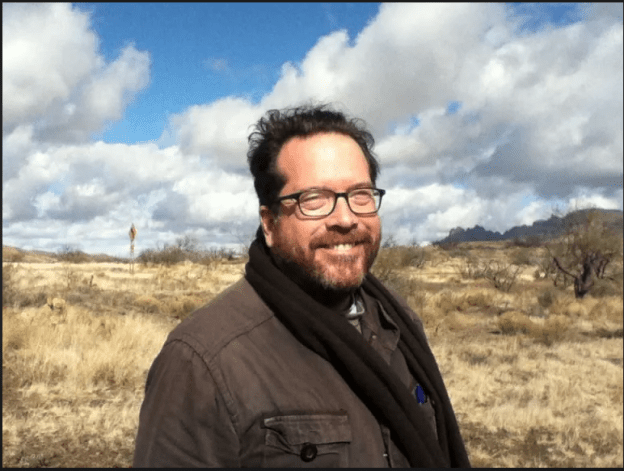
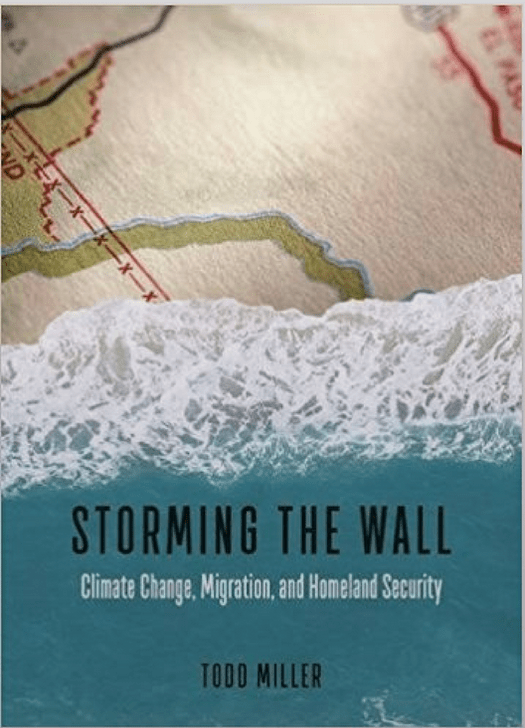
Returning to Forthright Radio is Izzy Award winning Todd Miller. He was our guest in 2017, when the book that won the Izzy Award, STORMING THE WALL: CLIMATE CHANGE, MIGRATION, AND HOMELAND SECURITY, came out. Last Spring of 2021, City Lights published his latest book, BUILD BRIDGES, NOT WALLS: A Journey to a World Without Borders. We spoke with him on August 30, 2021.
Building Bridges his his fourth book on border issues.
“As a woman I have no country. As a woman I want no country. As a woman, my country is the whole world.” – Virginia Woolf
What do you call it when a deacon from a local church gets to thinking about how to solve a problem, in this case, chronic homelessness, learns of other communities building tiny houses, goes to the Bozeman city offices to find out about building code requirements, and meets an Architecture Professor, who just happens to direct the MSU Community Design Center? Coincidence? Synchronicity? Serendipity? A God Moment? Whatever you call it, that meeting in the Fall of 2016 led to a collaboration involving local churches, Montana State University’s School of Architecture, the non-profit, HRDC, local businesses and individuals culminating in the creation of The Housing First Village, which is being built on the north 7th area of Bozeman. It is part of an innovative plan to centralize services for those chronically challenged with issues such as homelessness, food insecurity, etc.
We spoke with three members of the Gallatin Valley Interfaith Association, Rev. Connie Campbell-Pearson, who was the St. James Episcopal Church deacon who went to the city offices on that fateful day in 2016, along with Rev. Jody McDevitt of First Presbyterian Church and Amanda Cater of the Unitarian Universalist Fellowship of Bozeman. They organized other local religious groups to raise $139,000 to build tiny homes in the Housing First Village.
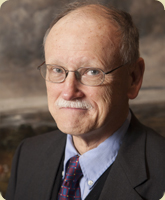
In part two, we spoke with the head of the MSU School of Architecture, Ralph Johnson, about how graduate and undergraduate students in their Community Design Center contributed to the project.
It has now grown under the aegis of HRDC, which is working to build the Food and Resource Center, a nearly 32,000-square-foot building that will become the new home of the Gallatin Valley Food Bank and Fork and Spoon restaurant, along with other HRDC programs. Of the planned 19 tiny homes to be constructed, 12 are nearing completion with occupancy hoped to begin in the Fall of 2021.
You can view this short video produced by HRDC “The Making of Housing First Village” here: https://vimeo.com/583977147
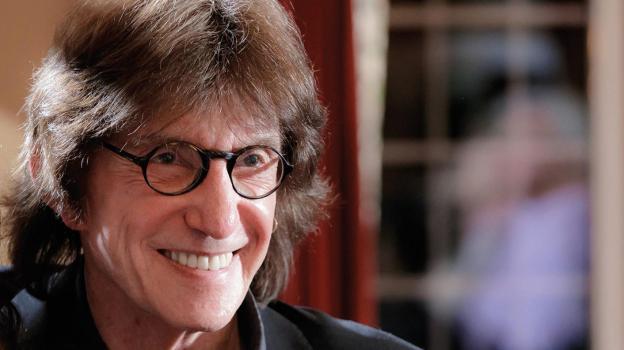
Thom Hartmann has had a very interesting life, campaigning for Barry Goldwater at the age of 13 with his father in Michigan, and a few years later protesting the war in Vietnam with Students for a Democratic Society, SDS. He’s an ordained Minister with Coptic Fellowship International. In the 1970s, He founded numerous businesses from an herbal products company to The New England Salem Children’s Village. He founded International Wholesale Travel & subsidiary in 1983. He moved to Germany with his family to work with Salem International, a relief agency. He founded the advertising agency, The Newsletter Factory. In 1996, he sold that company and retired to Vermont.
From 1968 to 1978 he worked as a DJ and news director at Lansing Michigan radio stations. In 2003, he started a radio show on a local station in Vermont, which was quickly picked up by IE America Radio Network and Sirius Satellite Radio. He moved to Oregon in 2005, and in addition to continuing his national show, he co-hosted a local talk show in Portland. And he’s also done a tv program.
By my count, THE HIDDEN HISTORY OF AMERICAN HEALTHCARE: WHY SICKNESS BANKRUPTS YOU AND MAKES OTHERS INSANELY RICH is number 31.
Some articles by Thom Hartmann or pertinent to this interview can be found here:
Alexander Hinton is Distinguished Professor of Anthropology, Director of the Center for the Study of Genocide and Human Rights, and UNESCO Chair on Genocide Prevention at Rutgers University.
He is the author of over a dozen books including the award-winning Why did they Kill? Cambodia in the Shadow of Genocide; Man or Monster? The Trial of a Khmer Rouge Torturer; and The Justice Facade: Trials of Transition in Cambodia. His new book is It Can Happen Here: White Power and the Rising Threat of Genocide in the US published by NYU Press.
He was an expert witness in the Extraordinary Chambers in the Courts of Cambodia Genocide Trial. Khmer Rouge Brother Number Two, Nuon Chea, was ultimately convicted of charges of genocide. He died in prison on August 4, 2019 at the age of 93.
At the end of the interview, we quoted Ulysses S. Grant:
“If we are to have another contest in the near future of our national existence, I predict that the dividing line will not be Mason and Dixon’s, but between patriotism and intelligence on one side, and superstition, ambition and ignorance on the other.”
Mark Rank is the Herbert S. Handley Professor in the Brown School of Social Work and The Department of Sociology at Washington University. Professor Rank is an expert on poverty studies and the author of notable books, such as One Nation, Underprivileged: Why American Poverty Affects Us All and Chasing the American Dream: Understanding What Shapes Our Fortunes.
His most recent book, published in March of 2021 by Oxford University Press, is POORLY UNDERSTOOD: What America Gets Wrong About Poverty, which he co-wrote with Professors Lawrence M. Eppard and Heather E. Bullock. In it they identify and analyze common myths about poverty, compare poverty levels in the United States with other developed nations and propose ideas of how to reduce it.
We spoke with Professor Mark Rank on May 14, 2021.
University of British Columbia Professor of Forest Ecology, Dr. Suzanne Simard, is a pioneer on the frontier of plant communication and intelligence. Her decades of in-the-field-experimental research have revolutionized our scientific understanding of forests, elucidating how trees, living side by side for hundreds of years, have evolved, how they perceive one another, learn and adapt their behaviors, recognize neighbors and remember the past; how they have agency about the future; elicit warnings and mount defenses, compete and cooperate with one another with sophistication, characteristics ascribed to human intelligence, traits that are the essence of civil societies–and at the center of it all, the Mother Trees: the mysterious, powerful forces that connect and sustain the others that surround them.
Suzanne Simard’s book, FINDING THE MOTHER TREE: Discovering the Wisdom of the Forest, was published by Knopf on May 4, 2021. We spoke together on April 27th.
We end the program with a recent piece commissioned by the Intermountain Opera Company composed by Eric Funk, Requiem for a Forest, Op. 168. It is performed by Roots in the Sky. A video adaptation by Thomas Thomas is available on https://bozemanarts-live.com/event/requiem-for-a-forest/
Requiem for a Forest
In summer heat And warming world Storms whip up, Lightening rolls, Sparks run to earth. The wind turns Through the mountains, Forests burn.
Fire ends, Yet fire begins. As mountains die, Cones open. Mors stupebit et natura Cum resurgent Creatura.
Now we must learn How to live here, Where fire season Burns all year. Blackened earth With green renew, May the fires wake us too.
After the global financial crisis of 2008 with all the repercussions to our economy and harm to individual lives, not a single high level corporate executive went to prison. Some claimed it was rank politics protecting them, but was there more to the story?
John C. Coffee, Jr., whose book, CORPORATE CRIME AND PUNISHMENT: THE CRISIS OF UNDERENFORCEMENT, was published in 2020 by Barrett-Koehler, is Columbia University Adolf A. Berle Professor of Law. Although he has been a law professor at Columbia University since 1980, this book is written for the lay audience.
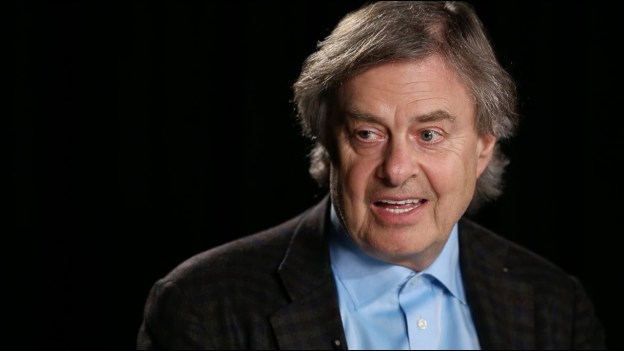
Professor Coffee has won many awards for his writing, his work in corporate governance, and exploring the interests of activist investors. He has served on the Legal Advisory Committee of the New York Stock Exchange, as well as the Legal Advisory Board that oversaw Nasdaq. He is a recognized expert on both the Securities and Exchange Commission (SEC) and the Delaware Court of Chancery, the forum in which the vast majority of American commercial disputes are heard.
We recently rebroadcast this interview with political theorist, Sheldon Wolin, from September, 2009. His final book, Democracy Incorporated: Managed Democracy and the Specter of Inverted Totalitarianism, was published in 2008, He coined the term inverted totalitarianism in 2003 to describe what he saw as the emerging form of government of the United States. Wolin analysed the United States as increasingly turning into a managed democracy (similar to an illiberal democracy). He uses the term “inverted totalitarianism” to draw attention to the totalitarian aspects of the American political system while emphasizing its differences from proper totalitarianism, such as Nazi and Stalinist regimes. He died in 2015 at the age of 93.
Lawrence Ferlinghetti, beloved poet, founder of City Lights Books and Publishing, and defender of free speech, died on February 22, 2021 at the age of 101 (just shy of his 102nd birthday) in San Franciso. We end with selections of his poetry in his own voice.
Thom Hartmann returned to Forthright Radio on 2/3/21 with the latest edition in his Hidden History series, THE HIDDEN HISTORY OF AMERICAN OLIGARCHY: Reclaiming Our Democracy from The Ruling Class, just released on February 2nd by Barrett-Koehler Publishing.
“There is a cult of ignorance in the United States, and there has always been. The strain of anti-intellectualism has been a constant thread winding its way through our political and cultural life, nurtured by the false notion that democracy means that ‘my ignorance is just as good as your knowledge.” ― Issac Asimov
“Those who can make you believe absurdities can make you commit atrocities” Voltaire.
Thomas Paine said it best: “To argue with a person who has renounced the use of reason is like administering medicine to the dead.”
Within an hour of this interview with Richard Kreitner on January 6, 2021, a mob left a rally in front of the White House in which Donald Trump, Rudy Giuliani and Donald Trump, Jr. had exhorted them to march down Pennsylvania Ave to the Capitol building and fight.
Kreitner had noted that the world was astounded by the peaceful transfer of power from John Adams to Thomas Jefferson in the election of 1800. Now, 220 years later, for the first time in U.S. history we have NOT had a peaceful transfer of power.
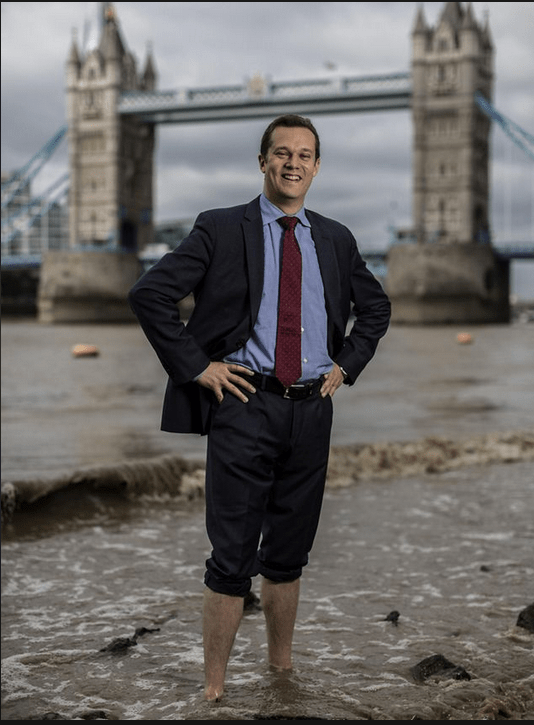
His book, BREAK IT UP: Secession, Division, and the Secret History of America’s Imperfect Union, documents how we have been divided from the very beginning of our republic, and his analysis affords a clearer perspective of our current situation.
Three weeks to the day after the death of the last Confederate widow (shown above), insurgents paraded their Battle Flag throughout the nation’s Capitol, which Secessionists had been unable to do during their insurrection in the 1860s.
“The ideal subject of totalitarian rule is not the convinced Nazi or the dedicated communist, but people for whom the distinction between fact and fiction, true and false, no longer exists.” Hannah Arendt