The Indigenous Uru-eu-wau-wau people have seen their population dwindle and their culture threatened since coming into contact with non-Native Brazilians in the 1980s. Though promised dominion over their own rain forest territory, they have faced illegal incursions from environmentally destructive logging and mining, and, most recently, land-grabbing invasions spurred on by right-wing politicians like President Jair Bolsonaro. With deforestation escalating as a result, the stakes have become global.
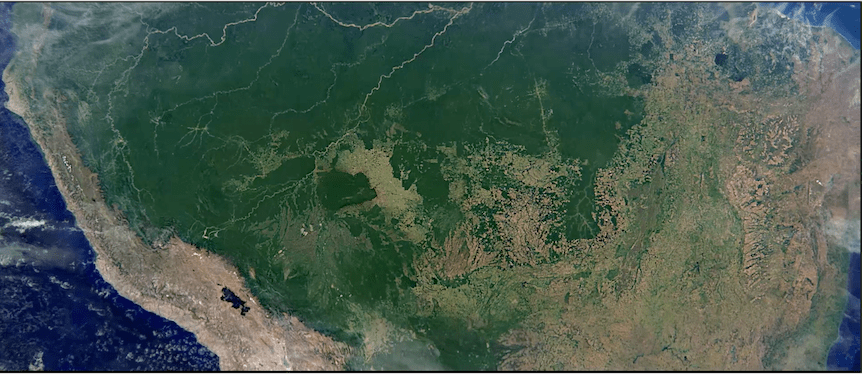
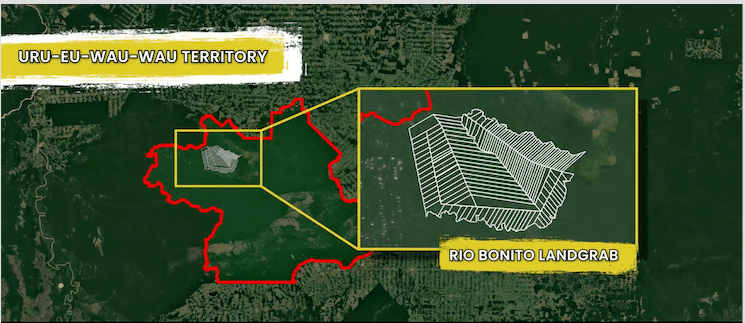
Screen shots from THE TERRITORY of remaining Uru-eu-wau-wau territory surrounded on 3 sides by man made desert.
Filmmaker, Alex Pritz, gained incredible access to the Uru-eu-wau-wau people, and environmentalists dedicated to protecting them and their Amazonian rain forest, as well as Brazilian settlers, filming as the groups come into conflict. From stone age technology to e-technology in only a couple of generations, The Uru-eu-wau-wau understand that the struggle for their survival is also the struggle for humanity’s survival. Protecting the rain forest is crucial to minimizing the catastrophic effects of climate change.
eu-wau-wau people protect their land from invaders & illegal deforestation:
Before she died on April 16, 2005, Marla Ruzicka succeeded in documenting civilian casualties in Afghanistan and Iraq, and persuading the U.S. Military and the U.S. Congress to assist victims and their families, as well as to create a fund to grant reparations for the harms done. It is believed to be the first time in history that this has been done.
This is an updated rebroadcast of a program originally aired on Easter Sunday, 2006. It was the first anniversary of her death at the age of 28. We spoke with her parents, Cliff and Nancy Ruzicka, and her twin brother, Mark, at their home on the shore of Clearlake, CA.
Equally at home with the military, the media, members of Congress of the people of the many countries she visited and came to know in her short life, she lived her belief that every life matters and deserves dignity, respect and justice.
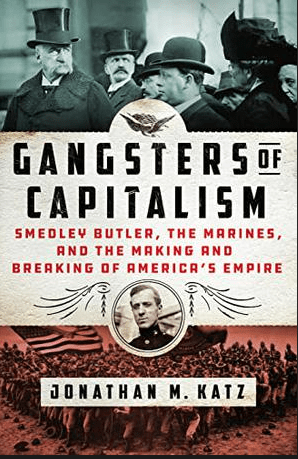
This interview was first broadcast as the sovereign nation of Ukraine was being invaded by the Russian Army. Terrible as this was, it was also an appropriate time to examine our own history, which Jonathan Katz has done in his most recent book, GANGSTERS OF CAPITALISM: Smedley Butler, The Marines, and the Making and Breaking of the American Empire, published in January 2022 by St. Martin’s Press.
He is an award winning journalist, whose earlier book, The Big Truck That Went By, chronicles his time in Haiti, where he was the only full-time American correspondent in Haiti, when the devastating earthquake struck on January 12, 2010 and the ensuing disasters brought on by the multiple failures of international aid projects. More than 230,000 people were killed.
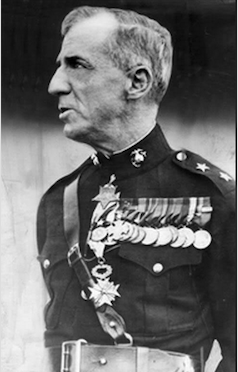
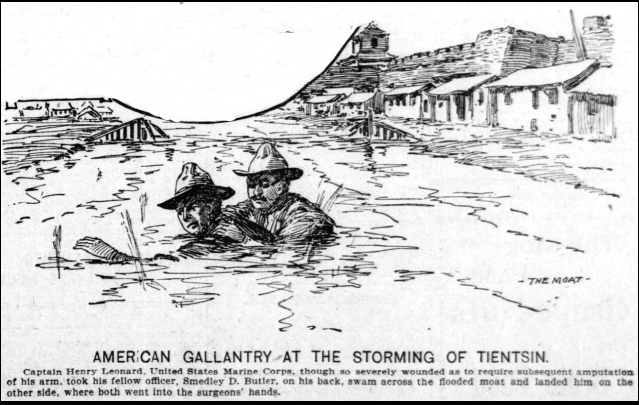
As he describes in our interview, Smedley Butler was there from the very beginning of the United States’ imperialism, first as a 16 year old lieutenant in the Spanish-American War, when we secured Guantanamo Bay, then on to Puerto Rico, The Philippines, China, Honduras, Panama, Nicaragua, Mexico, the Dominican Republic and Haiti.
After a long career in the Marines, in which he pioneered counter-insurgency methods and the militarization of police forces to enforce the prerogatives of capitalist oligarchs, who he eventually came to understand were calling the shots, he retired with the rank of General, the most decorated Marine in history, as well as the first of only 19 Marines to have been awarded the Medal of Honor twice.
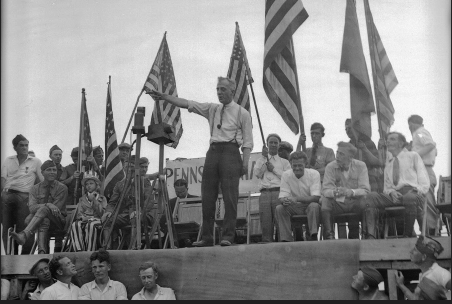
He became the Head of Public Safety for the City of Philadelphia, where he militarized that city’s police force. He eventually synthesized his experiences and understanding from his years subduing nationalist forces in those many countries – as well as battling gangsters in Prohibition era Philadelphia – to write his book, War Is a Racket, published in 1935.
He wrote, ”War is a racket. It always has been. It is possibly the oldest, easily the most profitable, surely the most vicious. It is the only one international in scope. It is the only one in which the profits are reckoned in dollars and the losses in lives. A racket is best described, I believe, as something that is not what it seems to the majority of the people. Only a small ‘inside’ group knows what it is about. It is conducted for the benefit of the very few, at the expense of the very many. Out of war a few people make huge fortunes.”
He spent his final years promoting democracy here in the United States and fighting fascism here and abroad, as well as trying to prevent what became World War II. Smedley Butler died of cancer at the age of 59 on June 21, 1940.
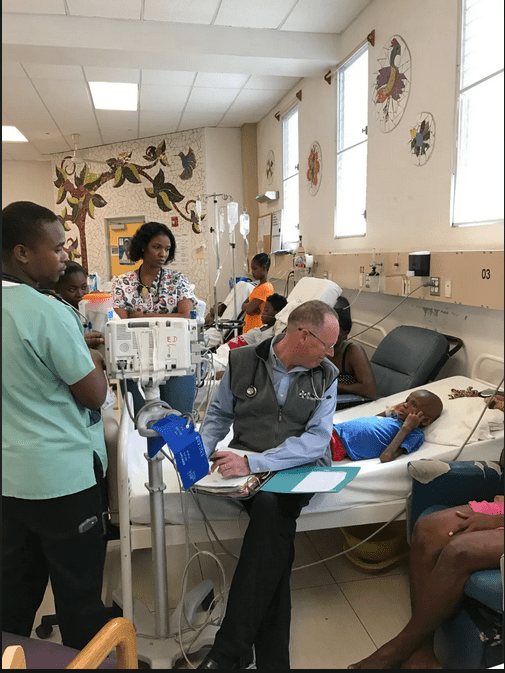
This edition of Forthright Radio ends with a tribute to Dr. Paul Farmer, who died on on February 21, 2022 at the age of 62. It is followed by Paul Farmer’s own voice speaking of his work.
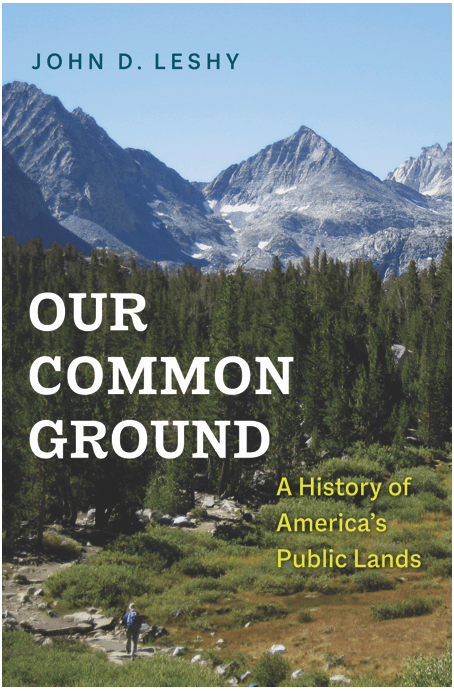
John D. Leshy is Professor Emeritus at the University of California, Hastings College of the Law in San Francisco. He was Solicitor (General Counsel) of the Interior Department throughout the Clinton Administration. Earlier, he was counsel to the Chair of the Natural Resources Committee of the U.S. House of Representatives, Associate Solicitor of Interior for Energy and Resources in the Carter Administration, an attorney-advocate with the Natural Resources Defense Council (NRDC) and a litigator in the U.S. Department of Justice Civil Rights Division. He led the Interior Department transition team for Clinton-Gore in 1992 and co-led it for Obama-Biden in 2008.
The U.S. government owns and manages more than six hundred million acres, which is about 30% of the nation’s land. These lands and the agencies that manage them—the National Forest Service, the National Park Service, the U. S. Fish & Wildlife Service, and the Bureau of Land Management—are a presence in our western communities.
John Leshy’s forthcoming book, OUR COMMON GROUND: A HISTORY OF AMERICA’S PUBLIC LANDS, soon to be published by Yale University Press. In 600+ pages, it chronicles this history of our public lands and suggests how Congress, the executive and the federal courts have responded to the numerous challenges facing these lands.
Kehinde Andrews is Professor of Black Studies in the School of Social Sciences at Birmingham City University. He is the director of the Center for Critical Social Research, founder of the Harambee Organisation of Black Unity, and co-chair of the UK Black Studies Association. In fact, he was the first black studies professor in the UK and led the establishment of the first black studies program in Europe at Birmingham City University.
Among his books are Resisting Racism: Race, Inequality, and the Black Supplementary School Movement and Back to Black: Retelling Black Radicalism for the 21st Century.
His most recent book is THE NEW AGE OF EMPIRE: HOW RACISM & COLONIALISM STILL RULE THE WORLD, published in the US by Bold Type Books.
Fifty years ago, the publication of his book, THE POLITICS OF HEROIN IN SOUTH EAST ASIA, led to his testifying before the Senate Committee on Appropriations Foreign Operations Subcommittee in June 1972. His research, including traveling to Hmong villages in Laos, revealed that the Central Intelligence Agency was knowingly involved in the transportation of heroin in the Golden Triangle of Burma, Thailand, and Laos. The CIA tried to block its publication, but it has been translated into 9 foreign languages with three English editions and is regarded as the “classic” work on global drug traffic.
His new book, also published by Haymarket Books, is titled TO GOVERN THE GLOBE: WORLD ORDERS & CATASTROPHIC CHANGE.
In it, he explores the interplay of three factors—sovereignty, human rights, and energy—in shaping the succession of empires and their global systems from the Black Death of 1350 through the coming climate crisis of 2050.
It is packed with meticulously researched facts and analysis of world history of the last 600 years, examining the continuities and disruptions that create systems that rule international affairs.
He asserts that China will become the world hegemon by 2030, via initiatives such as the Belt & Road Initiative, which makes manifest Halford Mackinder’s thesis that who controls the World Island, controls the world.
Articles referenced or pertinent to this interview:
In addition to having been a lead author of the fifth Assessment Report to the Intergovernmental Panel on Climate Change, Giulio Boccaletti was Chief Strategy Officer and Global Managing Director for Water at The Nature Conservancy, where he led a team of over 200 freshwater scientists, policy experts, economists and on-the-ground conservation practitioners, promoting action on water issues by governments and businesses.
Earlier in his career, he was a partner of consulting firm McKinsey & Company, where he co-founded the water practice and worked with businesses and governments around the world. He trained at MIT, Princeton and Bologna University in Physics and Atmospheric Science. His book, WATER: A Biography, was published in Sept. 2021 by Pantheon Books. We spoke with him in England on October 15.
Articles referenced or pertinent to this interview:
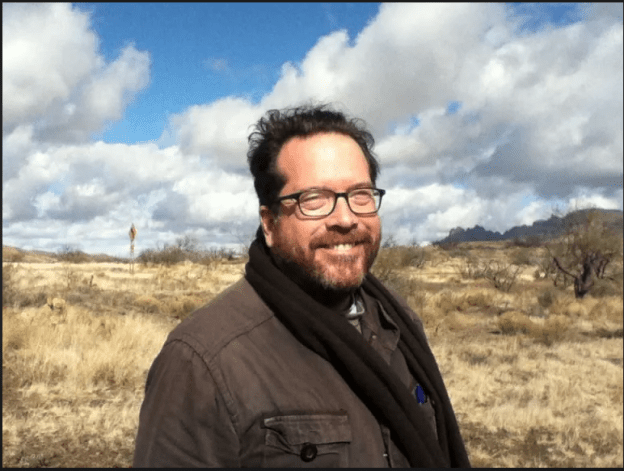
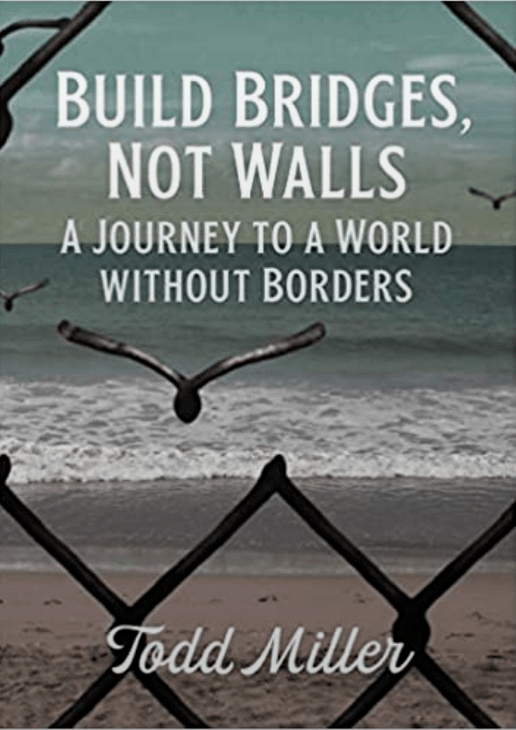
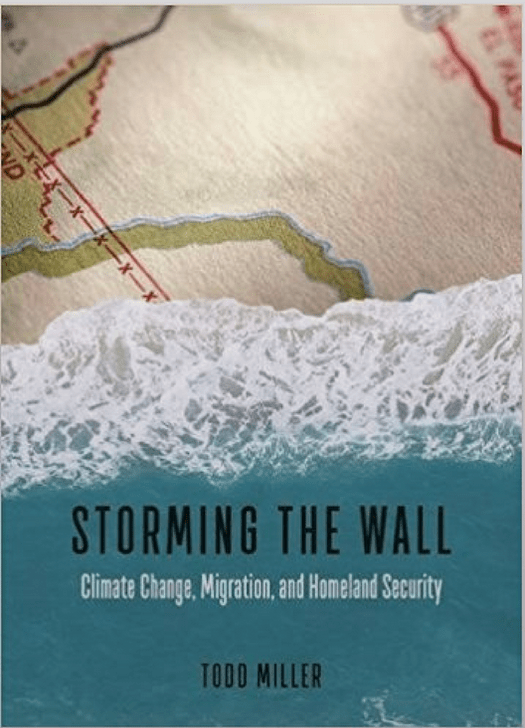
Returning to Forthright Radio is Izzy Award winning Todd Miller. He was our guest in 2017, when the book that won the Izzy Award, STORMING THE WALL: CLIMATE CHANGE, MIGRATION, AND HOMELAND SECURITY, came out. Last Spring of 2021, City Lights published his latest book, BUILD BRIDGES, NOT WALLS: A Journey to a World Without Borders. We spoke with him on August 30, 2021.
Building Bridges his his fourth book on border issues.
“As a woman I have no country. As a woman I want no country. As a woman, my country is the whole world.” – Virginia Woolf
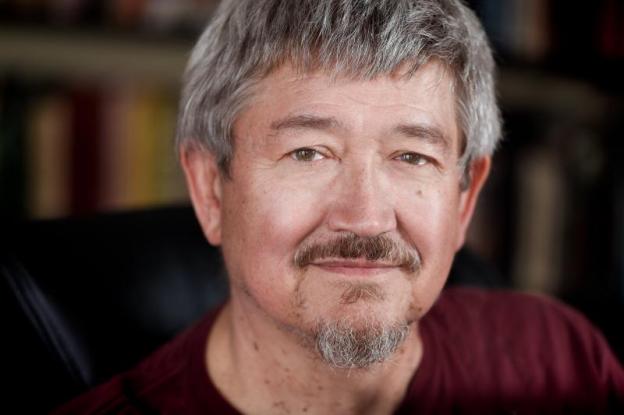
Alexander Hinton is Distinguished Professor of Anthropology, Director of the Center for the Study of Genocide and Human Rights, and UNESCO Chair on Genocide Prevention at Rutgers University.
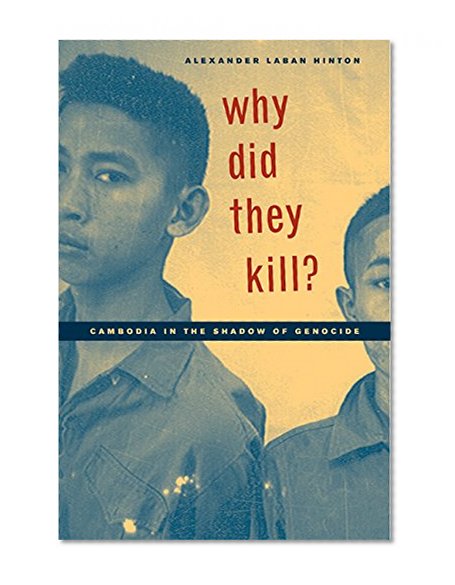
He is the author of over a dozen books including the award-winning Why did they Kill? Cambodia in the Shadow of Genocide; Man or Monster? The Trial of a Khmer Rouge Torturer; and The Justice Facade: Trials of Transition in Cambodia. His new book is It Can Happen Here: White Power and the Rising Threat of Genocide in the US published by NYU Press.
He was an expert witness in the Extraordinary Chambers in the Courts of Cambodia Genocide Trial. Khmer Rouge Brother Number Two, Nuon Chea, was ultimately convicted of charges of genocide. He died in prison on August 4, 2019 at the age of 93.
At the end of the interview, we quoted Ulysses S. Grant:
“If we are to have another contest in the near future of our national existence, I predict that the dividing line will not be Mason and Dixon’s, but between patriotism and intelligence on one side, and superstition, ambition and ignorance on the other.”
This edition of Forthright Radio from February 6, 2013, features an interview with Afghan-American author, Tamim Ansary, discussing his book, GAMES WITHOUT RULES: THE OFTEN INTERRUPTED HISTORY OF AFGHANISTAN, published by Public Affairs. As the United States and allies withdraw troops after 20 years of occupation and warfare in Afghanistan, it is well worth hearing again, because it speaks to the evolving situation there.
Tamim Ansary was born in Afghanistan in 1948, as a very young boy, he fell in love with history, and when Arnold Toynbee came through his hometown of Lashkargah, someone told him of a history loving 9 year old little bookworm, and he invited Tamim to tea. The rest, as they say, is history.
Tamim Ansary moved to the United States in 1964. He worked on textbooks for the Texas school system, out of which experience came his book, DESTINY DISRUPTED: A HISTORY OF THE WORLD THROUGH ISLAMIC EYES. Among his other books are WEST OF KABUL, EAST OF NEW YORK, as well as numerous books for children of different ages and reading levels. He has written a monthly column in Encarta. com, and has published essays in the San Francisco Chronicle, Salon, Alternet, TomPain.com, Edutopia, Parade, and the LA Times.
The Guardian published a piece by him on July 12, 2021 headlined:



















 Forthright Radio