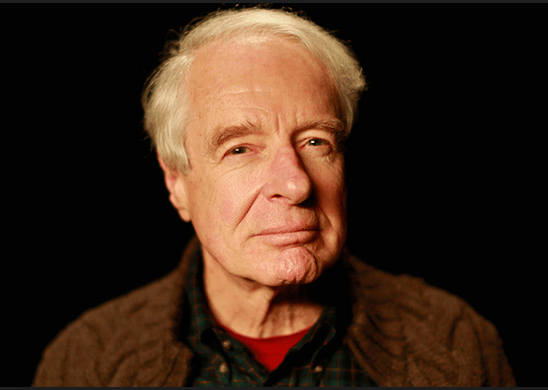
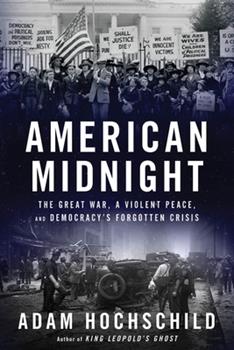
Award winning author and journalist, Adam Hochschild, is the author of eleven books. He returned to Forthright Radio to discuss his latest book, AMERICAN MIDNIGHT: THE GREAT WAR, A VIOLENT PEACE, AND DEMOCRACY’S FORGOTTEN CRISIS, published by Mariner Books.
While a college student in the early 1960s, Adam Hochschild worked on an anti-government newspaper in South Africa, and he was also a civil rights worker in Mississippi. He was a writer and editor for Ramparts magazine, and a co-founder of Mother Jones. He has been a lecturer in the UC Berkeley School of Journalism for many years. In 2014, he was elected a fellow of the American Academy of Arts and Sciences.
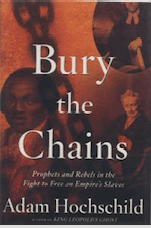
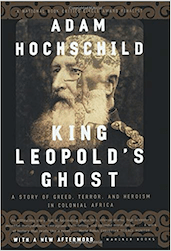
In our earlier interviews, he discussed his books, BURY THE CHAINS: PROPHETS AND REBELS IN THE FIGHT TO FREE AN EMPIRE’S SLAVES, and KING LEOPOLD’S GHOST: A STORY OF GREED, TERROR AND HEROISM IN COLONIAL AFRICA.
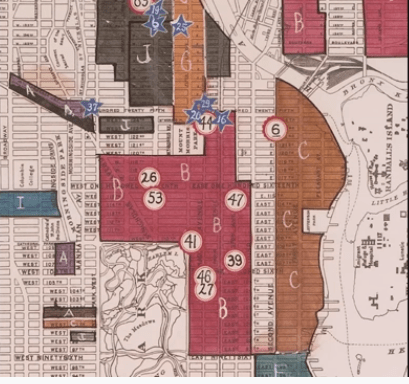
Military Intelligence Chief for NYC and virulent anti-immigrant proponent, John B. Trevor’s, “ethnic battle map” of upper Manhattan. Red for Jews, brown for Italians, grey for Blacks, blue for Irish. Circles are meeting halls. Stars are publication offices.
We spoke with him via telephone from his home in the Bay Area on October 25, 2022.
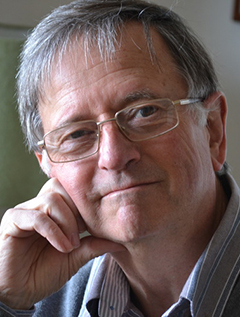
On September 18, 1947, the National Security Act, a major restructuring of the US Military and intelligence agencies went into effect. It created The National Security Council and The Central Intelligence Agency, headed by the Director of Central Intelligence. Our guest today on Forthright Radio is Professor of American History, emeritus, at the University of Edinburgh, Rhodri Jeffreys-Jones. His latest book, A QUESTION OF STANDING: THE HISTORY OF THE CIA, published by Oxford University Press, examines how the influence of the CIA has shifted with its standing with different presidents, Congresses, and the US as well as international public over time.
His reputation as an intelligence authority has been long established with earlier books such as, THE CIA AND AMERICAN DEMOCRACY; CLOAK AND DOLLAR: A HISTORY OF AMERICAN SECRET INTELLIGENCE; IN SPIES WE TRUST: THE STORY OF WESTERN INTELLIGENCE; and THE FBI: A HISTORY. We spoke with Professor Jeffreys-Jones on October 11, 2022 via Skype from his home in Edinburgh, Scotland.
The Bozeman Film Society is screening the film, God’s Country, based on Montana author, James Lee Burke’s short story, Winter Light, as interpreted by filmmaker, Julian Higgins. It is being shown at the Ellen Theater on October 19, 2022.
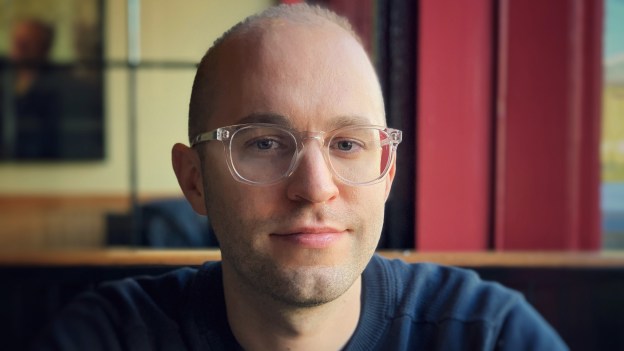
Julian Higgins directed a short film, based on Winter Light, of that same name in 2015. It followed closely the characters and action of Burke’s short story. This full length film, God’s Country, is shot entirely in Montana with half of the production team Montana based. His first feature length narrative film, it expands Burke’s story and explores even more contemporary issues as a response to the repercussions of the 2016 election.
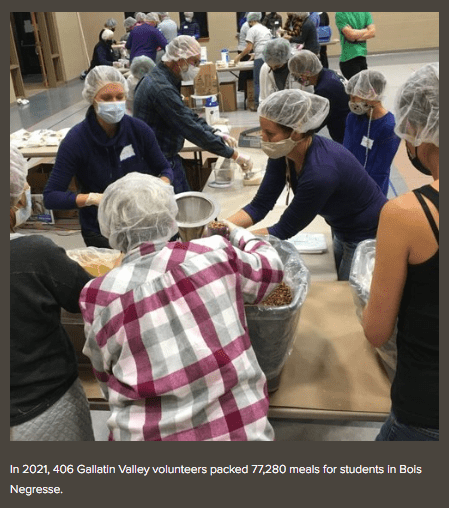
A year ago we interviewed Kay Roseen, president of Future Forward for Haiti, about the 2021 Gallatin Valley Packathon for Haiti. Over 400 local volunteers gathered at Hope Lutheran Church and packed 8 tons of food into packets to be prepared and served to the school children of the small village of Bois Negresse near the southeastern border of Haiti and the Dominican Republic. That provided over 75,000 meals – one meal every week day to those children for a full year.
This year, Future Forward for Haiti is again organizing a Gallatin Valley Packathon for Haiti at Hope Lutheran Church on October 15, and they are looking for 500 volunteers to pack 10 tons of food, which will yield 100,000 meals!
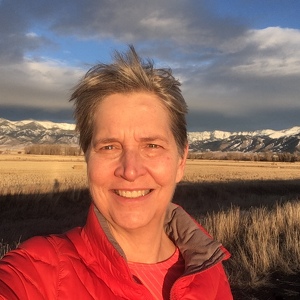
We spoke with Kay Roseen to find out more about the packathon, as well as the challenges in getting food and other assistance to the children of Haiti under increasingly difficult and dangerous circumstances. She tells us that Miraculously, Future Forward For Haiti and their partner, Feed the Hunger, with their local partners in Haiti, are succeeding – where larger, international organizations are less successful.
Reece Jones is a Professor of Geography and Environment at the University of Hawai’i at Manoa. His latest book, NOBODY IS PROTECTED: HOW THE BORDER PATROL BECAME THE MOST DANGEROUS POLICE FORCE IN THE UNITED STATES, is published by Counterpoint Press.
He is the editor-in-chief of the journal, Geopolitics, and co-editor of the Routledge Geopolitics Book Series with Klaus Dodds. He is best know for his work on border walls, the militarization of borders, and the rise in migrant deaths. His earlier books include Violent Borders: Refugees and the Right to Move ; Open Borders: In Defense of Free Movement; and Placing the Border in Everyday Life . Among his numerous awards is a Guggenheim Fellowship.
In NOBODY IS PROTECTED: HOW THE BORDER PATROL BECAME THE MOST DANGEROUS POLICE FORCE IN THE UNITED STATES, he traces the history of the Border Patrol, from its creation, quietly tucked into The Labor Appropriation Act of 1924. He writes “Its sole mission was to enforce the new eugenics-derived rules about who could enter the United States.” For most of its existence it was a small, underfunded agency, a mere 1,500 agents in the 1970s, until the 21st century, when it has become “a modern, sophisticated paramilitary force of over19,000 agents that asserts the legal right to sweep people off the streets of an American city without a warrant or even probable cause that a crime was committed.” Citizens and noncitizen alike. As Justice Thurgood Marshall noted, NOBODY IS PROTECTED. We spoke with Reece Jones on September 20, 2022.
We end the program with the poem with which Amanda Gorman opened the 2022 United Nations General Assembly on September 19, 2022.
Broadcaster, journalist, author, and four time winner of the Project Censored Award, Thom Hartmann returned to Forthright Radio with his latest book in The Hidden History Series: THE HIDDEN HISTORY OF NEOLIBERALSIM: HOW REAGANISM GUTTED AMERICA AND HOW TO RESTORE ITS GREATNESS.
This is number eight in the series, and it joins his more than thirty other books.
After the interview with Thom Hartmann, we share excerpts from a speech by Bernie Sanders at a rally of the National Union of Rail, Maritime and Transport Workers in the UK on August 31, 2022.
Returning to Forthright Radio, award winning science journalist, broadcaster and author, Gaia Vince, has a new book out from Flatiron Press, NOMAD CENTURY: HOW CLIMATE MIGRATION WILL RESHAPE OUR WORLD.
Her first book, Adventures in the Anthropocene: A Journey to the Heart of the Planet We Made, won the 2015 Royal Society Winton Prize for Science Books, making her the first woman to win that prize outright.
We spoke with her via Skype on August 22, 2022.
The original broadcast included audio excerpts from the 100th birthday programs honoring James Lovelock, whose Gaia Theory revolutionized the way we approach global crises. Links to the full programs can be found below.
Articles/videos pertinent or referred to in the program can be found here:
In 2019, we interviewed Dahr Jamail when his book, THE END OF ICE: BEARING WITNESS AND FINDING MEANING IN THE PATH OF CLIMATE DISRUPTION, was published by The New Press. In addition to interviewing scientists from around the world, he consulted with Indigenous people as well, investigating some of the cultural and spiritual dimensions of the climate crisis.
After THE END OF ICE came out, he joined with writer and teacher, Stan Rushworth, in interviewing 11 Native women and 9 men from different generations and walks of life to solicit their perspectives. This collaboration has resulted in the book, WE ARE THE MIDDLE OF FOREVER: INDIGENOUS VOICES FROM TURTLE ISLAND ON THE CHANGING EARTH, also published by The New Press.
Stan Rushworth was a full time, tenured professor at Cabrillo College from 1992 til 2008, where he taught Native American Literature and Critical Thinking. He continued teaching and developing Native classes there until 2022. He is the author of three earlier books, GOING TO WATER: THE JOURNAL OF BEGINNING RAIN; SAM WOODS: AMERICAN HEALING; and DIASPORA’S CHILDREN.
Stan and Dahr told their interviewees: “Our focus is the disruption of Earth; how did we get here? how do we move on in the right way? What’s in the way of that? And no matter the outcome, how do we carry ourselves?”
We spoke with Stan Rushworth on August 3, 2022 via Skype.
Links to articles and videos pertinent to this interview:
“WE ARE THE MIDDLE OF FOREVER” is from a poem by John Trudell, The Cleansing (from his first album, Tribal Voice).
Assistant Professor of Political Science at the University of Washington, Jacob M. Grumbach, is a Faculty Associate with the Harry Bridges Center for Labor Studies. His research focuses on the political economy of the United States, with an emphasis on public policy, racial and economic inequality, American Federalism, health policy, climate change and statistical methods.
His book, LABORATORIES AGAINST DEMOCRACY: HOW NATIONAL PARTIES TRANSFORMED STATE POLITICS, which investigates the causes and consequences of the nationalization of state politics since the 1970s, is published by Princeton U. Press.
Richard Gray has directed movies such as Robert the Bruce, Broken Ghost and Sugar Mountain. His latest film, MURDER AT YELLOWSTONE CITY, is the first feature length film to have been shot at the new Yellowstone Film Ranch outside of Pray, MT.
In this interview, we discuss the challenges of filming during Covid; his partnership with Livingston’s Carter Boehm and Chico Hot Spring proprietor, Colin Davis, in building the Yellowstone Film Ranch; their efforts to help pass The Montana Economic Development Industry Advancement (MEDIA) Act; and prospects for the Montana Film Industry after its passage.
The Bozeman Film Society will be premiering MURDER AT YELLOWSTONE RANCH on Friday, July 22 at the historic Ellen Theater. They post this at their website: The once peaceful and booming Yellowstone City has fallen on hard times, but when a local prospector strikes gold, things seem to be turning around. Any hope is soon shattered when the prospector is found dead and the Sheriff quickly arrests a mysterious newcomer. But nothing is so simple in this sleepy western town, and more than a few of the locals have secrets to keep and reasons to kill. As the brutal murders continue, pitting neighbor against neighbor, Yellowstone City goes down a bloody path to a final showdown that not all will survive. 123 minutes. NR. Starring: Gabriel Byrne, Thomas Jane, Isaiah Mustafa, Anna Camp, Aimee Garcia, Emma Kenney, with Nat Wolff, and Richard Dreyfuss.
We interviewed director/producer Richard Gray on July 11, 2022.












 Forthright Radio