Joining us once again is journalist, author and professor at the Columbia University Graduate School of Journalism, Howard French. He has been a decades long New York Times reporter, serving as its bureau chief for the Caribbean and Central America from 1990 to 1994, covering Haiti, Cuba, Nicaragua, El Salvador, and other countries. He was one of the Times’ first black foreign correspondents, and from 1994 to 1998 he covered West and Central Africa, reporting on wars in Liberia, Sierra Leone, and Central Africa, with particular attention to the fall of the longtime dictator of Zaire, Mobutu Sese Seko. From 1998 to 2008 he served as the Times bureau chief for Japan, Korea and Shanghai, from which experiences he wrote Everything Under the Heavens: How China’s Past Helps Shape its Push for Global Power; and China’s Second Continent: How a Million Migrants Are Building a New Empire in Africa.
His latest book, THE SECOND EMANCIPATION: NKRUMAH, PAN-AFRICANISM, AND GLOBAL BLACKNESS AT HIGH TIDE, is being released on August 26, 2025 by Liveright. The link to our earlier interview when his book, BORN IN BLACKNESS: Africa, Africans, and the Making of the Modern World, 1471 to the Second World War, was published is below.
His very well documented books are packed full of information and insights rarely seen outside the academic world. Best of all, his writing style is lucid, fluid and a pleasure to read.
We spoke with Howard French via FaceTime on August 19, 2025.
Links to articles, etc. pertinent to this interview:
This edition of Forthright Radio marks the 20th anniversary of the first program that day after Thanksgiving in 2004. I am deeply grateful to Mendocino County Public Broadcasting, KZYXfm, and all the listeners who support community radio, for having given me the opportunity to host and produce Forthright Radio.
Bruce Gourely is an historian specializing in American History and the editor of Church & State magazine, the publication of Washington D.C. based Americans United for Separation of Church and State. He is an award winning author and photographer. Among his nine books are Crucible of Faith and Freedom: Baptists and the American Civil War; Diverging Loyalties: Baptists in Middle Georgia During the American Civil War. He also owns and operates the website, Yellowstone.net.
I recently had the opportunity to hear Bruce Gourely speak right after the recent election, and I immediately invited him to share his thoughts as an historian and a person dedicated to to preserving our First Amendment rights to help prepare us for what will surely be challenging times ahead. We spoke with him on November 19th, 2024 in the Beyond the Deep End studio.
““The women in Congress had to wage virtually every battle alone,” Schroeder wrote in her memoir of those early years, “whether we were fighting for female pages (there were none) or a place where we could pee.” That’s right. For many years, women didn’t have a bathroom off the House floor like the men did. When Schroeder was there, women were forced to use the restroom inside the women’s reading room far off on another floor. Female members of the House didn’t get a women’s bathroom off the House floor until 2011.”
This special edition of Forthright Radio for August 26, 2020, celebrates the Centennial of the signing of the 19th Amendment to the US Constitution on August 26, 1920, after the very long, very hard struggle by women of different races and backgrounds to win the right to vote.
As our guest, Professor Martha S. Jones reminds us, this struggle is not over.
Martha S. Jones is the Society of Black Alumni Presidential Professor and Professor of History at The Johns Hopkins University. She is a legal and cultural historian, whose work examines how black Americans have shaped the story of American democracy.
Professor Jones is the author most recently of Vanguard: How Black Women Broke Barriers, Won the Vote, and Insisted on Equality for All, which will be published by Basic Books on September 8, 2020.
Her other books include Birthright Citizens: A History of Race and Rights in Antebellum America (2018), winner of numerous prestigious awards, and All Bound Up Together: The Woman Question in African American Public Culture 1830-1900, and a coeditor of Toward an Intellectual History of Black Women.
Professor Jones currently serves as a Co-president of the Berkshire Conference of Women Historians, and on the Executive Board of the Society of American Historians.
Other articles relating to the struggle for suffrage or pertinent to this interview include:
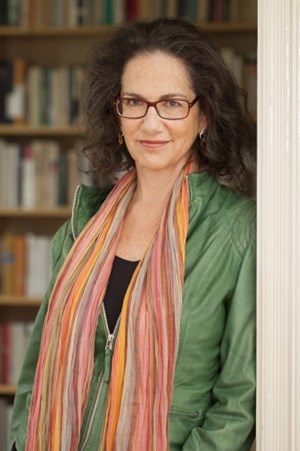
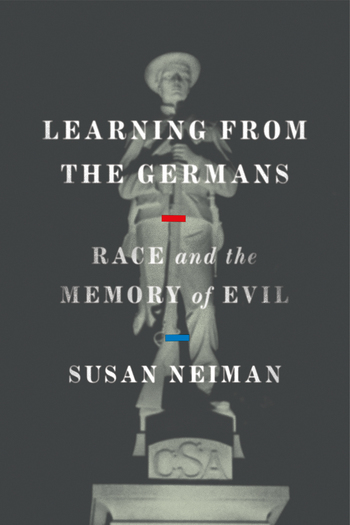
Born in the Civil Rights era of the Southern U.S., Susan Neiman has spent most of the last four decades in Berlin. She is the Director of The Einstein Forum. Her latest book is Learning from the Germans: Race and the Memory of Evil, published by Farrar, Straus and Giroux.
Among the many things she reminds us of in her book is that the Nazi regime lasted only 12 years – from 1933 to 1945. Likewise, the period we call “Reconstruction” also lasted only 12 years from 1865 to 1877. She quotes her colleague, the late Tony Judt: the historian’s task (is) “to tell what is almost always an uncomfortable story and explain why the discomfort is part of the truth we need to live well and live properly. A well-organised society is one in which we know the truth about ourselves collectively, not one in which we tell pleasant lies about ourselves”.
What can Americans learn from the Germans about confronting and moving on from our racist past toward more social justice? Susan Neiman has much to share of what she has learned from the Germans.
What can we learn of what Southerners have done and are doing to heal the wounds of our past? Susan has much to share of what she has learned in Mississippi and Alabama.




 Forthright Radio