

“For Indians, defeat in the face of American Progress and Manifest Destiny was supposed to be a foregone conclusion.” So writes our guest in the first half of today’s broadcast, Julian Brave Noisecat, in his article, When the Indians Defeat the Cowboys, published in the January 2017 issue of Jacobin magazine. This young indigenous scholar, journalist and activist is in the first half of our show.  In the second half hour, we speak with Doug Peacock, Montana grizzly bear aficionado, who among many, many other things, was an erstwhile friend of Edward Abbey, and inspiration for the character, George Washington Hayduke, in Abbey’s seminal work, The MONKEY WRENCH GANG. He discusses the delisting of Yellowstone grizzly bears from the endangered species list, as well as what the heck is going on with Montana’s Washington gang, now that 2/3 of its congressional delegation – excluding the other third, organic farmer, Senator John Testor – are not only from the same small city of Bozeman, MT, who worked together at the same cyber-technology start-up, Right Now Technologies, but also both became multimillionaires after Oracle bought it for $1.5 billion. You may remember hearing about the recently elected Greg Gianforte, who pled guilty to assaulting Guardian journalist, Ben Jacobs, the night before the statewide special election to replace former Representative Ryan Zinke, who had been confirmed as Secretary of the Interior.
  Doug recounts the recent up-close encounter with a mama grizzly and her yearling cub, who nursed for 7 minutes 35 feet from him and his daughter in Yellowstone Park.
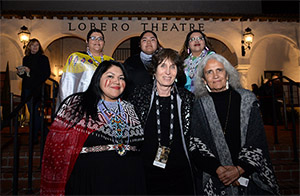
 Julian Brave Noisecat graduated Phi Beta Kappa and Magna Cum Laude in History from Columbia University in 2015. The next year he received a Masters in Global and Imperial History from Oxford University, which had awarded him a Clarendon Scholarship. His writings have appeared in The Guardian, Jacobin, Fusion, Salon, High Country News, Fusion, as well as others. He is a member of the Canim Lake Band Tsq’escen Tribewithin the province of British Columbia.
 Doug Peacock was our guest on Forthright Radio in January 2014, after his book IN THE SHADOW OF THE SABERTOOTH: A RENEGADE NATURALIST CONSIDERS GLOBAL WARMING, THE FIRST AMERICANS AND THE TERRIBLE BEASTS OF THE PLEISTOCENE, was published. After 2 tours as a Special Forces medic in the Central Highlands of Viet Nam, Doug Peacock returned to the United States suffering from the not yet named Post Traumatic Stress Disorder. He found wilderness was the only place he could be to deal with the effects of war trauma. Thus began his more than 4 decades of interacting with grizzlies, whom he credits with restoring his soul, & his dedication to protecting and preserving them, & the wilderness they – and we – need to thrive. Doug Peacock was the subject of an award winning film about grizzly bears & Vietnam, called Peacock’s War. Among his books are WALKING IT OFF: A VETERAN’S CHRONICLE OF WAR AND WILDERNESS; GRIZZLY YEARS: IN SEARCH OF THE AMERICAN WILDERNESS; AND IN THE PRESENCE OF GRIZZLIES: THE ANCIENT BOND BETWEEN MEN AND BEARS, written with his wife, Andrea Peacock.




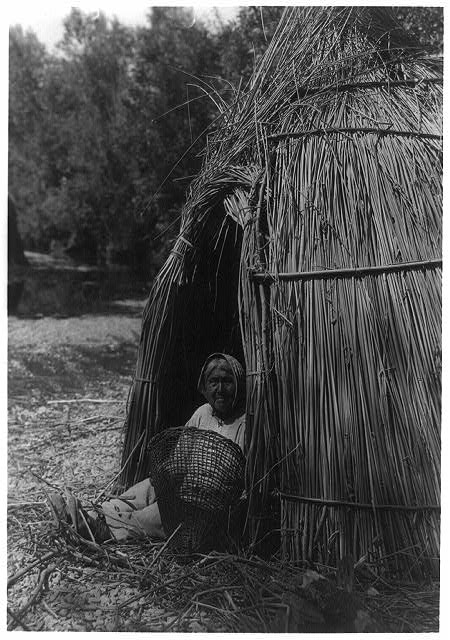
 The place we now call CA, was unknown to non-Indians until March 1543, when Spaniards first explored the coast, but it wasn’t until 226 years later, in 1769, that Spain sent soldiers and Franciscan missionaries north from Mexico to colonize it, to preempt British, Dutch and Russian expansion, and to protect northern Mexico’s silver mines. At that time, there were about 310,000 native people living there, which seems small compared to California’s current population of almost 40 million, but he writes that it was actually the densest native population north of Mexico in North America. We began by discussing this pre-European CA population, and how they lived on the land.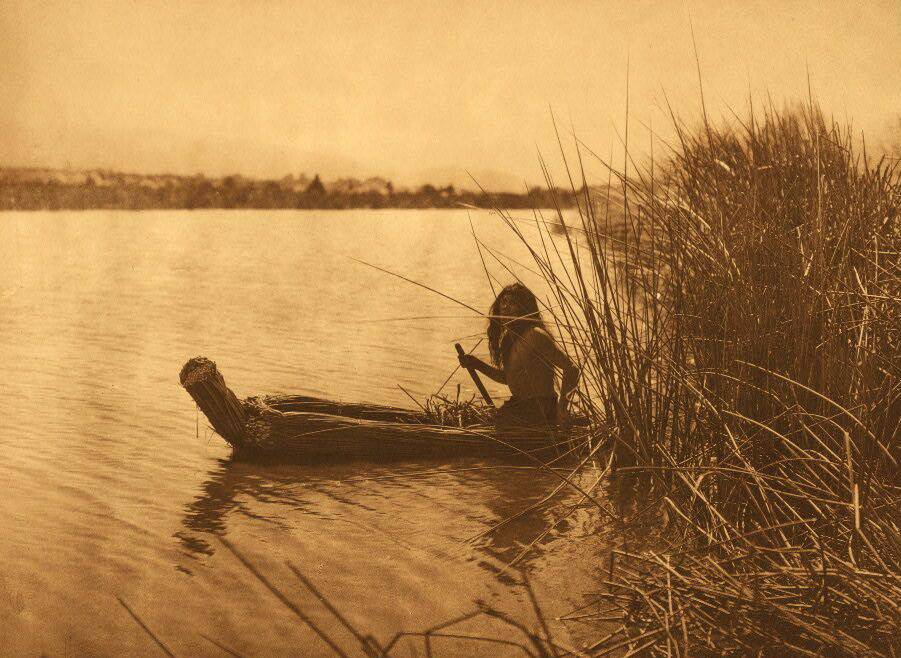
 The Mendocino Indian Reservation was discontinued in March 1866 and the land opened for settlement 3 years later.



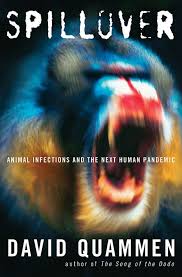
 Among the questions he investigates are: Why do new diseases emerge when they do, where they do, as they do, and not elsewhere, other ways, at other times? Is it happening more now than in the past? And perhaps the biggest question: What sort of deadly bug, with what unforeseen origins and what inexorable impacts, will emerge next?
 Forthright Radio