The film, WE BURN LIKE THIS, is a debut feature written, directed and produced by Alana Waksman.
It’s a coming-of-age story of historical trauma, survival, and healing. When 22-year-old Rae, a descendant of Holocaust survivors, is targeted by Neo-Nazis in Billings, Montana, her ancestors’ trauma becomes real. It’s inspired by true events and features a terrific ensemble cast of largely Montana actors, as well as film crew.
director’s statement I never met my grandparents. They were taken from their homes near Radomsko, Poland in 1942 and survived forced labor camps as young teenagers in Russia. I have been told that my grandfather survived a period of time by eating grass. After the war, my grandparents found themselves at a displaced persons camp in Germany. This is where my dad was born, and two years later they were able to immigrate to Brooklyn, New York. My grandparents were proud to be Americans, but my father grew up ashamed of his immigrant and Jewish identities as it was often the reason he was singled out, threatened, and bullied. The day after the 2016 election, Neo-Nazi pamphlets showed up on the doorsteps of Har Shalom Synagogue in Missoula, Montana where I was living at the time. For the first time in my life, my family’s history was suddenly very real. I made this film in order to sort through my thoughts about my identity, the inherited effects of historical trauma, and what self-acceptance and self-love looks like. We Burn Like This is my debut feature, which I have been developing for the last seven years. It is my contribution to the greater healing of Jewish bigotry, which continues to be even more important, timely, and urgent. The storming of the capitol on January 6th was a continued reminder after an exhausting and frightening four years that we are living beside much hatred and rage, and our new administration does not erase the true colors and feelings of our fellow Americans. I believe that it matters to share this story and inspire discussion about Jewish identity and historical trauma in present day America. May we find a way to forgive, accept, and love ourselves and others. May we find the perfection even in the darkest times and in the darkest memories. May this film be a part of that process, and may we all radically heal. -Alana Waksman
We were already in production to rebroadcast this archived edition of Forthright Radio from April 25, 2005, featuring un-embedded journalist, Dahr Jamail, with documentary filmmaker and humanitarian assistance worker, Mark Manning, recounting their experiences relating to the two battles of Fallujah waged by the United States military in Iraq in the Spring and Fall of 2004. – when former President Bush made this statement in a speech at his presidential library on May 18, 2022:
“Russian elections are rigged. Political opponents are imprisoned or otherwise eliminated from participating in the electoral process. The result is an absence in checks and balances in Russia, and the decision of one man to launch a wholly unjustified and brutal invasion of Iraq …… I mean of Ukraine …. “
Mark Twain noted that history doesn’t necessarily repeat itself, but sometimes it rhymes.
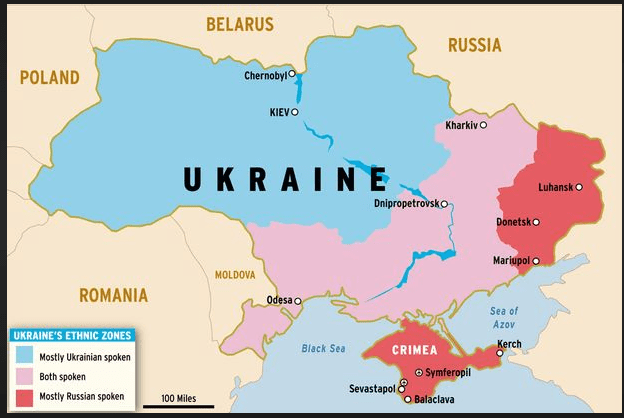
And we were struck by certain similarities between the selling of the U. S. invasion of Iraq to the American people in April of 2003, and the Russian invasion of Ukraine in February of 2022. In both cases, the leaders asserted that the military actions by their vastly larger, stronger and wealthier nations were purely defensive in nature. In the case of the US, the administration claimed that Iraq’s alleged possession of weapons of mass destruction (which was later proven to be entirely false, and were known to be false at the time) required immediate preemptive military force, and that “we must fight them over there to prevent having to fight them here.” Russia justified their military actions by claims of NATO provocations by encroaching on its border and the potential of Ukraine joining NATO.
Saddam Hussein, who had formerly been an ally of the US in the 1980s against Iran, now had to be subjected to regime change, because of the brutal nature of his dictatorship. The Russian excuse was the Ukraine government was rife with Nazi fascists.
Each government maintained tight control over information, and the mainstream media in both countries were slavish in delivering their governments’ messages of the righteousness and necessity of their respective invasions, assuring their populace that their soldiers would be welcomed as liberators and the military actions would be over quickly. The popularity of both these leaders and their military actions initially rose in polls.
Many Americans are amazed that Russians support Putin’s aggression, forgetting how enthusiastically they watched the “Shock and Awe” spectacle delivered by all major American media, at least in the early days of the Iraq War. In Russia protest and demonstrations against the invasion are put down swiftly, and those who even refer to the situation with the word “war” are subject to lengthy prison terms.
Before the invasion of Iraq, in major world capitals, some of the largest peace demonstrations in world history were either ignored or dismissed as mere “focus groups” by the Bush administration.
As we view with horror the senseless destruction of Ukraine villages and cities and the wanton civilian deaths, we find this interview with Dahr Jamail and Mark Manning instructive of our own nation’s responsibility for similar acts.
Indigenous artisans, cooks and farmers tell us this story (in Spanish and in their own languages) about the origins of indigenous corn and how their ancestors have guided the evolution of seeds from the dawn of agriculture to the 21st century; a collective effort that spans more than 350 generations.
To their voices are added those of community leaders, scientists, cooks and many others whose knowledge and activism are committed not only to the defense of food sovereignty and genetic integrity, diversity and the collective property of indigenous seeds, but also for the defense of an enduring cultural legacy and way of life.
Filmmaker and Chair of the FIlm & Digital Media Department at UC Santa Cruz , Gustavo Vazquez, brings us to Oaxaca to experience the wisdom of various indigenous communities, as they explain that “Corn was not domesticated by man – Man was domesticated by corn.”
Professors Ignacio Chapela (UC Berkeley) and Alan Bennett (UC Davis) discuss the merits and dangers of genetically modified organisms, and the characteristics of different landraces of corn that have co-evolved with the people of Oaxaca – continuing co-evolution vs. exploitation for patenting and profit.
Susana Harp, Senator from Oaxaca, works to protect the heritage and health of her region, and to respect the validity of their approach. “Corn & its surrounding rituals are tied to the cosmology of the indigenous people – by extension, the essence of being Mexican, linking our lives to corn.”
The Indigenous Uru-eu-wau-wau people have seen their population dwindle and their culture threatened since coming into contact with non-Native Brazilians in the 1980s. Though promised dominion over their own rain forest territory, they have faced illegal incursions from environmentally destructive logging and mining, and, most recently, land-grabbing invasions spurred on by right-wing politicians like President Jair Bolsonaro. With deforestation escalating as a result, the stakes have become global.
Screen shots from THE TERRITORY of remaining Uru-eu-wau-wau territory surrounded on 3 sides by man made desert.
Filmmaker, Alex Pritz, gained incredible access to the Uru-eu-wau-wau people, and environmentalists dedicated to protecting them and their Amazonian rain forest, as well as Brazilian settlers, filming as the groups come into conflict. From stone age technology to e-technology in only a couple of generations, The Uru-eu-wau-wau understand that the struggle for their survival is also the struggle for humanity’s survival. Protecting the rain forest is crucial to minimizing the catastrophic effects of climate change.
eu-wau-wau people protect their land from invaders & illegal deforestation:
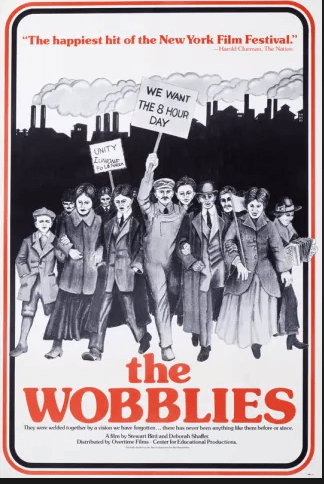
As more and more workers in the United States are organizing to create unions to represent their interests, and corporations are spending millions and millions of dollars to thwart their efforts, it is good to honor this International Workers Day, May Day, by celebrating the restoration and screening of the film, THE WOBBLIES. It was produced during the 1970s and premiered at the NY Film Festival in 1979, and has been recently restored to 4K digital format by the Museum of Modern Art, as well as being inducted into The National Film Registry of the Library of Congress in 2021, one of only 25 films added each year.
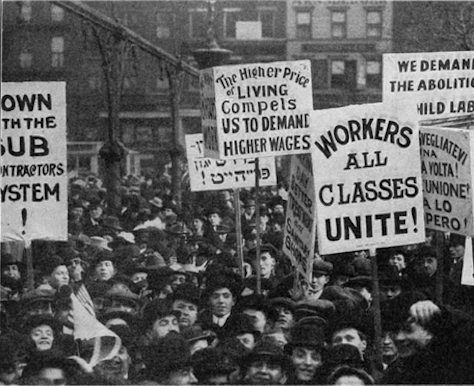
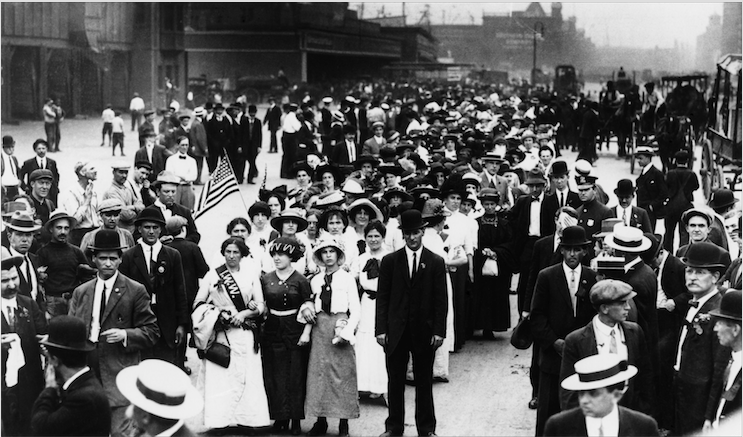
May 1st is celebrated in many countries around the world as a holiday to honor laborers. May 1st was chosen because it marked the day, May 1st, 1886, when a general strike began in the United States to campaign for an 8 hour work day. Four days later in the so-called Haymarket Affair in Chicago police arrived to disperse a packed public assembly in Haymarket Square in support of the general strike, when a person, never identified, threw a bomb. The police fired on the workers. In the ensuing melée seven police officers were killed, as well as at least four citizens. In addition, 60 police were injured as were at least 115 citizens. Hundreds of labor leaders and sympathizers were rounded-up and four were executed by hanging, after a trial that many historians consider a miscarriage of justice. On May 5, 1886 in Milwaukee, WI, the state militia fired on a crowd of strikers, killing seven, including a schoolboy and a man feeding his chickens in his own yard.
We interviewed filmmakers, Deborah Shaffer and Stewart Bird, about their film, THE WOBBLIES, about the period about 20 years after the deadly events during the General Strike of 1886, as a new effort to organize ALL the workers began. They state:
“When we started production on The Wobblies in 1977 our goal was to rescue and record an almost completely neglected chapter of American history as told by its elderly survivors. We never imagined then that the themes of labor exploitation, anti-immigrant legislation, and racial and gender discrimination would resonate as strongly today. We couldn’t be prouder to have the film included last year in the National Film Registry, and to have Kino Lorber present the new 4K MoMA restoration nationwide on International Workers Day.”
About Producer-Director Deborah Shaffer Academy Award®-winning filmmaker Deborah Shaffer began making social issue documentaries as a member of the Newsreel Collective in the ‘70’s. She co-founded Pandora Films, one of the first women’s film companies, which produced several shorts. Her first feature documentary, The Wobblies, premiered at the prestigious New York Film Festival in 1979. During the ’80s Shaffer focused on human rights in Central America and Latin America, directing many films including Witness to War: Dr. Charlie Clements, which won the Academy Award® for Short Documentary in 1985, and Fire from the Mountain and Dance of Hope, which both played at the Sundance Film Festival. Shaffer directed one of the first post-September 11 films, From the Ashes: 10 Artists followed by From the Ashes: Epilogue, which premiered at the Sundance and Tribeca Film Festivals. She is also the Executive Producer of the Academy Award®-nominated short Asylum, and has directed numerous acclaimed public television programs on women and the arts. She directed and produced To Be Heard, which won awards at numerous festivals and aired nationwide on PBS. Her most recent film, Queen of Hearts: Audrey Flack premiered at DOC NYC and won the Audience Award at the Hamptons Documentary Film Festival. She has been awarded a Guggenheim Fellowship and the Irene Diamond Lifetime Achievement Award by the Human Rights Watch Film Festival.
About Producer-Director – Editor Stewart Bird Stewart Bird is a Bronx-born writer and filmmaker. Murder at the Yeshiva is his first novel and he is presently writing his second NYPD homicide detective novel with Detective Mo Shuman. He wrote Solidarity Forever, an oral history of the I.W.W. (University of Minnesota Press) with Dan Georgakas and Deborah Shaffer. He also co-authored the play “The Wobblies: The U.S. vs. Wm. D. Haywood et. al.,” (with Peter Robilotta), which was performed at the Hudson Guild Theatre in New York and published by Smyrna Press. Bird wrote a one-hour story for PBS entitled “The Mighty Pawns” about a black inner-city chess team, which was shown nationally on Wonderworks and distributed nationally by Disney. As a writer/producer for Fox television’s Current Affair, he produced various segments: “Alan Berg,” “Elvis Presley,” “A Cycle of Justice,” and “The Night Natalie Died.” He worked as a writer/producer for CBS News’ 48 Hours and produced segments like “Another America,” “Underground,” “Stuck on Welfare,” and “Earth Wars.” He has produced numerous feature-length documentaries including “Finally Got the News,” about black auto workers in Detroit; “Retratos,” on the Puerto Rican community in New York; “Coming Home,” on Vietnam Veterans; “Building the American Dream: Levittown, NY” and The Wobblies (with Deborah Shaffer) focusing on the Industrial Workers of the World a turn-of-the-century labor union.
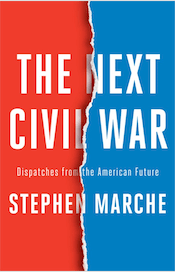
Stephen Marche is a Canadian novelist and journalist. He writes for The Atlantic, The New York Times, The Wall Street Journal, The New Yorker and Esquire, among other outlets. His latest book, which we’ll be discussing in this interview is THE NEXT CIVIL WAR: DISPATCHES FROM THE AMERICAN FUTURE, published by Avid Reader Press, a division of Simon & Schuster.
He writes, “There will be those who say that the possibility of a new civil war is alarmist. All I can say is that reality has outpaced even the most alarmist predictions.”
“The intelligence services of other countries are preparing dossiers on the possibilities of America’s collapse. Foreign governments need to prepare for a post-democratic America, an authoritarian and hence much less stable superpower. They need to prepare for a broken America, one with many different centers of power. They need to prepare for a lost America, one so consumed by its crises, that it cannot manage to conceive, much less to enact, domestic or foreign policies.
The purpose of this book is to give readers access to the same advance information. These dispatches are projections but not fantasies. The next civil war isn’t science fiction anymore. The plants to the first battle have already been drawn up. And not by novelists. By colonels.”
Ray McGovern earned a Masters’ degree with honors in Russian Language, Literature and History from Fordham University. In the early 1960s, he served as a US Army Infantry Intelligence Officer in the analysis division on Soviet foreign policy, especially with respect to China and Indochina, which includes Vietnam, Cambodia, Laos, Burma, and Thailand.
In the CIA, he served under seven presidents from 1963 to 1990, beginning with John F. Kennedy. In the 1980s he chaired the National Intelligence Estimates and prepared the President’s Daily Brief. In 2003, he co-founded Veteran Intelligence Professionals for Sanity (VIPS) dedicated to analyzing and criticizing the mis-use of intelligence, specifically the false claims leading to the Iraq War. In 2006, he returned to CIA headquarters to protest the CIA’s involvement in torture, when he returned his Intelligence Commendation Medal.
We spoke with Ray McGovern on April 6, 2022. The next day, The United Nations General Assembly voted to expell Russia from The Human Rights Council.
Articles or videos referenced or pertinent to the interview:
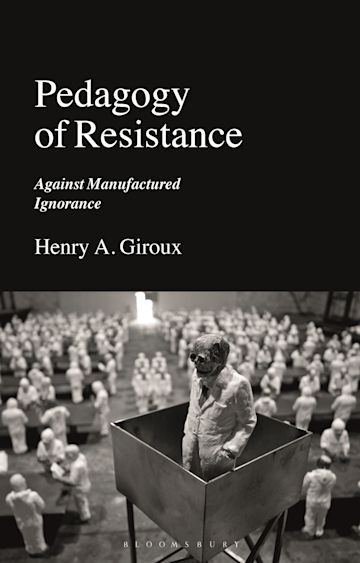
Henry Giroux is McMaster University Chair for Scholarship in the Public Interest & The Paulo Freire Distinguished Scholar in Critical Pedagogy.
An internationally renowned writer and cultural critic, Professor Giroux has authored, or co-authored over 65 books, written several hundred scholarly articles, delivered more than 250 public lectures, and been a regular contributor to print, television, and radio news media outlets.
He is on the Board of Directors for Truthout, and he is on the editorial and advisory boards of numerous national and international scholarly journals, and he has served as the editor or co-editor of four scholarly book series. He co-edited a series on education and cultural studies with Paulo Freire for a decade. His books have been translated into many languages and his work has appeared in the New York Times and many other prominent news media
His latest book is PEDAGOGY OF RESISTANCE AGAINST MANUFACTURED IGNORANCE, which will be published on April 21, 2022 by Bloomsbury Academic.
We end this archived edition of Forthright Radio with a song by the Ukrainian group, Beton.
From the Guardian article of March 19, 2022 headlined:
Kyiv calling: famous Clash anthem reborn as call to arms Ukrainian punk band Beton win blessing of the Clash to record new version of song to raise funds for support network “The Clash have given their blessing to a new version of their song London Calling by a Ukrainian punk band called Beton. Kyiv Calling, recorded near the front line, has lyrics that call upon the rest of the world to support the defense of the country from Russian invaders. All proceeds of what is now billed as a “war anthem” will go to the Free Ukraine Resistance Movement (FURM) to help fund a shared communications system that will alert the population to threats and lobby for international support. Its mission is to restore territorial integrity and strengthen Ukraine’s sovereignty.”
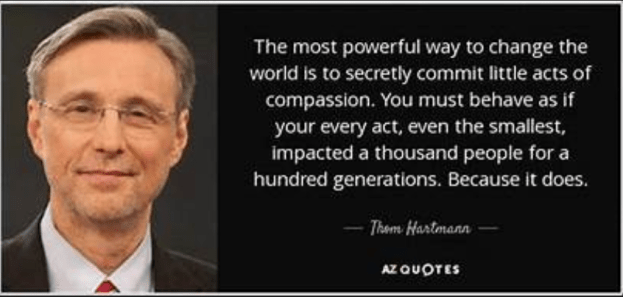
With the latest addition to his Hidden History Series, veteran author, journalist, Thom Hartmann, returns to discuss THE HIDDEN HISTORY OF BIG BROTHER IN AMERICA: HOW THE DEATH OF PRIVACY AND THE RISE OF SURVEILLANCE THREATEN US AND OUR DEMOCRACY. It was just published by Barrett-Koehler on international women’s day, March 8, 2022.
He explores how the government and corporate America misuse our personal data and shows how we can reclaim our privacy. Thom Hartmann documents exactly how the government and corporations are tracking our every online move and using our data to buy elections, employ social control, and monetize our lives. Thom Hartmann traces the history of surveillance and social control, looking back to how Big Brother invented whiteness to keep order, and how surveillance began to be employed as a way to modify behavior. As he writes, “The goal of those who violate privacy and use surveillance is almost always social control and behavior modification.”
Along with covering the history, he shows how we got to where we are today, how China — with its new Social Credit System — serves as a warning, and how we can and must avoid a similarly dystopian future. By delving into the constitutional right to privacy, Hartmann reminds us of our civil right and shows how we can restore it.
And particularly now, with the Russian invasion of Ukraine, cyberwarfare is a factor, whether control of information or disruption of infrastructure. We spoke with Thom Hartmann on March 9, 2020 via Skype.
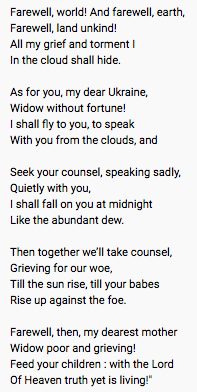
We end this edition of Forthright Radio, mindful of the suffering of the Ukrainian people enduring the crimes against humanity at the hands of Russian military forces at the behest of Vladimir Putin. First, Russians unplugged live – with Sting introducing his live performance. This is followed by Ukrainian poet/composer, Valentin Silvestrov’s, Prayer for Ukraine performed by the Kyiv Chamber Choir in 2014 as part of the Maidan Cycle. And finally, a little girl, Amelia, singing “Let It Go” in Ukrainian while sheltering in a crowded basement under Russian Bombardment.
Prayer for Ukraine
Links to articles/videos/films pertinent to this edition of Forthright Radio:
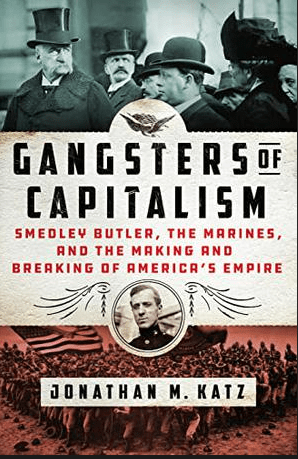
This interview was first broadcast as the sovereign nation of Ukraine was being invaded by the Russian Army. Terrible as this was, it was also an appropriate time to examine our own history, which Jonathan Katz has done in his most recent book, GANGSTERS OF CAPITALISM: Smedley Butler, The Marines, and the Making and Breaking of the American Empire, published in January 2022 by St. Martin’s Press.
He is an award winning journalist, whose earlier book, The Big Truck That Went By, chronicles his time in Haiti, where he was the only full-time American correspondent in Haiti, when the devastating earthquake struck on January 12, 2010 and the ensuing disasters brought on by the multiple failures of international aid projects. More than 230,000 people were killed.
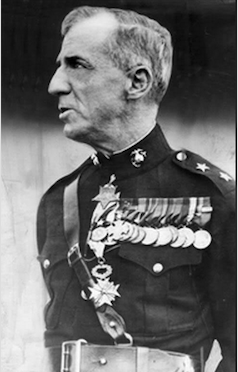
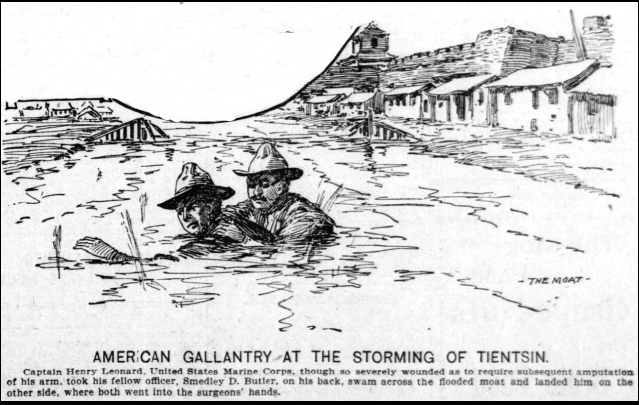
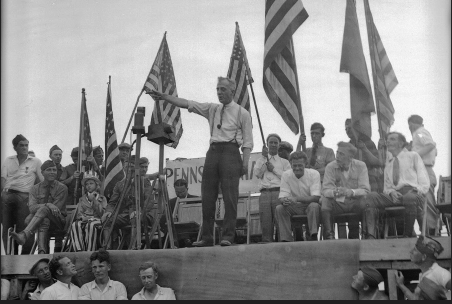
As he describes in our interview, Smedley Butler was there from the very beginning of the United States’ imperialism, first as a 16 year old lieutenant in the Spanish-American War, when we secured Guantanamo Bay, then on to Puerto Rico, The Philippines, China, Honduras, Panama, Nicaragua, Mexico, the Dominican Republic and Haiti.
After a long career in the Marines, in which he pioneered counter-insurgency methods and the militarization of police forces to enforce the prerogatives of capitalist oligarchs, who he eventually came to understand were calling the shots, he retired with the rank of General, the most decorated Marine in history, as well as the first of only 19 Marines to have been awarded the Medal of Honor twice.
He became the Head of Public Safety for the City of Philadelphia, where he militarized that city’s police force. He eventually synthesized his experiences and understanding from his years subduing nationalist forces in those many countries – as well as battling gangsters in Prohibition era Philadelphia – to write his book, War Is a Racket, published in 1935.
He wrote, ”War is a racket. It always has been. It is possibly the oldest, easily the most profitable, surely the most vicious. It is the only one international in scope. It is the only one in which the profits are reckoned in dollars and the losses in lives. A racket is best described, I believe, as something that is not what it seems to the majority of the people. Only a small ‘inside’ group knows what it is about. It is conducted for the benefit of the very few, at the expense of the very many. Out of war a few people make huge fortunes.”
He spent his final years promoting democracy here in the United States and fighting fascism here and abroad, as well as trying to prevent what became World War II. Smedley Butler died of cancer at the age of 59 on June 21, 1940.
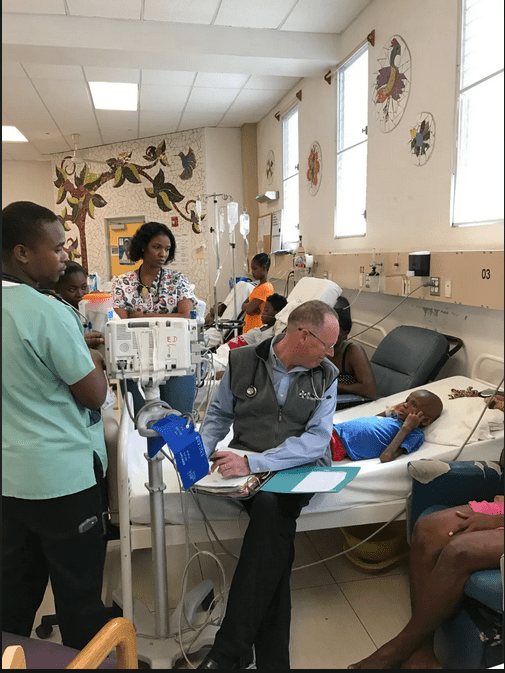
This edition of Forthright Radio ends with a tribute to Dr. Paul Farmer, who died on on February 21, 2022 at the age of 62. It is followed by Paul Farmer’s own voice speaking of his work.



















 Forthright Radio