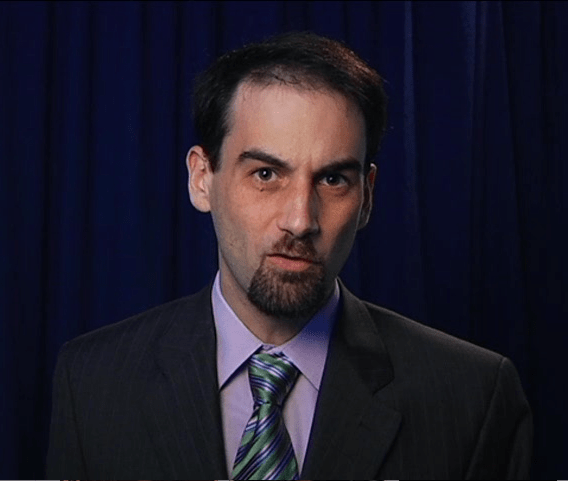
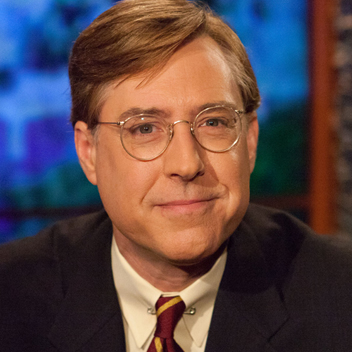
Thomas Frank is an historian, political analyst and journalist. Although he was a college Republican, he became highly critical of conservatism, and as you will hear in this interview, of the Democratic Party as well. A former columnist for The Wall Street Journal and Harper’s, Thomas Frank is the founding editor of the on-line magazine, The Baffler, and he writes regularly for The Guardian. Among his eleven books are WHAT’S THE MATTER WITH KANSAS? THE WRECKING CREW: HOW CONSERVATIVES RULE; PITY THE BILLIONAIRE: THE HARD-TIMES SWINDLE and THE UNLIKELY COMEBACK OF THE RIGHT; and LISTEN, LIBERAL: OR, WHAT EVER HAPPENED TO THE PARTY OF THE PEOPLE? His latest book is THE PEOPLE, NO: A BRIEF HISTORY OF ANTI-POPULISM, published by Metropolitan Books.
The latest in Thom Hartmann’s Hidden History series has just been released by Barret-Koehler Publishing, THE HIDDEN HISTORY OF MONOPOLIES: HOW BIG BUSINESS DESTROYED THE AMERICAN DREAM. In addition to his daily 3 hour radio program, he somehow finds the time and energy to write the Hidden History Series, and he has been generous enough to be our guest on Forthright Radio each time one is published.
Here’s what Ralph Nader writes in the forward to THE HIDDEN HISTORY OF MONOPOLIES: HOW BIG BUSINESS DESTROYED THE AMERICAN DREAM:
”This is the most important, dynamic book – small as it is – on the cancers of monopoly by giant corporations written in our generation. he goes on “Because he is by far the most erudite longtime national radio talk show host, he has had an uncanny sense of retrieving critical segments of American history, ignored by historians, regarding the suspicion and caution our forbears had about this artificial entity called the large corporation as it became more immune and more privileged than real human beings……” he goes on from there, but we’ll just let the Thom speak and you can hear for yourself why Nader has such high appreciation of the man.
You can find the past shows on the Forthright.media archives.
This special edition of Forthright Radio for August 26, 2020, celebrates the Centennial of the signing of the 19th Amendment to the US Constitution on August 26, 1920, after the very long, very hard struggle by women of different races and backgrounds to win the right to vote.
As our guest, Professor Martha S. Jones reminds us, this struggle is not over.
Martha S. Jones is the Society of Black Alumni Presidential Professor and Professor of History at The Johns Hopkins University. She is a legal and cultural historian, whose work examines how black Americans have shaped the story of American democracy.
Professor Jones is the author most recently of Vanguard: How Black Women Broke Barriers, Won the Vote, and Insisted on Equality for All, which will be published by Basic Books on September 8, 2020.
Her other books include Birthright Citizens: A History of Race and Rights in Antebellum America (2018), winner of numerous prestigious awards, and All Bound Up Together: The Woman Question in African American Public Culture 1830-1900, and a coeditor of Toward an Intellectual History of Black Women.
Professor Jones currently serves as a Co-president of the Berkshire Conference of Women Historians, and on the Executive Board of the Society of American Historians.
Other articles relating to the struggle for suffrage or pertinent to this interview include:
On the day that Henry Giroux finished his latest book, Race, Politics, and Pandemic Pedagogy: Education in a Time of Crisis, he graciously joined us for an interview. It will be published in 2021.
Henry Giroux is Paulo Freire Distinguished Scholar in Critical Pedagogy and Chair for Scholarship in the Public Interest at McMaster University.
He has written more than 56 books since his first book, Ideology, Culture and the Process of Schooling was published in 1981, and he has been generous with his time over the years as he published books such as Zombie Politics in the Age of Casino Capitalism; Disposable Youth: Racialized Memories, and the Culture of Cruelty; The Violence of Organized Forgetting: Thinking Beyond America’s Disimagination Machine; Disposable Futures: The Seduction of Violence in the Age of Spectacle; America at War with Itself; American Nightmare: The Challenge of US Authoritarianism; and The Terror of the Unforeseen.
We spoke with him on August 2, 2020 about the multiple crises with which we are faced.
Paul Pierson is the John Gross Professor of Political Science at UC Berkeley. LET THEM EAT TWEETS: HOW THE RIGHT RULES IN AN AGE OF EXTREME INEQUALITY is one of several books he has written with Jacob Hacker, who is director of the Institution for Social and Policy Studies and a Political Science Professor at Yale University. Their other books include American Amnesia: How the War on Government Led Us to Forget What Made America Prosper, Winner-Take-All Politics: How Washington Made the Rich Richer–and Turned Its Back on the Middle Class; Off Center: The Republican Revolution and The Erosion of American Democracy. Professor Pierson has also written many other books including the prize winning, Dismantling the Welfare State? Reagan, Thatcher and the Politics of Retrenchment.
Some articles referenced or relevant to the interview:
Patrick Cockburn is the winner of the Martha Gelhorn Prize, the James Cameron Prize, The Orwell Prize, Foreign Commentator of the Year numerous times. He has been a Middle East correspondent for the Financial times and the Independent, and is a frequent contributor to the London Review of Books.
His many books include Out of the Ashes: The Resurrection of Saddam Hussein, written with his brother, Andrew, prior to the war in Iraq, and republished as Saddam Hussein: An American Obsession; The Occupation: War and Resistance in Iraq; Muqtada: Muqtada al-Sadr, the Shia Revival, and the Struggle for Iraq; The Rise of Islamic State: Isis and the New Sunni Revolution;The Age of Jihad: Islamic State; and The Great War for the Middle East.
His latest book is WAR IN THE AGE OF TRUMP: THE FALL OF ISIS, THE BETRAYAL OF THE KURDS, THE CONFLICT WITH IRAN to be released by OR Books on July 7, 2020.
In this interview, we began by discussing the impact on the region of the assassination of General Qasem Soleimani by the Trump Administration on January 3, 2020.
The plight of the Kurds in Iraq and Syria, and their role in fighting the Islamist State, was discussed.
Patrick Cockburn’s intrepid journalism keeps us informed of the ever changing situation on the ground in the Middle East.
Jennifer Mercieca is an author, researcher, historian of American political rhetoric and Associate Professor in the Department of Communication at Texas A&M University, Dr. Jennifer Mercieca. She writes about American political discourse, especially as it relates to citizenship, democracy and the presidency. Her previous books are FOUNDING FICTIONS and THE RHETORIC OF HEROIC EXPECTATIONS: ESTABLISHING THE OBAMA PRESIDENCY. Her latest book, DEMAGOGUE FOR PRESIDENT: THE RHETORICAL GENIUS OF DONALD TRUMP will be published July 9, 2020 by Texas A&M University Press.
“Historical levels of polarization, a disaffected and frustrated electorate, and widespread distrust of government, the news media, and traditional political leadership set the stage in 2016 for an unexpected, unlikely, and unprecedented presidential contest.
Donald Trump’s campaign speeches and other rhetoric seemed on the surface to be simplistic, repetitive and disorganized to many. As DEMAGOGUE FOR PRESIDENT shows, Trump’s campaign strategy was anything but simple.
Articles referred to or pertinent to the interview:
What happens to a representative democracy when one party is no longer committed to the foundational notion everyone must be represented, equally? This is one of the questions David Daley addresses in his latest book, UNRIGGED: HOW AMERICANS ARE BATTLING BACK TO SAVE DEMOCRACY.
David Daley is a senior fellow for FairVote and the author of Ratf**ked: The True Story Behind the Secret Plan to Steal America’s Democracy, which helped spark the recent drive to reform gerrymandering. Dave’s second book, Unrigged: How Americans Are Battling Back to Save Democracy, chronicles the victories and defeats in state efforts to reform elections and uphold voting rights.
He is the former editor-in-chief of Salon.com, and the former CEO and publisher of the Connecticut News Project. He is a digital media fellow at the Wilson Center for the Humanities and the Grady School of Journalism at the University of Georgia. His work has appeared in the New Yorker, The Washington Post, The Guardian, New York magazine, the Atlantic, the Boston Globe, Rolling Stone. When writing for the Hartford Courant, he helped identify Mark Felt as the “Deep Throat” source for Bob Woodward and Carl Bernstein.
Some articles by David Daley or pertinent to this interview:
Daniel Q. Gillian is Julie Beren Platt and Marc E. Platt Presidential Distinguished Professor of Political Science at the University of Pennsylvania. His research interests focus on racial and ethnic politics, political behavior, political institutions, public policy and the American Presidency.
Professor Gillion’s first book, The Political Power of Protest: Minority Activism and Shifts in Public Policy, demonstrates the influential role of protest to garner a response from each branch of the federal government, highlighting protest actions as another form of constituent sentiment that should be considered alongside public opinion and voting behavior.
His book, Governing with Words: The Political Dialogue on Race, Public Policy, and Inequality in America, demonstrates that historically, the political dialogue on race offered by presidents and congressional members alters the public policy process and shapes societal and cultural norms to improve the lives of racial and ethnic minorities, illustrating that mere words are a powerful tool for combating racial inequality in America.
Professor Gillian’s most recent book is THE LOUD MINORITY: WHY PROTESTS MATTER IN AMERICAN DEMOCRACY, just published by Princeton University Press. It comes at a time when many of us have been confined to our homes for many weeks during this global pandemic and others protest, disregarding social distancing precautions and carrying rapid fire weapons to state capitals, protesting government stay at home orders. We asked him about this and more.
Here are links to some of the articles referenced in this interview:
Alan Hirsch’s latest book, A SHORT HISTORY OF PRESIDENTIAL ELECTION CRISES: (AND HOW TO PREVENT THE NEXT ONE), has just been published by City Lights Books.
Alan Hirsch is an Instructor in the Humanities and Chair of the Justice and Law Studies program at Williams College. He is the author of a number of other books including Impeaching the President: Past, Present, and Future and For the People: What the Constitution Really Says About Your Rights (coauthored with Akhil Amar). He received his law degree from Yale Law School. His work has appeared in the Washington Post, Los Angeles Times, Washington Times, Newsday, and the Village Voice. He also serves as a trial consultant and expert witness on interrogations and criminal confessions, testifying around the nation.
He focuses on four presidential election crises that left the nation with no clear winner: those in the years 1800, 1824 & 1876, 2000, and he notes that in twelve elections, fully 20% of all presidential elections, were too close for comfort.