Les AuCoin represented Oregon’s 1st Congressional District from 1975 to 1992. At the age of 32, he was the first Democrat to do so since 1936. After serving 18 years, he gave up his seat to run for the US Senate against incumbent Republican Senator Bob Packwood, who although winning that race, resigned under threat of expulsion in 1995 after allegations of sexual harassment, abuse and assault of women emerged.
In this interview he shares his thoughts and experiences as one of the first cohort to be seated after Richard Nixon’s resignation under threat of impeachment in 1974, “The Watergate Babies.”
It was recorded on December 18,1019, as the US House of Representatives was impeaching Donald J. Trump .
Born in the Civil Rights era of the Southern U.S., Susan Neiman has spent most of the last four decades in Berlin. She is the Director of The Einstein Forum. Her latest book is Learning from the Germans: Race and the Memory of Evil, published by Farrar, Straus and Giroux.
Among the many things she reminds us of in her book is that the Nazi regime lasted only 12 years – from 1933 to 1945. Likewise, the period we call “Reconstruction” also lasted only 12 years from 1865 to 1877. She quotes her colleague, the late Tony Judt: the historian’s task (is) “to tell what is almost always an uncomfortable story and explain why the discomfort is part of the truth we need to live well and live properly. A well-organised society is one in which we know the truth about ourselves collectively, not one in which we tell pleasant lies about ourselves”.
What can Americans learn from the Germans about confronting and moving on from our racist past toward more social justice? Susan Neiman has much to share of what she has learned from the Germans.
What can we learn of what Southerners have done and are doing to heal the wounds of our past? Susan has much to share of what she has learned in Mississippi and Alabama.
Christopher Ketcham has been a freelance writer for more than 20 years. His articles have been published in Harper’s, CounterPunch, National Geographic, Hustler, Penthouse, the New York Times, Pacific Standard, Sierra, Earth Island Journal, Vanity Fair, The New Republic, Rolling Stone, Mother Jones, Salon, and many other websites and newspapers large and small. He was a Knight Science Journalism Fellow at MIT in 2015-16, and he is currently a MacDowell Colony writing fellow in New Hampshire, whence he spoke to us. THIS LAND: HOW COWBOYS, CAPITALISM, AND CORRUPTION ARE RUINING THE AMERICAN WEST, published by Viking, is his first book.
THIS LAND: HOW COWBOYS, CAPITALISM, AND CORRUPTION ARE RUINING THE AMERICAN WEST is a hard hitting look at the battle now raging over the fate of the public lands in the American West.
An area of ancient pinyon and juniper forests larger than the state of Vermont, adapted over eons to the arid lands of the west, is being destroyed by machines such as these – turned into mulch for the planting of seeds of invasive species for forage for the most destructive invasive specie, Bos taurus, cows.
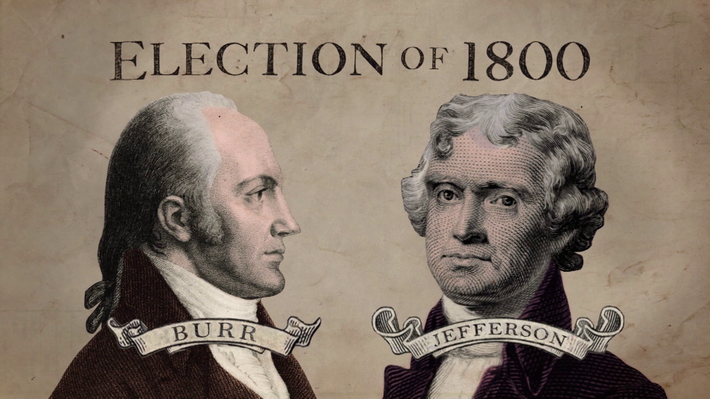
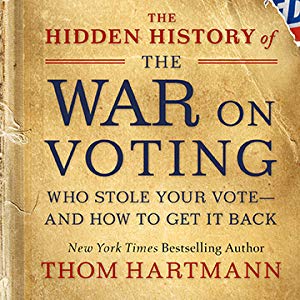
Thom Hartmann is a progressive national and internationally syndicated talk show host. He’s a New York Times bestselling, 4-times Project Censored Award-winning author of 24 books in print in 17 languages on five continents. Among his many books are Screwed: The Undeclared War Against The Middle Class and What We Can Do About It; Unequal Protection: How Corporations Became “People” – And How You Can Fight Back; Leonardo DiCaprio was inspired by Thom Hartmann’s book, The Last Hours of Ancient Sunlight, to make the movie “The 11th Hour” (in which he appears). His latest books are in his Hidden History Series: The Hidden History of Guns and the Second Amendment and The Hidden History of The Supreme Court and the Betrayal of America, both published by Berrett-Koehler Publishers. In it, Thom Hartmann address questions such as Why did the founders create the Supreme Court? What is judicial review – and how does it make the Supreme Court what thomas Jefferson, post-1803 – a despotic branch? How does the history of the US Constitution explain the Court’s frequent decisions in favor of the wealthy and corporations? The HAS the Court sided with popular opinion – and how have people successfully challenged the Court in the past? How did a 20th Century coalition of business and billionaires seize control of the American government, including the Supreme Court? How did America’s great democratic experiment end in a functional oligarchy? Most important, how can we change course in time to address the planetary crisis of climate change?
University of Notre Dame History professor, Darren Dochuk is the author of From Bible Belt to Sunbelt: Plainfolk religion, Grassroots Politics, and the Rise of Evangelical Conservatism, which has received numerous prizes and awards. He has also co-edited several other books in American history, including most recently, The Routledge History of the Twentieth-Century United States. His most recent book is ANOINTED WITH OIL: HOW CHRISTIANITY AND CRUDE MADE MODERN AMERICA, published by Basic Books.
“Power is never so overwhelming that there’s no room for resistance.” Henry Giroux
In this interview with Professor Henry Giroux, we discuss his latest book, THE TERROR OF THE UNFORESEEN, published by LARB Provocations, from The Los Angeles Review of Books. Just the latest of over 65 books he has written.
Henry Giroux is the McMaster University Chair for Scholarship in the Public Interest & The Paulo Freire Distinguished Scholar in Critical Pedagogy at McMaster University in Hamilton, Canada. The Toronto Star has named him one of the 12 Canadians Changing the Way We Think. He has also been named in Routledge’s Key Guides as one of the top fifty educational thinkers of the modern period. He is on the editorial and advisory boards of numerous national and international scholarly journals. He is on the Board of Directors for Truthout.
Henry Giroux is a regular contributor to a number of online journals including Truthout, Truthdig, and CounterPunch. He has published in journals including Social Text, Third Text, Cultural Studies, Harvard Educational Review, Theory, Culture, & Society, and Monthly Review.
His primary research areas are: cultural studies, youth studies, critical pedagogy, popular culture, media studies, social theory, and the politics of higher and public education. He is particularly interested in what he calls the war on youth, the corporatization of higher education, the politics of neoliberalism, the assault on civic literacy and the collapse of public memory, public pedagogy, the educative nature of politics, and the rise of various youth movements across the globe.
Since the death in 1967, of Koch patriarch, Fred Koch,
Charles Koch has governed the private corporation, Koch Industries, influencing the economy and politics of the United States as few individuals have ever done in history.
An early, lucrative investment was the acquisition of the Pine Bend Refinery, a “cash cow” for the Kochs for over 50 years. Conflicts with labor unions and violations of environmental laws marked Koch management of Pine Bend
In Kochland: The Secret History of Koch Industries and Corporate Power in America (Simon & Schuster, 2019), business journalist, Christopher Leonard, delves deeply into the history of the Koch family and businesses, whose products are foundational to the U.S. economy – from fertilizer for food to energy for transportation, industry and homes, to the fibers we wear and more.
Among its numerous acquisitions over the past 50 years, Georgia-Pacific was one of its biggest, affecting many communities, including Ft. Bragg, CA. The former mill site was bought from Koch Industries by the City of Ft. Bragg. Many are concerned about the toxic residues, including lead, arsenic, dioxin and PCBs.
Koch Network Infiltration of Public Schools ‘Harms Students, Teachers, and Our Democracy’: Report
In this interview recorded on July 25, 2019, John Taliaferro discusses the extraordinary life of George Bird Grinnell, largely forgotten to conservation history. His book, Grinnell: America’s Environmental Pioneer & His Restless Drive to Save the West, is published by Liveright Publishing, a division of W. W. Norton.
Grinnell is credited with being the first person of European descent to explore what is today Glacier National Park, as well as being instrumental in its creation
He was a founder of the Audubon Society and published The Audubon Magazine.
Grinnell was a prolific writer on many topics, including hunting, conservation, the ethnology of numerous Native American tribes, and novels about Jack, a Western boy.
Childless himself, he wrote the “Jack” books for his nephews:
In this edition of Forthright Radio, we bring you a recording of a panel discussion from the 2019 BZN International Film Festival, featuring Mike Mease, co-founder of Buffalo Field Campaign, and Doug Peacock, writer, naturalist, filmmaker and Green Beret combat medic, who is founder of Save The Yellowstone Grizzly.
It was recorded in the Hager Auditorium of the Museum of the Rockies on June 8, 2019.
Buffalo Field Campaign (BFC) is the only group working both in the field and in the policy arenas to stop the harassment and slaughter of America’s last wild buffalo.
Formalized as a 501(c)(3) nonprofit in 1997, we also protect the natural habitat of wild free-roaming bison and other native wildlife, and stand with First Nations to honor the sacredness of wild buffalo.
Our primary goal is to create permanent year-round protection for bison and the ecosystem they depend on—including respect for the migratory needs of this long-exploited and clearly endangered species.
Save the Yellowstone Grizzly (STYG) was founded by Doug Peacock in 2016 as a response to the U.S. Fish and Wildlife Service (FWS) statement published in the Federal Register on March 3, 2016, recommending the removal of grizzly bears in the Yellowstone ecosystem from their “threatened” status under the Endangered Species Act.
On June 3, 2016, Peacock drafted a letter to President Barack Obama which emphasized the FWS’s tragic dismissal of the importance of climate change: In the last decade, climate change has decimated the Yellowstone grizzly’s most important food, the white bark pine nut.
Today, all grizzlies south of Canada are threatened by global warming, which has already decimated the Yellowstone grizzly’s most important food source, the whitebark pine nut. In August 2018, Save the Yellowstone Grizzly filed an amicus brief to address the most crucial issue and deficiency in the government’s case, climate change. Judge Christensen accepted the brief on August 29, the day before the federal hearing on delisting.