Category Archives: Science

Earth Day Network/March for Science

In the first half hour, our guest is Gretchen Goldman, of the Union of Concerned Scientists. In the second half hour our guest is Kathleen Rogers, president of Earth Day Network.

Ordinarily, I don’t organize Forthright Radio shows around declared months or day. Every month is African History Month or Poetry Month. Every day is international women’s day or Earth Day, but this year is distinctly different from any I can remember. Our species, Homo Sapiens, which is the Latin for wise man, is acting with disastrous lack of wisdom, and the biological & geological evidence of ongoing disaster is mounting as we speed willy-nilly into the anthropocene. But even as the forces of greed and ignorance accelerate their efforts wreaking environmental chaos and destruction, those who see this folly are rising and resisting to protect the biosphere.  One of them is our first guest, Gretchen Goldman.

Gretchen Goldman is the research director for the Center for Science and Democracy at the Union of Concerned Scientists. Dr. Goldman leads research efforts on the role of science in public policy, focusing on topics ranging from scientific integrity in government decision-making, to political interference in science-based standards on hydraulic fracturing, climate change, sugar, and chemicals.
Before joining the Union of Concerned Scientists, Dr. Goldman was at the Georgia Institute of Technology, where she was a postdoctoral research fellow working on statistical modeling of urban air pollution for use in epidemiologic studies of acute human health effects.

Kathleen Rogers, president of Earth Day Network, has worked for more than 20 years as an environmental attorney and advocate, focusing on international and domestic environmental public policy and law. Under her leadership, Earth Day Network has developed a significant role in advancing the new green economy and has emerged as a dynamic year-round policy and activist organization. Earth Day Network now reaches into 192 countries, embraces new constituencies — including youngsters and people of color — and integrates civic participation into each of Earth Day Network’s programs and activities.

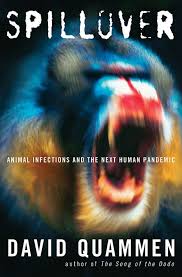
David Quammen- Spillover: Animal Infections & the Next Human Pandemic


images

In this edition of Forthright Radio, originally broadcast on May 1, 2013, intrepid journalist, David Quammen, discusses his book, SPILLOVER: ANIMAL INFECTIONS& THE NEXT HUMAN PANDEMIC,  in which he tracks down the animal origins of such diseases we humans are now susceptible to, including viruses such as HIV-AIDS, SARS, EBOLA, HENDRA, MARBURG, and INFLUENZA, and bacteria such as LYME DISEASE and Q FEVER.

h_research_global-emerging-infectious-diseases-map.jpgAmong the questions he investigates are: Why do new diseases emerge when they do, where they do, as they do, and not elsewhere, other ways, at other times? Is it happening more now than in the past? And perhaps the biggest question: What sort of deadly bug, with what unforeseen origins and what inexorable impacts, will emerge next?
grooming2.jpg

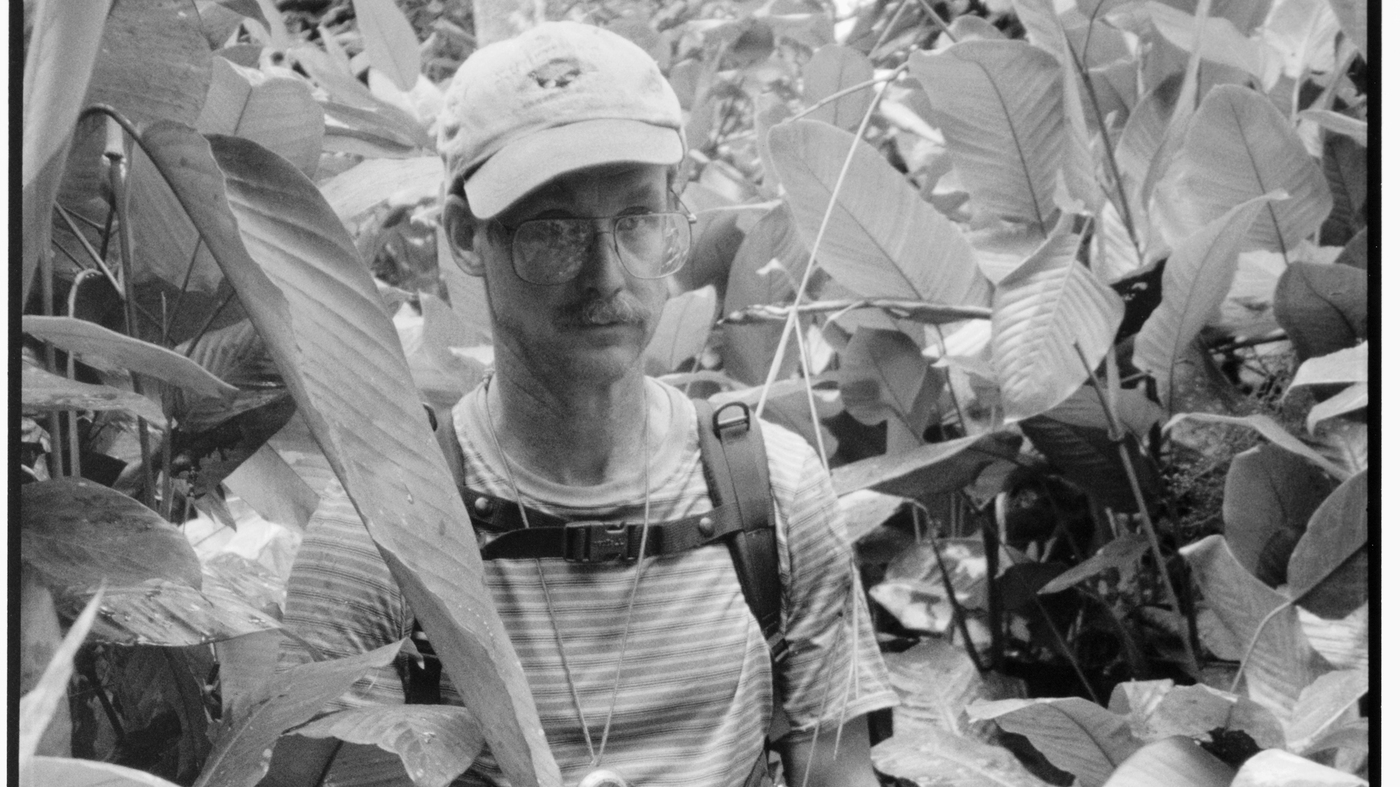
David Quammen is the author of four books of fiction, and seven acclaimed books of nonfiction, including THE RELUCTANT MR. DARWIN and THE SONG OF THE DODO. He served as the Wallace Stegner Chair of Western American Studies at Montana State University from 2007 – 2009. He is a contributing writer for National Geographic magazine. SPILLOVER: ANIMAL INFECTIONS AND THE NEXT HUMAN PANDEMIC is more than a page turner about how microbes cross from animal species into humans and evolve into infectious diseases, it is also a chronicle of the many far flung journeys David Quammen has taken to some of the most remote parts of the globe, to interview the scientists in the field, who search for the animal reservoirs from which they come.

david_wide-a960150228d34236c602f3043f38a988ba363451.jpg

images-1.jpeg

Articles pertinent to this interview:

Infection of Wildlife Biologist Highlights Risks of Virus Hunting https://theintercept.com/2022/07/02/virus-infection-bat-biosafety/

As Covid recedes in US a new worry emerges: wildlife passing on the virus https://www.theguardian.com/world/2021/nov/11/us-covid-wildlife-virus

Matthew Wolf-Meyer- The Slumbering Masses: Sleep, Medicine & Modern American Life

This edition of Forthright Radio from November 11, 2012 came up in conversation (12-11-17), so we thought it might be of interest to our web listeners, as well.

As the nights grow longer, and the season approaches of long winter naps, it seems like a good time to discuss one of the inevitable aspects of life – sleep. And this seemingly simple topic is not so simple for more and more people in the modern world. And it really is quite mysterious. Neither doctors nor scientists can even tell us what sleep IS, much less what natural sleep might be. And then, there are the effects of capitalism on sleep.

To discuss these things and more, we have with us Matthew Wolf-Meyer, who was (then) a Professor of Anthropology, at UC Santa Cruz. Matthew Wolf-Meyer received his Ph.D. from the Department of Anthropology at the University of Minnesota, specializing in medical anthropology, and the social study of science and technology. He holds previous degrees in Literature, Science Fiction Studies, and American Cultural Studies.

In January, 2016, he joined the faculty of the Anthropology Dept. at SUNY Binghamton. His work focuses on medicine, science and media in the United States to make sense of major modern-era shifts in the expert practices of science and medicine and popular representations of health.    His book The Slumbering Masses: Sleep, Medicine and Modern American Life, published by The University of Minnesota Press, was the first book-length social scientific study of sleep in the United States and won the New Millennium book prize in 2013. It offers insights into the complex lived realities of disorderly sleepers, the long history of sleep science, and the global impacts of the exportation of American sleep.

41Ifp5ZXgSL._AC_US218_

Robert Proctor Golden Holocaust: The Origins of the Cigarette Catastrophe and the Case for Abolition

Professor Robert Proctor specializes in 20th century science, technology, and medicine, especially the history of controversy in those fields, and projects on scientific rhetoric, the cultural production of ignorance (agnotology), and the history of expert witnessing. He also does work on human origins–including changing notions of the oldest tools, art and fire; changing body imagery, the history of molecular anthropology, changing archaeological techniques and images of “humaness,” etc. the history of global creationism and of Evo Devo, catastrophic geology, global climate change and environmental policy.

Some of his earlier books include RACIAL HYGIENE: MEDICINE UNDER THE NAZIS; CANCER WARS: HOW POLITICS SHAPES WHAT WE KNOW AND DON’T KNOW ABOUT CANCER; and VALUE-FREE SCIENCE? PURITY AND POWER IN MODERN KNOWLEDGE. He is a fellow of the American Academy of Arts and Sciences, and he was a senior scholar in residence at the U.S. Holocaust Research Institute.

This interview was originally broadcast on February 15, 2012.

Articles referred to or pertinent to this interview:

Big Tobacco is killing the planet with plastics. No smokescreen should be allowed to hide that https://www.theguardian.com/global-development/2022/may/26/big-tobacco-is-killing-the-planet-with-plastics-no-smokescreen-should-hide-that-acc

Humans used tobacco 12,300 years ago, new discovery suggests https://www.bbc.com/news/world-us-canada-58884119

Smoking linked to faster cognitive decline in men http://latimes.com/business/la-fi-tobacco-20120126,0,6096911.story