Author Archives: forthrightradio

The House on Coco Road w/Damani Baker & Belvie Rooks

This film is so many things. It’s a family history of sorts, hence the title, THE HOUSE ON COCO ROAD, but it’s also a chronicle of the historic revolution in the tiny island of Grenada by the New Jewel Movement (Joint Endeavor for Welfare, Education and Liberation), co-founded by Maurice Bishop and Bernard Coard, and the destabilization under the Ronald Reagan regime, leading to the invasion and overthrow of the government there. As if that weren’t enough, it also chronicles the rise – and government repression of – revolutionary Black Activism in the United States, featuring Angela Davis and her sister, Fania Davis, as well as the director’s mother, Fannie Haughton. I don’t know how they got this all into a mere 79 minutes, without making it feel rushed or overfull, but the result is a beautiful, important film rich in both historical facts and emotional, social and cultural realities.

th-5.jpg

Damani Baker is a native of the San Francisco Bay Area, who is one of Filmmaker Magazine’s “25 new faces in independent film”. His career spans documentaries, music videos, museum installations and advertisements. Some of Damani Baker’s documentaries include The House on Coco Road, which revisits the events and circumstances of the 1983 U.S. invasion of Grenada, and Return, an award-winning film that explores the genius of traditional African medicine. He directed music videos for Maiysha’s single “Wanna Be”, which was nominated for a 2009 Grammy,  and Morley’s “Women of Hope”, inspired by pro-democracy activist Aung San Suu Kyi. His first feature documentary, Still Bill, was on the life and music of Bill Withers.  His current projects include over 10 films for museums in Nigeria and Chattanooga, Tennessee. These films include interviews with President Bill Clinton, Dr. Kofi Annan and President Ellen Johnson Sirleaf.  In addition, he is a professor at Sarah Lawrence College’s Film and New Media Department, the director of the Quest forGlobal Healing Film Series in Bali, Indonesia and media collaborator with the International Budget Partnership, tracking government transparency through budgets around the world.
belvie_rooks.jpg

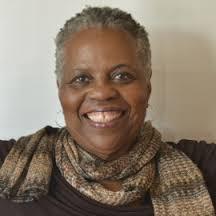
Belvie Rooks is a producer of The House on Coco Road. She is Co-Founder of Growing a Global Heart. She is a writer, educator and producer whose work weaves the worlds of spirituality, feminism, ecology and social justice. She is a former board member of Bioneers, The Urban Habitat Program, and the Positive Futures Network/Yes Magazine, and is currently Chair of the Board of the Ella Baker Center for Human Rights, as well as a board member of the Institute for Noetic Sciences, and the Jessie Smith Noyes Foundation. She is a Core Faculty member of Holy Names University’s Culture and Spirituality Program.
Her published works have appeared in a number of books, publications and anthologies including: The Same River Twice: Honoring the Difficult by Alice Walker (Scribner); My Soul is a Witness: African American Women’s Spirituality (Beacon Press); she was Co-Editor of Paris Connections: African American Artists in Paris, which was an American Book Award winner.

Fannie.jpg

Fannie Haughton is Damani Baker’s mother, whose family moved from share cropping in Louisiana to Los Angeles in the 1950s. After having been told she “wasn’t college material”, she did very well at Cal State LA & transferred to UCLA, where she met Angela Davis, becoming her Teaching Assistant, as well as life long friend and supporter. After experiencing the repression of Black Activists and the deteriorating situation in urban America in the Ronald Reagan presidency, she moved her young family to Grenada in 1982.

th-2.jpg   th-1.jpg

Angela Davis was a young political activist and philosophy professor at UCLA, when she refused to disavow her membership in the Communist Party & was fired under the Ronald Reagan governorship. She was prosecuted for conspiracy involving the 1970 armed take-over of a Marin County, CA courthouse, in which 4 people were killed, but she was acquitted.

Fania-1.jpg

Fania Davis is Angela Davis’s sister and good friend of Fannie Haughton. They considered fleeing to Cuba to avoid the repression associated when Angela went under ground after being accused of conspiracy in the George Jackson/Marin County courtroom take over.
Maurice_Bishop_imfo.jpg


Ronald.jpg

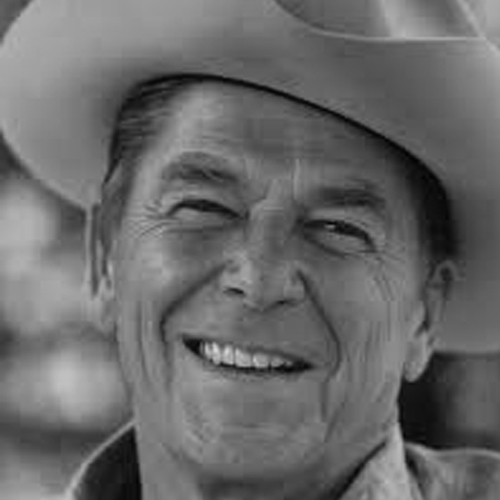
As Governor of CA, Ronald Reagan ordered the firing of Angela Davis from UCLA, as well as other repressive measures, including the closing of most of the state’s mental institutions, without providing for the displaced inmates.

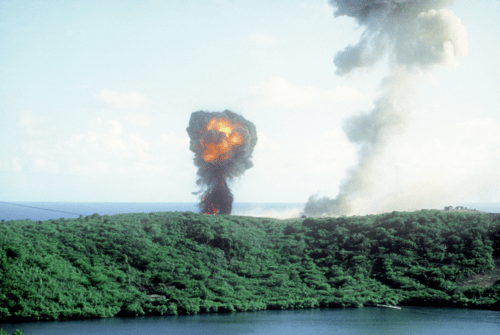
As president, in Ronald Reagan’s imagination, the 10,000 airstrip being built on the tiny island of Grenada (12 mi x 21 mi, population 100,000) with international assistance to increase tourism, and with private firms from the U.S., Britain doing much of the work, could only be explained as Soviet/Cuban militarization. He ordered destabilization of the new government and then, an invasion by the US military.
Damani2.jpg

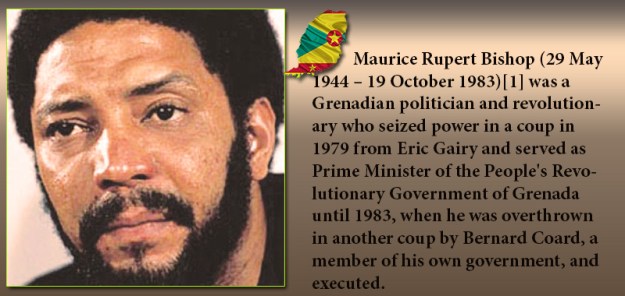
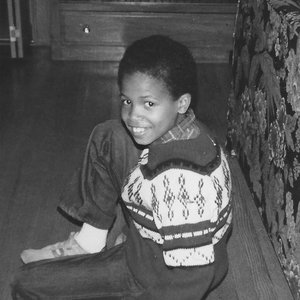
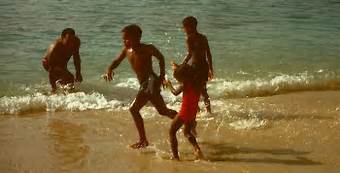
9 year old Damani Baker’s experience was quite the opposite. Grenada was a place safe for children, where the Prime Minister, Maurice Bishop, was like an uncle, women had positions of power and health care was a right. He & his family hid under their bed during the 3 days of US bombardment of what had been their paradise.
th-6.jpg

th-4.jpg

18010273_10154533012918424_4898549258470305742_n.jpg

th-3.jpg

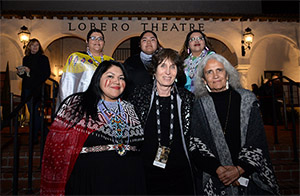
TRIBAL JUSTICE: Anne Makepeace & Yurok Tribal Judge Abby Abinanti

55-tribaljustice.jpg

Two judges… two tribes… one goal: restoring justice.

abby_10_350x350.jpg

The Honorable Abby Abinanti
Abby Abinanti, Chief Judge of the Yurok Tribe on the North Coast of California, is the first Native American woman to pass the California bar exam. She established the first tribal-run clean slate program in the country to help members expunge criminal records, and focuses on keeping young people out of jail, in school and with their people. She has also served as Appellate Judge for the Colorado River Indian Tribe; Judge for the Hopi Tribal Court and Shoeshone-Bonnock Tribal Court; Chief Magistrate on the Court of Indian Offenses for the Hoopa Valley Tribal Court; and Tribal Courts Evaluator for the Indian Justice Center and the American Indian Justice Center.

claudette_10_350x350.jpg

The Honorable Claudette White
Judge White has served as Chief Judge for the Quechan Tribal Court since 2005. She also rides circuit, serving in tribal courts throughout Southern Arizona and California, including the Fort McDowell Indian Community, Ak-Chin Indian Community, Salt River Pima Maricopa Indian Community and Tonto Apache Tribal Courts. She is President of the Arizona Indian Judges Association, and is a member of the Arizona Tribal, State and Federal Court Forum and the newly formed California Tribal Court/State Court Forum. She works closely with families, state court judges, probation officers and social workers to ensure the best outcomes for families and children.

51-tribaljustice.jpg

Anne Makepeace has been a writer, producer, and director of award-winning independent films for more three decades. Her new film, Tribal Justice,  premiered at the Santa Barbara International Film Festival just this past February 2017. Her previous documentary, We Still Live Here: Âs Nutayuneân, about the return of the Wampanoag language, had its broadcast premiere on the PBS series Independent Lens in 2011. The film has won many awards, including the Full Frame Inspiration Award and the Moving Mountains Award at Telluride MountainFilm for the film most likely to effect important social change. The $3000 MountainFilm prize went directly to the Wampanoag Language Reclamation Project, enabling them to launch their first-ever language immersion camp for children. We Still Live Here was funded by ITVS, the Sundance Documentary Fund, the LEF Foundation, and the National Science Foundation, among others. Makepeace was able to complete the film with fellowships from the Guggenheim Foundation and the Radcliffe Institute for Advanced Study. Other recent films by Anne Makepeace include: I. M. PEI: Building China Modern ,(PBS broadcast on American Masters in 2010), and her Emmy nominated feature documentary Rain in a Dry Land (lead show on PBS P.O.V. 2007), which chronicled the journey and resettlement of two Somali Bantu refugee families from Africa through their first two years in America. She won a National Prime Time Emmy for her American Masters/PBS documentary Robert Capa in Love and War, which premiered at Sundance in 2003. Coming to Light, her documentary about Edward S. Curtis, also premiered at Sundance, was short-listed for an Academy Award in 2000, broadcast on American Masters in 2001, and won many prizes, including the O’Connor Award for Best Film from the American Historical Association, an Award of Excellence from the American Anthropological Association, a Gold Hugo from Chicago, Best Documentary at Telluride, and many others. Her first documentary, Baby It’s You, premiered at Sundance, was broadcast as the lead show on P.O.V. in 1998, and screened at the Whitney Biennial 2000.

left-right-abby_01.jpg

Yurok Tribal Judge Abby Abinanti with Humboldt County Judge Christopher Wilson

left-right-claudette_01.jpg

Quechan Tribal Judge Claudette White & Imperial County Judge Juan Ulloa

600.jpg

Judge Abby Abinanti presiding in the Yurok Tribal Court.

“The tribal courts both incorporate traditional values and hold up an example to the nation about the possibilities of alternative dispute resolution. [They] have much to offer to the tribal communities, and much to teach the other court systems operating in the United States.
”          —

The Honorable Sandra Day O’Connor, former Supreme Court Justice

A California Law School Reckons With the Shame of Native Massacres https://www.nytimes.com/2021/10/27/us/hastings-college-law-native-massacre.html

Finding Kukan/Big Sonia

As we have done each May for the last 10+ years, Forthright Radio is going to the movies, specifically reviewing documentaries from the upcoming Mendocino Film Festival. Today our show is in 2 parts. In the first, we interview Robin Lung, producer/director of FINDING KUKAN, a sort of detective story to find a long forgotten, lost film, and the almost forgotten woman who produced it, Li Ling-Ai.

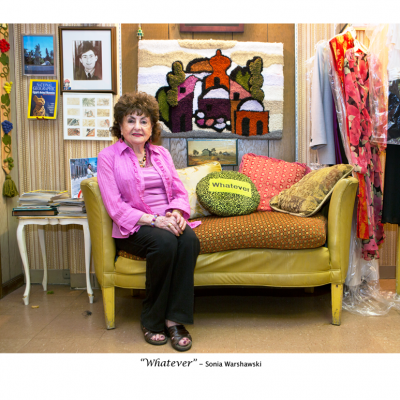
In the second segment, we speak with Leah Warshawski and Todd Soliday about their film, BIG SONIA. It’s about the amazing Sonia Warshawski, who survived 3 concentration camps, 2 beatings from SS guards, each of which almost killed her, and then, on the very day Bergen Belsen was liberated by the British, a bullet to the chest, which also almost killed her. Today, she is not only alive in her nineties, but she is a thriving, beloved member of her Kansas City community. And if you think this is just another depressing story of cruelty and brutality, you don’t know Sonia. We hope you’ll stay tuned to hear about her.

Among the things that unite these two films are: they are both about women with indomitable spirits, who are determined to get the truth out about unimaginable cruelty and atrocities. They are both about events that happened in WWII, one in Europe the other in Asia. They are both about women with unique fashion sense, of great longevity and spunk.

li-ling-ai-e1266620711433.jpg

FINDING KUKAN:
It’s about an Academy Award-winning color documentary about World War II China, that has been lost for decades. An uncredited female producer from the early days of Hollywood. The mystery behind their disappearance from history.
In the 1930s, China risked collapse under the onslaught of Japan’s military juggernaut. Chinese-American firebrand Li Ling-Ai decided to jolt Americans into action with a new medium: 16mm Kodachrome color film. She hired photojournalist, Rey Scott, to travel to China and document the war-torn country, including the massive bombing of the wartime capital. Their landmark film,  Kukan: The Battle Cry of China,  was screened for President Roosevelt at the White House, and received one of the first Academy Awards for a feature documentary in 1942. So, how come we have  never heard of Li Ling-Ai? And why have all copies of Kukan disappeared? Our guest, Filmmaker Robin Lung, turns detective to uncover this forgotten story.

th-2.jpg

Robin Lung is a 4th generation Chinese American, who was raised in Hawai‘i.  For over 15 years, she has been bringing untold minority stories to film. A graduate of Stanford University and Hunter College in NYC, Robin Lung made her directorial debut with Washington Place: Hawai‘i’s First Home, a 30-minute documentary for PBS Hawai‘i about Hawai‘i’s historic governor’s mansion and the home of Queen Lili‘uokalani. She was the associate producer for the national PBS documentary, Patsy Mink: Ahead of the Majority (aired October 2008), Hawai‘i unit producer for acclaimed film Vivan Las Antipodas!, unit producer for NOVA’s Killer Typhoon, and producer/director for numerous short documentaries for the Historic Hawai‘i Foundation.

BIG SONIA:

Whatever-400x400.png

In the second segment we move to the other theater of WWII, the Nazis’ march across Europe, specifically the invasion of Poland in Sept. 1939,  and what we have come to know as The Holocaust.

Here’s some of the description of the film on the Mendocino Film Festival website:
A “diva” known for wearing leopard print and high heels, Holocaust survivor Sonia Warshawski, serves as a bridge between cultures and generations, while continuing to run her late husband’s tailor shop in Kansas City. She miraculously survived concentration camps, death camps, and being shot in the chest on Liberation Day, but now she faces new challenges: the mall, where she works at her shop is about to close its doors, and the risk of forced retirement looms on the horizon. And unbelievably, the voices of Holocaust deniers seem to be getting louder & stronger. What will she do?

Leah Warshawski
Producer | Co-Director
Leah Warshawski produces documentary-style features, television, commercials, and branded entertainment in remote parts of the world. Her first feature, FINDING HILLYWOOD (2013) won 6 awards, and screened at more than 65 festivals. Leah’s career in film began in Hawaii, working in the marine department for LOST and HAWAII. She is currently working on the feature doc PERSONHOOD (2017-18), and advises filmmakers on outreach, marketing and hybrid distribution plans. In addition, Leah co-founded rwandafilm.org.

Todd Soliday
Co-Director | DP | Post Supervisor | Editor | Motion Graphics
Todd Soliday is a jack-of-all-trades with 25 years experience in production and post production. He specializes in documentary storytelling and adventure films such as PLATINUM (2007). He was post-production supervisor for FINDING HILLYWOOD. Recent feature documentary projects include OUT OF LUCK (2015) and THE BREACH (2014). He and Leah are married.

Earth Day Network/March for Science

In the first half hour, our guest is Gretchen Goldman, of the Union of Concerned Scientists. In the second half hour our guest is Kathleen Rogers, president of Earth Day Network.

Ordinarily, I don’t organize Forthright Radio shows around declared months or day. Every month is African History Month or Poetry Month. Every day is international women’s day or Earth Day, but this year is distinctly different from any I can remember. Our species, Homo Sapiens, which is the Latin for wise man, is acting with disastrous lack of wisdom, and the biological & geological evidence of ongoing disaster is mounting as we speed willy-nilly into the anthropocene. But even as the forces of greed and ignorance accelerate their efforts wreaking environmental chaos and destruction, those who see this folly are rising and resisting to protect the biosphere.  One of them is our first guest, Gretchen Goldman.

Gretchen Goldman is the research director for the Center for Science and Democracy at the Union of Concerned Scientists. Dr. Goldman leads research efforts on the role of science in public policy, focusing on topics ranging from scientific integrity in government decision-making, to political interference in science-based standards on hydraulic fracturing, climate change, sugar, and chemicals.
Before joining the Union of Concerned Scientists, Dr. Goldman was at the Georgia Institute of Technology, where she was a postdoctoral research fellow working on statistical modeling of urban air pollution for use in epidemiologic studies of acute human health effects.

Kathleen Rogers, president of Earth Day Network, has worked for more than 20 years as an environmental attorney and advocate, focusing on international and domestic environmental public policy and law. Under her leadership, Earth Day Network has developed a significant role in advancing the new green economy and has emerged as a dynamic year-round policy and activist organization. Earth Day Network now reaches into 192 countries, embraces new constituencies — including youngsters and people of color — and integrates civic participation into each of Earth Day Network’s programs and activities.

Joan Walsh

Joan Walsh is The Nation’s National Affairs Correspondent and an MSNBC political analyst. She is the author of What’s the Matter With White People? Finding Our Way in the Next America.

Before joining The Nation, Joan Walsh was Salon’s very first news editor. She served as editor in chief for six years.

Before joining Salon, she worked as a consultant on education and poverty issues for community groups and foundations, including the Rockefeller Foundation and Annie E. Casey Foundation. She’s written for publications ranging from Vogue to The New York Times, Washington Post, Los Angeles Times, and the San Francisco Chronicle. And as baseball season has just begun, it seems appropriate to mention that she is an avid baseball fan, & she’s the co-author of Splash Hit: The Pacific Bell Park Story, about the building of the San Francisco Giants waterfront stadium. We welcome you to Forthright Radio, Joan Walsh.

L. A. Kauffman – Direct Action: Protest & the Reinvention of American Radicalism

L.A. Kauffman has spent more than thirty years immersed in radical movements, as a journalist, historian, organizer, and strategist. Her writings on grassroots activism and social movement history have been published in The Nation, The Progressive, Mother Jones, the Village Voice, and many other venues.

L.A. Kauffman was a central strategist of the two-year direct action campaign that saved more than 100 New York City community gardens from bulldozing in 1999; she masterminded the campaign’s most notorious action, the release of 10,000 crickets in One Police Plaza during a city land auction. She served as a street tactician, direct-action trainer, and movement analyst during the turn-of-the-millennium global justice movement; her widely cited Free Radical column chronicled the movement’s upsurge and post-9/11 collapse.

Kauffman was the mobilizing coordinator for the massive February 15, 2003 antiwar protest in New York City, creating the event’s iconic “World Says No to War” poster, overseeing online outreach, and assembling the massive grassroots street operation, that distributed more than 2 million leaflets in a matter of weeks. She continued in this role through the years of major antiwar protests.

More recently, she coordinated successful campaigns to save two iconic New York City public libraries from being demolished and replaced by luxury towers.

Her latest book, Direct Action: Protest & the Reinvention of American Radicalism, is published by Verso.

Steven A. Ramirez The Case for the Corporate Death Penalty: Restoring Law & Order on Wall St.

Remember the Financial Crisis of 2008, when the shenanigans of Wall Street and the megabanks nearly crashed the global economic order? Remember the unfolding horror of families being put out on the streets, their possessions on their former front lawns? Remember the swift billions of tax payer dollars handed over to banks that were too big to fail, and the 10s and hundreds of millions of dollars quickly paid in bonuses to the very perpetrators, who were too big to jail – or as Matt Taibbi put it, “TOO SMUG TO JAIL”? Recent government figures put the cost to more than $20 trillion dollars, but how can one reckon the cost in human suffering? The soaring unemployment, the wiping out of retirement savings, the suicides, the massive transfer of wealth from the middle class and the most needy to the least needy? Remember President Obama telling the nation that, while what they did “was just immoral or inappropriate or reckless, a lot of that stuff wasn’t necessarily illegal”?

Our guest is Steven A. Ramirez, law professor and Associate Dean for Research and Faculty Development, and Director of the Business and Corporate Governance Law Center, at Loyola University School of Law. He and his wife, Mary Kreiner Ramirez, who is a Law Professor at Washburn University School of Law, have co-written an eye-opening book, THE CASE FOR THE CORPORATE DEATH PENALTY: RESTORING LAW AND ORDER ON WALL STREET, just published by New York University Press. In it, they lay out precisely, and in great depth, how and why criminal charges can, and should, be brought for the fraud and malfeasance perpetrated on the American public, and indeed nearly destroying the world economic order, and yet not a single senior executive has been indicted on any criminal charges, although ample evidence was provided to the Department of Justice and other agencies with the power to penalize wrong doing. As they note, in many cases, the statute of limitations has not run out.

Professor Ramirez is well qualified to establish this, since he served as a Senior Attorney for the Federal Deposit Insurance Corporation, as well as an Enforcement Attorney with the Securities and Exchange Commission. He has published extensively in the areas of law and economics, corporate governance and financial regulations. In addition to this latest book, THE CASE FOR THE CORPORATE DEATH PENALTY: RESTORING LAW AND ORDER ON WALL STREET, his books include, Lawless Capitalism: the Subprime Crisis and the case for an economic rule of law (NYU Press, 2013) and The Economics of Discrimination, in The Encyclopedia of Law and Society (2007)

Ray McGovern, Veteran CIA Analyst Co-founder of Veteran Intelligence Professionals for Sanity

th-8.jpg

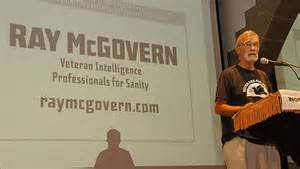
Ray McGovern was a CIA analyst for 27 years, from 1963 to 1990, where he chaired National Intelligence Estimates and prepared the President’s Daily Brief, which he briefed one-on-one to President Ronald Reagan’s five most senior national security advisers from 1981 to 1985.  He received the Intelligence Commendation Medal at his retirement, but he returned it in 2006 to protest the CIA’s involvement in torture.  In 2003 he co-found Veteran Intelligence Professionals for Sanity. He speaks fluent Russian and has studied Russia for more than 50 years.

In this interview originally broadcast on January 18, 2017, he discusses Obama’s commutation of Chelsea Manning’s sentence, the ethics of whistle-blowing, comparing her case with those of General David Petraeus, who became CIA Director, and General Cartwright.

th-4.jpg

Pre-emptive leaks by government agencies.

The Stuxnet Virus used against Iran, destroying 100s of their centrifuges, introducing a whole new kind of warfare: cyberwarfare. Russia’s proposals for a treaty to govern cyberwar, which have been rebuffed ever since.

th-2.jpg

Allegations of Russian interference in the 2016 elections vs. wikileaks revealing the efforts by the Democratic National Committee to sabotage Bernie Sanders’ campaign.

th-6.jpg

Director Colby’s testimony that the CIA controls just about everyone in the US media & his subsequent firing.

th-5.jpg

The popular vote vs the Electoral College.

Donald Trump’s relationship with the “Intelligence Community” & the rise of “The Deep State”.  “After 9/11 everything changed…” Syria as a proxy war… and more


Benjamin Madley – AN AMERICAN GENOCIDE: The United States and the California Indian Catastrophe 1846-1873


Benjamin Madley is an historian of Native America, the United States, and genocide in world history. Born in Redding, California, Professor Madley spent much of his childhood in Karuk Country near the Oregon border, where he became interested in the relationship between colonizers and indigenous peoples. He writes about American Indians, as well as colonial genocides in Africa, Australia, and Europe, often applying a transnational and comparative approach. He is a professor of history at the University of CA at Los Angeles.  An American Genocide: The United States and the California Indian Catastrophe, 1846-1873 is his first book.  It is published by Yale University Press.  Professor Benjamin Madley, We welcome you to Forthright Radio.

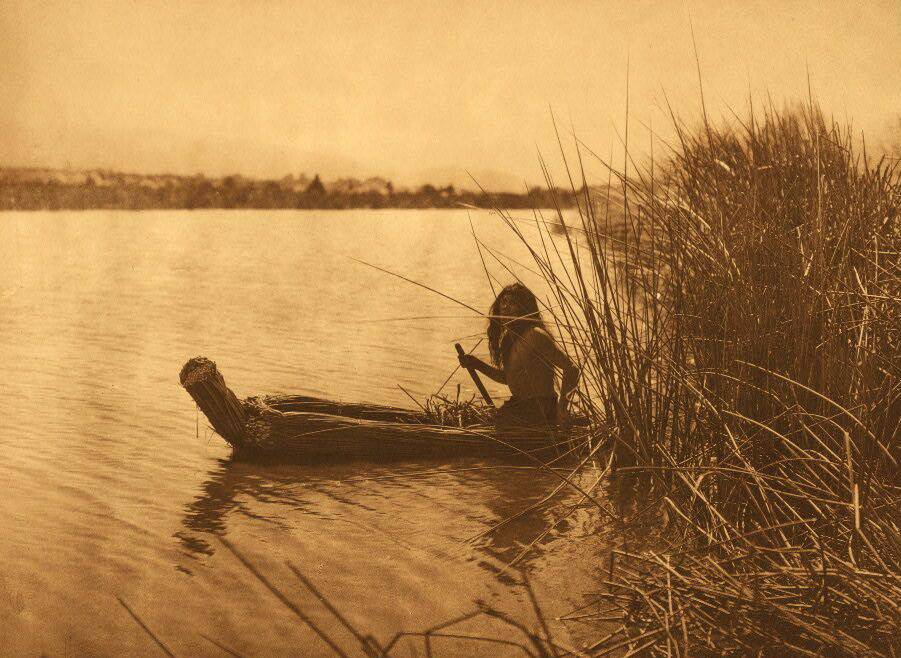
fire-drill-koskimo.jpgThe place we now call CA, was unknown to non-Indians until March 1543, when Spaniards first explored the coast, but it wasn’t until 226 years later, in 1769, that Spain sent soldiers and Franciscan missionaries north from Mexico to colonize it, to preempt British, Dutch and Russian expansion, and to protect northern Mexico’s silver mines.  At that time, there were about 310,000 native people living there, which seems small compared to California’s current population of almost 40 million, but he writes that it was actually the densest native population north of Mexico in North America. We began by discussing this pre-European CA population, and how they lived on the land.
hunter-lake-pomo.jpg

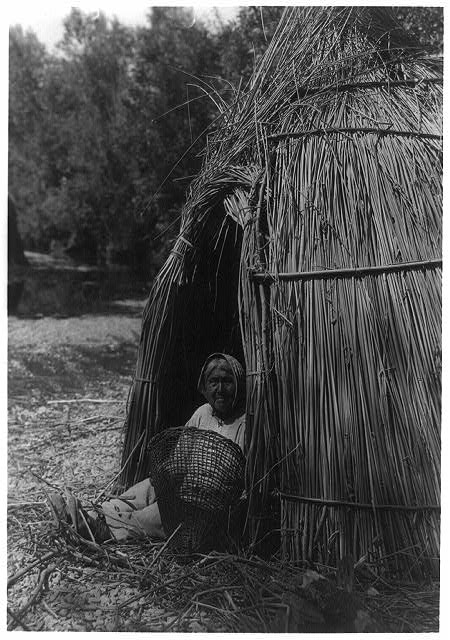
The Mendocino Indian Reservation was a former Indian reservation in Mendocino County, of the early ones to be established (Spring, 1856) in California by the Federal Government for the resettlement of California Indians, near modern day Noyo, which was the home of the Pomo Tribe. Its area was 25,000 acres (100km²), but Yuki, Yokiah, Wappo, Salan Pomo, Kianamaras, Whilkut and others were forced off their ancestral lands and removed there.tmp6C50.jpgThe Mendocino Indian Reservation was discontinued in March 1866 and the land opened for settlement 3 years later.
m11667b.jpg

3b44751r.jpg

nativa-american-pomo-woman-the-vault--edward-curtis.jpg

California and the Indian Wars The Mendocino War of 1859-1860 http://www.militarymuseum.org/Mendocino%20War.html#a http://www.militarymuseum.org/Mendocino%20War.html#c http://www.militarymuseum.org/Mendocino%20War.html#d

The ethno-geography of the Pomo and neighboring Indians https://oac.cdlib.org/ark:/13030/hb9779p385/?brand=oac4

A California Law School Reckons With the Shame of Native Massacres https://www.nytimes.com/2021/10/27/us/hastings-college-law-native-massacre.html

What Happened to the Tribes of Europe John Trudell https://www.youtube.com/watch?v=K2wGOlVDsRw