Marc Bekoff is professor emeritus of Ecology and Evolutionary Biology at the University of Colorado, Boulder, and co-founder with Jane Goodall of Ethologists for the Ethical Treatment of Animals. He has published more than 1000 essays (popular, scientific, and book chapters), 30 books, and has edited three encyclopedias. His latest book is THE ANIMALS’ AGENDA: FREEDOM, COMPASSION AND COEXISTENCE IN THE HUMAN AGE, co-written with Jessica Pierce, and published by Beacon Press (2017). http://www.beacon.org/The-Animals-Agenda-P1250.aspx
This interview was prompted by his recent interview with Brooks Fahy of Predator Defense (predatordefense.org), whose investigative work exposes shocking activity at the US Dept of Agriculture, as well as the complicity of wildlife organizations, such as Defenders of Wildlife and The Humane Society of the US, in the “Administrative Removal”, i.e. killing, of wolves innational forests. (See below.)
Some of Professor Bekoff’s articles referenced in the interview can be found here:
Why Some Animals Have Evolved a Sense of Humour https://www.bbc.com/future/article/20240223-do-animals-have-sense-of-humour
Inmates, Animals, and Art: Creative Expressions of Compassion and Hope
https://www.psychologytoday.com/blog/animal-emotions/201612/inmates-animals-and-art-creative-expressions-hope
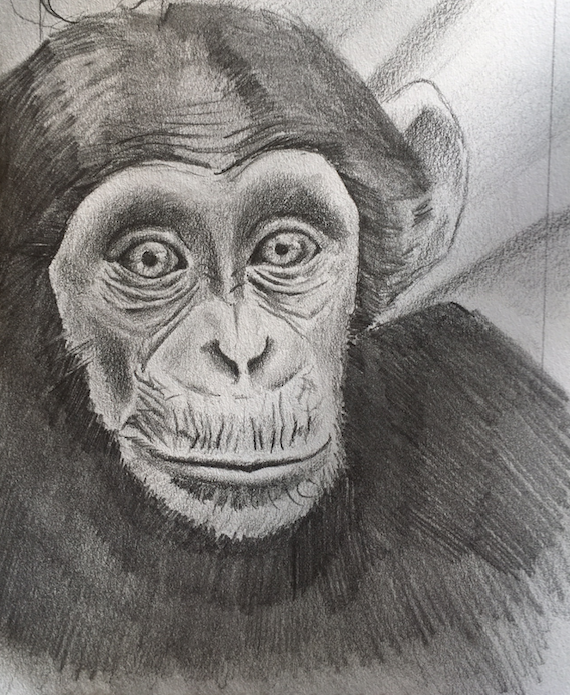
Kyle’s chimpanzee
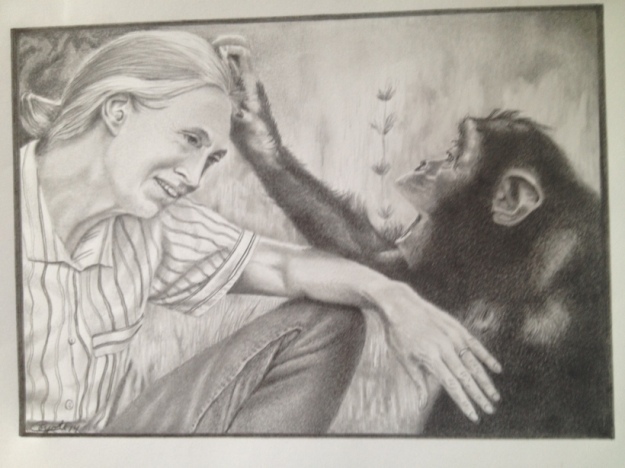
Cody’s Jane Goodall
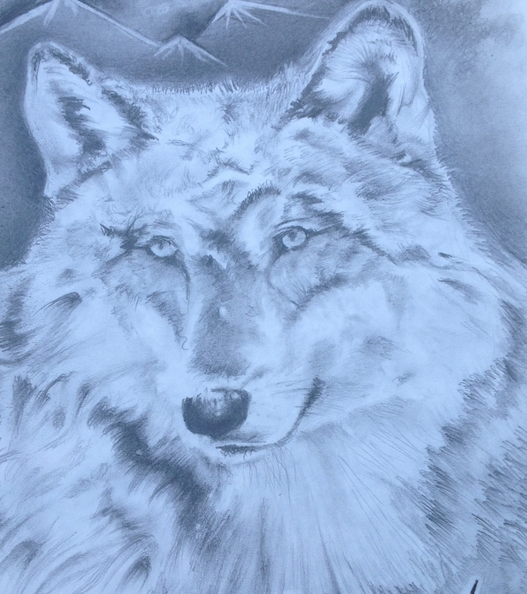 Troy’s wolf
New Zealand Imprinting Kids for Violence Toward Animals Using Well-Known Psychological Principles
https://www.psychologytoday.com/blog/animal-emotions/201707/imprinting-kids-violence-toward-animals
Why Men Trophy Hunt: Showing Off And The Psychology Of Shame https://www.psychologytoday.com/blog/animal-emotions/201703/why-men-trophy-hunt-showing-and-the-psychology-shame
Who’s Really Defending Wildlife As Wolves Are “Removed” So Cows Can Take Over?
https://www.psychologytoday.com/blog/animal-emotions/201707/whos-really-defending-wildlife-wolves-are-removed
Wolves and Cows: Individual and Organizational Conflicts
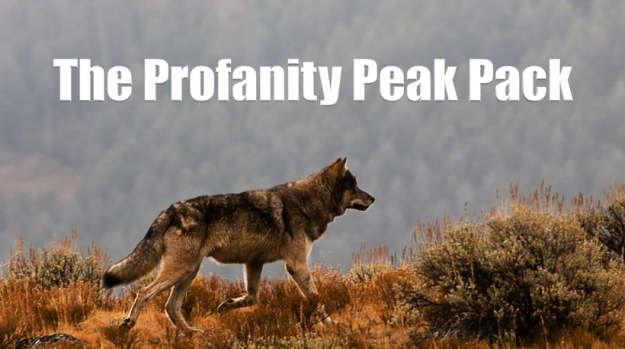
THE PROFANITY PEAK PACK: SET UP & SOLD OUT
http://www.predatordefense.org/profanity/
Not only does science show that killing wolves increases attacks on cattle, but Washington experienced this phenomenon first-hand when they tried to stop wolves in the Profanity Peak Pack from killing a rancher’s cattle in pristine Colville National Forest in 2016. The more wolves they killed, the more cows were attacked, and they ended up destroying the pack. Tragically, they didn’t learn, and they resumed this slaughter in July 2017 by targeting the Smackout Pack for death.
To put their upside-down values in perspective, keep in mind that Washington has over a 1,000,000 cows and only around 120 wolves. And wolves increasingly appear to have no place to live in peace, not even pristine forested public land.
EXPOSED: THE USDA’S SECRET WAR ON WILDLIFE
http://www.predatordefense.org/exposed/
In the award-winning documentary three former federal agents and a prominent Congressman blow the whistle on the strategically misnamed program within the USDA called Wildlife Services. They go on the record showing Wildlife Services for what it really is—a barbaric, unaccountable, out-of-control, wildlife killing machine that acts at the bidding of corporate agriculture and the hunting lobby, all with taxpayer dollars
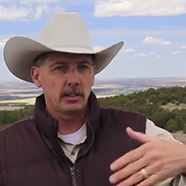 “Poisons banned since the 1970s, that the official record said didn’t exist, were being bought from the Wyoming Dept. of Ag. to sell to ranchers and predator boards.” REX SHADDOX – Former Wildlife Services trapper & special investigator for Wyoming Sting operation
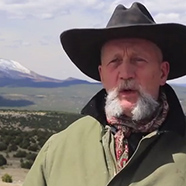 “Government employees shouldn’t be breaking the law [on the job]. And the federal government should not be in the business of predator control on taxpayer dollars.” GARY STRADER – Former police officer & Wildlife Services trapper
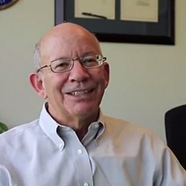 “Wildlife Services is one of the most opaque and least accountable agencies I know of. It is not capable of reforming itself. They need a mandate for reform… it’s going to have to be imposed on them.” REP. PETER DEFAZIO
Senior U.S. Congressman (D-OR)




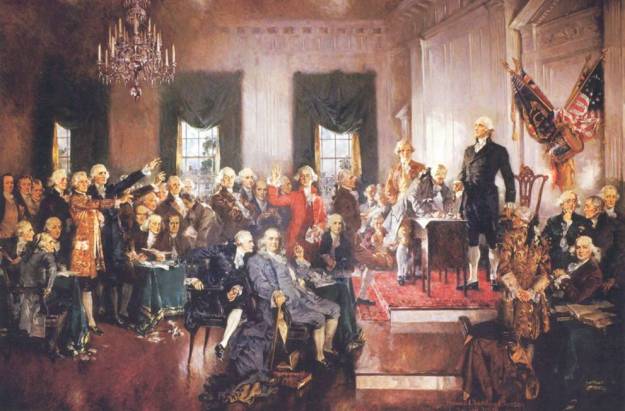
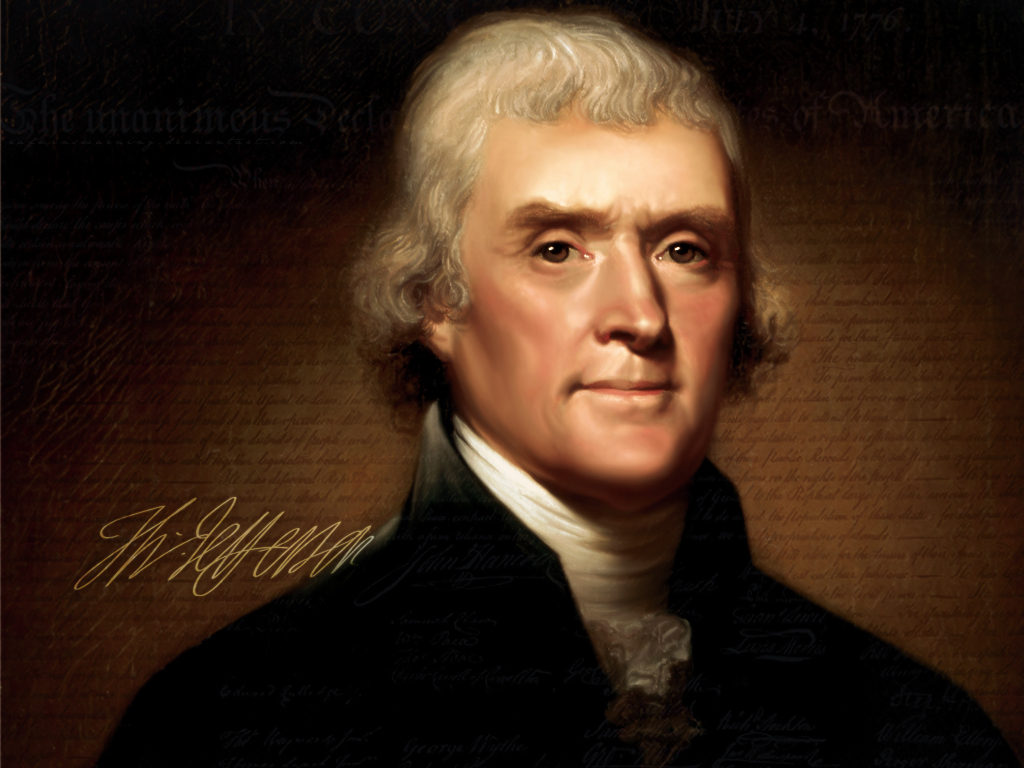 Thomas Jefferson provided an evolving legal theory of Free Holding, dating back to the Anglo Saxon invasion of England, and disavowing the right of kings to grant tenure of lands, which had begun with the Norman Invasion. He believed anyone could take and hold any land without the permission of a sovereign, i.e Direct Ownership, as long as it was “vacant” .


 In the second half hour, we speak with Doug Peacock, Montana grizzly bear aficionado, who among many, many other things, was an erstwhile friend of Edward Abbey, and inspiration for the character, George Washington Hayduke, in Abbey’s seminal work, The MONKEY WRENCH GANG. He discusses the delisting of Yellowstone grizzly bears from the endangered species list, as well as what the heck is going on with Montana’s Washington gang, now that 2/3 of its congressional delegation – excluding the other third, organic farmer, Senator John Testor – are not only from the same small city of Bozeman, MT, who worked together at the same cyber-technology start-up, Right Now Technologies, but also both became multimillionaires after Oracle bought it for $1.5 billion. You may remember hearing about the recently elected Greg Gianforte, who pled guilty to assaulting Guardian journalist, Ben Jacobs, the night before the statewide special election to replace former Representative Ryan Zinke, who had been confirmed as Secretary of the Interior.
 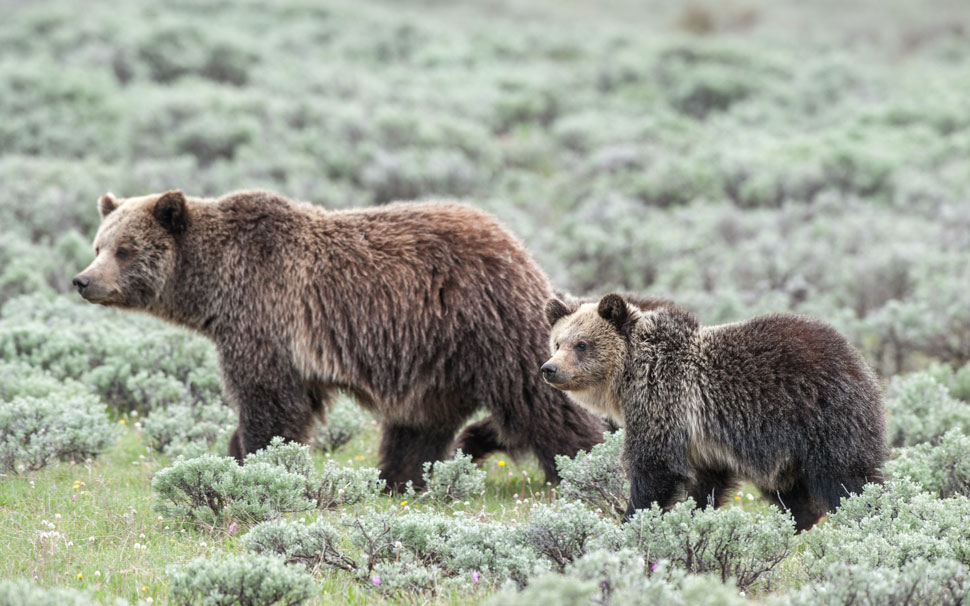 Doug recounts the recent up-close encounter with a mama grizzly and her yearling cub, who nursed for 7 minutes 35 feet from him and his daughter in Yellowstone Park.
 Julian Brave Noisecat graduated Phi Beta Kappa and Magna Cum Laude in History from Columbia University in 2015. The next year he received a Masters in Global and Imperial History from Oxford University, which had awarded him a Clarendon Scholarship. His writings have appeared in The Guardian, Jacobin, Fusion, Salon, High Country News, Fusion, as well as others. He is a member of the Canim Lake Band Tsq’escen Tribewithin the province of British Columbia.
 Doug Peacock was our guest on Forthright Radio in January 2014, after his book IN THE SHADOW OF THE SABERTOOTH: A RENEGADE NATURALIST CONSIDERS GLOBAL WARMING, THE FIRST AMERICANS AND THE TERRIBLE BEASTS OF THE PLEISTOCENE, was published. After 2 tours as a Special Forces medic in the Central Highlands of Viet Nam, Doug Peacock returned to the United States suffering from the not yet named Post Traumatic Stress Disorder. He found wilderness was the only place he could be to deal with the effects of war trauma. Thus began his more than 4 decades of interacting with grizzlies, whom he credits with restoring his soul, & his dedication to protecting and preserving them, & the wilderness they – and we – need to thrive. Doug Peacock was the subject of an award winning film about grizzly bears & Vietnam, called Peacock’s War. Among his books are WALKING IT OFF: A VETERAN’S CHRONICLE OF WAR AND WILDERNESS; GRIZZLY YEARS: IN SEARCH OF THE AMERICAN WILDERNESS; AND IN THE PRESENCE OF GRIZZLIES: THE ANCIENT BOND BETWEEN MEN AND BEARS, written with his wife, Andrea Peacock.


 thenextsystem.org