Author Archives: forthrightradio

Steven A. Ramirez The Case for the Corporate Death Penalty: Restoring Law & Order on Wall St.

Remember the Financial Crisis of 2008, when the shenanigans of Wall Street and the megabanks nearly crashed the global economic order? Remember the unfolding horror of families being put out on the streets, their possessions on their former front lawns? Remember the swift billions of tax payer dollars handed over to banks that were too big to fail, and the 10s and hundreds of millions of dollars quickly paid in bonuses to the very perpetrators, who were too big to jail – or as Matt Taibbi put it, “TOO SMUG TO JAIL”? Recent government figures put the cost to more than $20 trillion dollars, but how can one reckon the cost in human suffering? The soaring unemployment, the wiping out of retirement savings, the suicides, the massive transfer of wealth from the middle class and the most needy to the least needy? Remember President Obama telling the nation that, while what they did “was just immoral or inappropriate or reckless, a lot of that stuff wasn’t necessarily illegal”?

Our guest is Steven A. Ramirez, law professor and Associate Dean for Research and Faculty Development, and Director of the Business and Corporate Governance Law Center, at Loyola University School of Law. He and his wife, Mary Kreiner Ramirez, who is a Law Professor at Washburn University School of Law, have co-written an eye-opening book, THE CASE FOR THE CORPORATE DEATH PENALTY: RESTORING LAW AND ORDER ON WALL STREET, just published by New York University Press. In it, they lay out precisely, and in great depth, how and why criminal charges can, and should, be brought for the fraud and malfeasance perpetrated on the American public, and indeed nearly destroying the world economic order, and yet not a single senior executive has been indicted on any criminal charges, although ample evidence was provided to the Department of Justice and other agencies with the power to penalize wrong doing. As they note, in many cases, the statute of limitations has not run out.

Professor Ramirez is well qualified to establish this, since he served as a Senior Attorney for the Federal Deposit Insurance Corporation, as well as an Enforcement Attorney with the Securities and Exchange Commission. He has published extensively in the areas of law and economics, corporate governance and financial regulations. In addition to this latest book, THE CASE FOR THE CORPORATE DEATH PENALTY: RESTORING LAW AND ORDER ON WALL STREET, his books include, Lawless Capitalism: the Subprime Crisis and the case for an economic rule of law (NYU Press, 2013) and The Economics of Discrimination, in The Encyclopedia of Law and Society (2007)

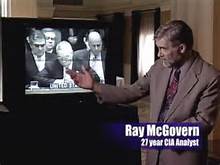
Ray McGovern, Veteran CIA Analyst Co-founder of Veteran Intelligence Professionals for Sanity

th-8.jpg

Ray McGovern was a CIA analyst for 27 years, from 1963 to 1990, where he chaired National Intelligence Estimates and prepared the President’s Daily Brief, which he briefed one-on-one to President Ronald Reagan’s five most senior national security advisers from 1981 to 1985.  He received the Intelligence Commendation Medal at his retirement, but he returned it in 2006 to protest the CIA’s involvement in torture.  In 2003 he co-found Veteran Intelligence Professionals for Sanity. He speaks fluent Russian and has studied Russia for more than 50 years.

In this interview originally broadcast on January 18, 2017, he discusses Obama’s commutation of Chelsea Manning’s sentence, the ethics of whistle-blowing, comparing her case with those of General David Petraeus, who became CIA Director, and General Cartwright.

th-4.jpg

Pre-emptive leaks by government agencies.

The Stuxnet Virus used against Iran, destroying 100s of their centrifuges, introducing a whole new kind of warfare: cyberwarfare. Russia’s proposals for a treaty to govern cyberwar, which have been rebuffed ever since.

th-2.jpg

Allegations of Russian interference in the 2016 elections vs. wikileaks revealing the efforts by the Democratic National Committee to sabotage Bernie Sanders’ campaign.

th-6.jpg

Director Colby’s testimony that the CIA controls just about everyone in the US media & his subsequent firing.

th-5.jpg

The popular vote vs the Electoral College.

Donald Trump’s relationship with the “Intelligence Community” & the rise of “The Deep State”.  “After 9/11 everything changed…” Syria as a proxy war… and more


Benjamin Madley – AN AMERICAN GENOCIDE: The United States and the California Indian Catastrophe 1846-1873


Benjamin Madley is an historian of Native America, the United States, and genocide in world history. Born in Redding, California, Professor Madley spent much of his childhood in Karuk Country near the Oregon border, where he became interested in the relationship between colonizers and indigenous peoples. He writes about American Indians, as well as colonial genocides in Africa, Australia, and Europe, often applying a transnational and comparative approach. He is a professor of history at the University of CA at Los Angeles.  An American Genocide: The United States and the California Indian Catastrophe, 1846-1873 is his first book.  It is published by Yale University Press.  Professor Benjamin Madley, We welcome you to Forthright Radio.

fire-drill-koskimo.jpgThe place we now call CA, was unknown to non-Indians until March 1543, when Spaniards first explored the coast, but it wasn’t until 226 years later, in 1769, that Spain sent soldiers and Franciscan missionaries north from Mexico to colonize it, to preempt British, Dutch and Russian expansion, and to protect northern Mexico’s silver mines.  At that time, there were about 310,000 native people living there, which seems small compared to California’s current population of almost 40 million, but he writes that it was actually the densest native population north of Mexico in North America. We began by discussing this pre-European CA population, and how they lived on the land.

hunter-lake-pomo.jpg

The Mendocino Indian Reservation was a former Indian reservation in Mendocino County, of the early ones to be established (Spring, 1856) in California by the Federal Government for the resettlement of California Indians, near modern day Noyo, which was the home of the Pomo Tribe. Its area was 25,000 acres (100km²), but Yuki, Yokiah, Wappo, Salan Pomo, Kianamaras, Whilkut and others were forced off their ancestral lands and removed there.tmp6C50.jpgThe Mendocino Indian Reservation was discontinued in March 1866 and the land opened for settlement 3 years later.

m11667b.jpg

3b44751r.jpg

nativa-american-pomo-woman-the-vault--edward-curtis.jpg

California and the Indian Wars The Mendocino War of 1859-1860 http://www.militarymuseum.org/Mendocino%20War.html#a http://www.militarymuseum.org/Mendocino%20War.html#c http://www.militarymuseum.org/Mendocino%20War.html#d

The ethno-geography of the Pomo and neighboring Indians https://oac.cdlib.org/ark:/13030/hb9779p385/?brand=oac4

A California Law School Reckons With the Shame of Native Massacres https://www.nytimes.com/2021/10/27/us/hastings-college-law-native-massacre.html

What Happened to the Tribes of Europe John Trudell https://www.youtube.com/watch?v=K2wGOlVDsRw

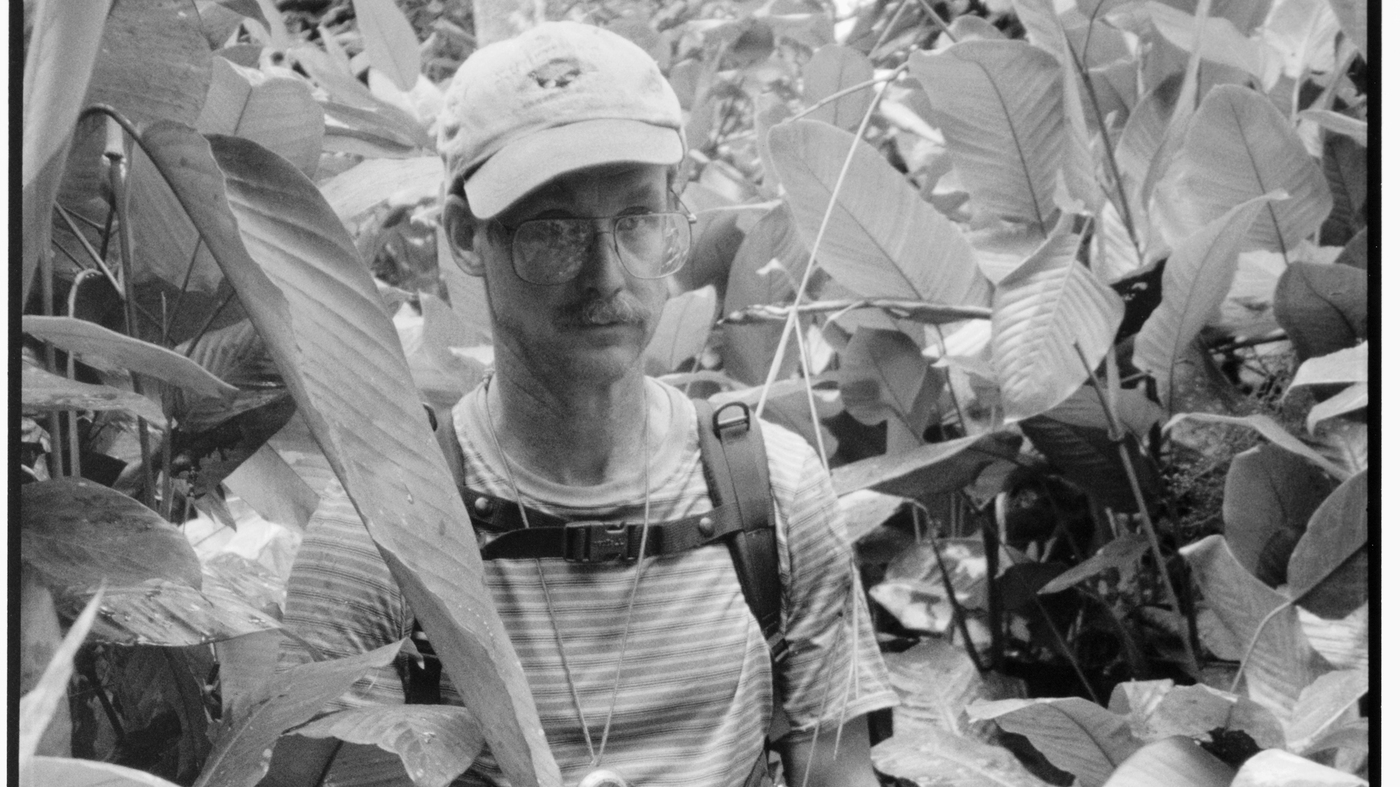
David Quammen- Spillover: Animal Infections & the Next Human Pandemic


images

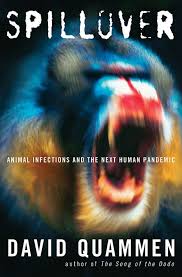
In this edition of Forthright Radio, originally broadcast on May 1, 2013, intrepid journalist, David Quammen, discusses his book, SPILLOVER: ANIMAL INFECTIONS& THE NEXT HUMAN PANDEMIC,  in which he tracks down the animal origins of such diseases we humans are now susceptible to, including viruses such as HIV-AIDS, SARS, EBOLA, HENDRA, MARBURG, and INFLUENZA, and bacteria such as LYME DISEASE and Q FEVER.

h_research_global-emerging-infectious-diseases-map.jpgAmong the questions he investigates are: Why do new diseases emerge when they do, where they do, as they do, and not elsewhere, other ways, at other times? Is it happening more now than in the past? And perhaps the biggest question: What sort of deadly bug, with what unforeseen origins and what inexorable impacts, will emerge next?
grooming2.jpg

David Quammen is the author of four books of fiction, and seven acclaimed books of nonfiction, including THE RELUCTANT MR. DARWIN and THE SONG OF THE DODO. He served as the Wallace Stegner Chair of Western American Studies at Montana State University from 2007 – 2009. He is a contributing writer for National Geographic magazine. SPILLOVER: ANIMAL INFECTIONS AND THE NEXT HUMAN PANDEMIC is more than a page turner about how microbes cross from animal species into humans and evolve into infectious diseases, it is also a chronicle of the many far flung journeys David Quammen has taken to some of the most remote parts of the globe, to interview the scientists in the field, who search for the animal reservoirs from which they come.

david_wide-a960150228d34236c602f3043f38a988ba363451.jpg

images-1.jpeg

Articles pertinent to this interview:

Infection of Wildlife Biologist Highlights Risks of Virus Hunting https://theintercept.com/2022/07/02/virus-infection-bat-biosafety/

As Covid recedes in US a new worry emerges: wildlife passing on the virus https://www.theguardian.com/world/2021/nov/11/us-covid-wildlife-virus

Matthew Wolf-Meyer- The Slumbering Masses: Sleep, Medicine & Modern American Life

This edition of Forthright Radio from November 11, 2012 came up in conversation (12-11-17), so we thought it might be of interest to our web listeners, as well.

As the nights grow longer, and the season approaches of long winter naps, it seems like a good time to discuss one of the inevitable aspects of life – sleep. And this seemingly simple topic is not so simple for more and more people in the modern world. And it really is quite mysterious. Neither doctors nor scientists can even tell us what sleep IS, much less what natural sleep might be. And then, there are the effects of capitalism on sleep.

To discuss these things and more, we have with us Matthew Wolf-Meyer, who was (then) a Professor of Anthropology, at UC Santa Cruz. Matthew Wolf-Meyer received his Ph.D. from the Department of Anthropology at the University of Minnesota, specializing in medical anthropology, and the social study of science and technology. He holds previous degrees in Literature, Science Fiction Studies, and American Cultural Studies.

In January, 2016, he joined the faculty of the Anthropology Dept. at SUNY Binghamton. His work focuses on medicine, science and media in the United States to make sense of major modern-era shifts in the expert practices of science and medicine and popular representations of health.    His book The Slumbering Masses: Sleep, Medicine and Modern American Life, published by The University of Minnesota Press, was the first book-length social scientific study of sleep in the United States and won the New Millennium book prize in 2013. It offers insights into the complex lived realities of disorderly sleepers, the long history of sleep science, and the global impacts of the exportation of American sleep.

41Ifp5ZXgSL._AC_US218_

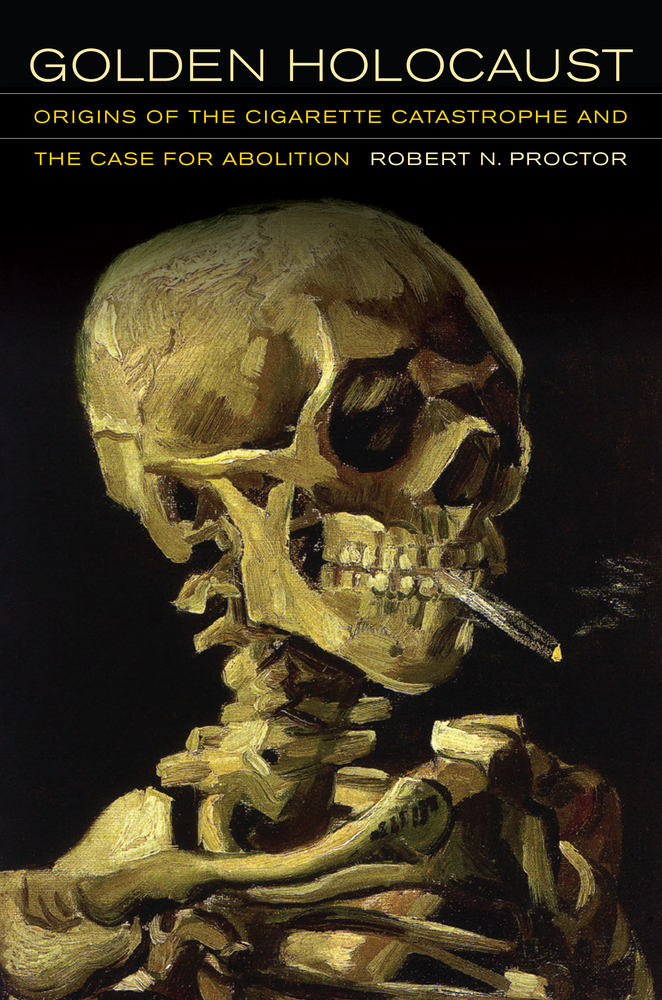
Robert Proctor Golden Holocaust: The Origins of the Cigarette Catastrophe and the Case for Abolition

Professor Robert Proctor specializes in 20th century science, technology, and medicine, especially the history of controversy in those fields, and projects on scientific rhetoric, the cultural production of ignorance (agnotology), and the history of expert witnessing. He also does work on human origins–including changing notions of the oldest tools, art and fire; changing body imagery, the history of molecular anthropology, changing archaeological techniques and images of “humaness,” etc. the history of global creationism and of Evo Devo, catastrophic geology, global climate change and environmental policy.

Some of his earlier books include RACIAL HYGIENE: MEDICINE UNDER THE NAZIS; CANCER WARS: HOW POLITICS SHAPES WHAT WE KNOW AND DON’T KNOW ABOUT CANCER; and VALUE-FREE SCIENCE? PURITY AND POWER IN MODERN KNOWLEDGE. He is a fellow of the American Academy of Arts and Sciences, and he was a senior scholar in residence at the U.S. Holocaust Research Institute.

This interview was originally broadcast on February 15, 2012.

Articles referred to or pertinent to this interview:

Big Tobacco is killing the planet with plastics. No smokescreen should be allowed to hide that https://www.theguardian.com/global-development/2022/may/26/big-tobacco-is-killing-the-planet-with-plastics-no-smokescreen-should-hide-that-acc

Humans used tobacco 12,300 years ago, new discovery suggests https://www.bbc.com/news/world-us-canada-58884119

Smoking linked to faster cognitive decline in men http://latimes.com/business/la-fi-tobacco-20120126,0,6096911.story