
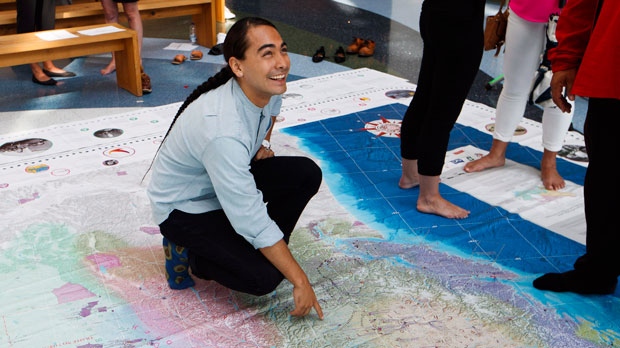
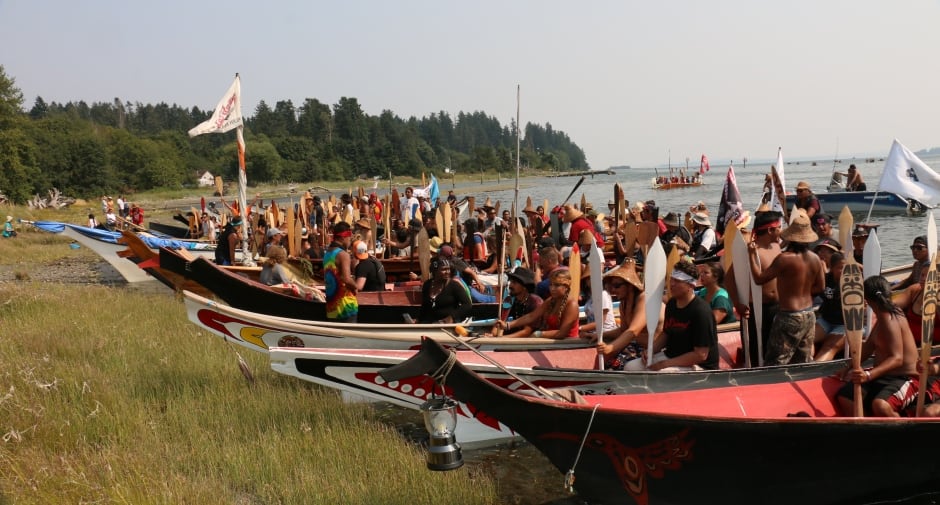
Liz Miller is a documentary maker and professor interested in new approaches to community collaborations and documentary as a way to connect personal stories to larger social concerns. She is a Full Professor in Communications Studies at Concordia University in Montreal and teaches courses in media production, methods in co-creation/ research-creation, Latin American film, Media-and-the-Environment, Food Systems and more. Her films/educational campaigns on timely issues such as water privatization, immigration, refugee rights and the environment have won international awards, been integrated into educational curricula and influenced decision makers. Liz Miller’s The Shoreline Project, which in a series of 2 dozen short films takes us around the world to meet people from myriad cultures and backgrounds, creatively responding to increasing realities of climate disruption, will be at this year’s Mendocino Film Festival in two formats: The film collection, The Shore Line, will screen at the Matheson this coming Saturday June – 1 at12:30 pm. The full interactive exhibit of The Shoreline Project, will be on display at the Festival Headquarters in Odd Fellows Hall, during the entire festival.
 Sefali is a Green Rhinos Youth Leader in Maipith, Sundarbans, India. After a devastating cyclone hit in 2009, she organized fellow students to plant trees around their homes and school.
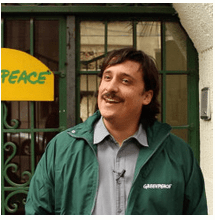 Matias Asun exchanged his job as Director of Greenpeace in Chile to become the Ambassador from the newly proclaimed Republica Glaciar after concluding that the Chilean government had abandoned glaciers. He lobbies the Legislature and pertinent boards to gain protection for them from mining companies and climate disruption.
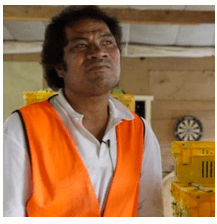 Ioane Teitiota of the island nation of Kiribati was the first person in the world to apply for climate refugee status in New Zealand. Although his island is expected to be completely inundated within 20 years, the Immigration Board ruled that he and his family were not in danger of dying, so they were sent back. Noting that if he were granted asylum on grounds of climate change it would open the floodgate for millions of others ironically confirmed his reason for being granted asylum.
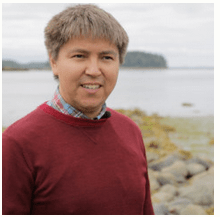 Will Nelson is a biologist and a member of the Metlakatla Stewardship Council. They are engaged in using helicopters to map inter-tidal archeological sites to document their heritage in present day British Columbia, which they have maintained for at least the past 14,000 years. Structures such as clam gardens and clam middens establish their long-standing claims to the land to protect sensitive coastal areas from development.
After the interview with Liz Miller, we reported on the US Navy’s proposed Training & Testing, reading a PSA from Thaïs Mazur:
The Navy is seeking Federal Regulatory Permits under the Marine Mammal Protection Act (MMPA) and the Endangered Species Act (ESA) to do weapons testing off the Mendocino coast, requesting a seven year permit to do the testing and training 12 miles offshore.
This is part of the larger Northwest Navy Training and Testing from Alaska to Northern California. The coast of Mendocino is a major migration route for gray whales and humpbacks.
The Navy is proposing activities that include anti-submarine warfare exercises involving tracking aircraft and sonar; surface-to-air gunnery and missile exercises; air-to-surface bombing exercises; and extensive testing for several new weapons systems.
U.S. Navy training exercises in the Pacific Ocean could kill, injure, or harm dozens of protected species of marine mammals — Southern Resident killer whales, blue whales, humpback whales, dolphins, and porpoises — through the use of high-intensity, mid-frequency sonar, which harass whales, dolphins and other marine mammals, 12.5 million times over the next five years. The use of sonar has been directly connected to many instances of beached whales, that have died from erupting lungs, ruptured ear drums and organ damage after military sonar exercises. Sonar exercises have also been found to cause mass strandings of whales.
The Navy is accepting comments on the DRAFT Supplemental EIS through June 12, 2019. Here is the link:
https://www.nwtteis.com/PublicInvolvement/Public-Comment

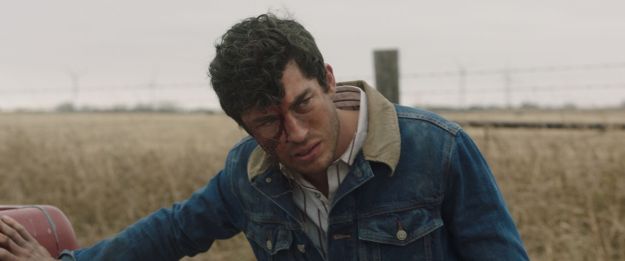 Brothers Parker and Graham Phillips co-wrote, co-directed, and co-produced a magnificent contemporary Western, THE BYGONE, which tackles difficult issues such as sex trafficking, missing and murdered Indigenous women, the decline of ranching, and the corrupting influence attending resource extraction.
 When a young rancher, Kip Summer, played by Graham Parker, crosses paths and falls in love with a Lakota girl, Waniya, from a nearby reservation, her mysterious disappearance sparks a search that uncovers a harrowing past and hints at a dire future.
 The awful realities of sex trafficking among the man camps and bars in fracking site boom towns, and the inability of overwhelmed local law enforcement to cope leads to a dramatic series of show downs and shoot-outs in the best Western tradition.
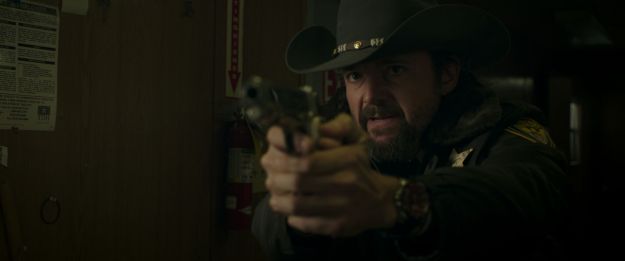 The well researched screenplay is rich with symbols and informed with a sensitivity to historic and current inequities between Indigenous and Anglo cultures, as well as the conflicts between ranching and fracking. The ensemble cast was clearly dedicated to portraying each character’s role with utter conviction.
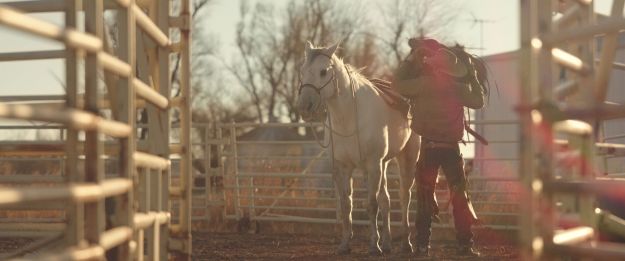 The cinematography serves the action far better than the normal Western and is deserving of its own award.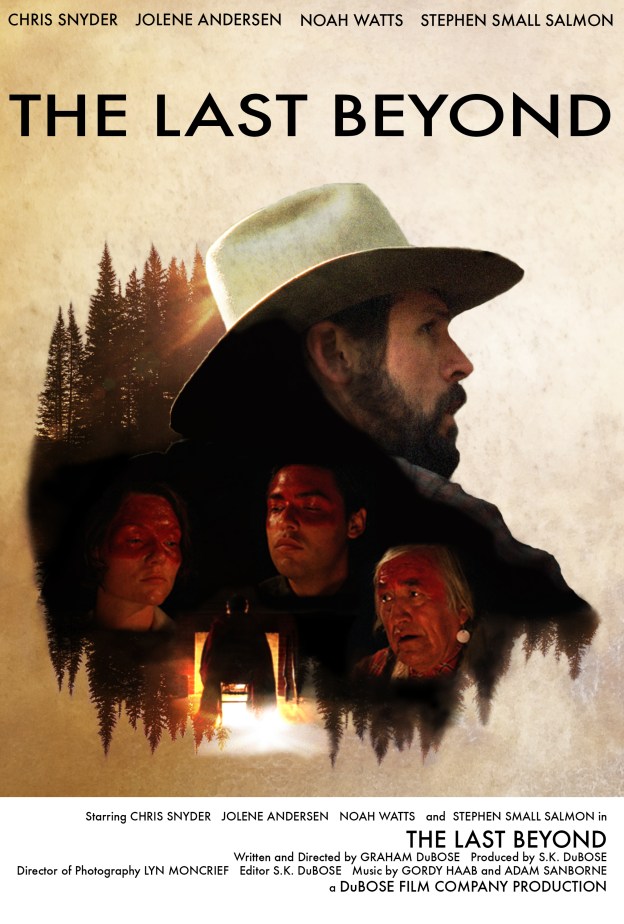
 THE LAST BEYOND is an intimate western set in Montana during the Great Depression about death, love, and rebirth. It follows a rancher named Stratton Eiseley who loses his father to illness and his ranch to foreclosure setting him adrift.
  Shortly after he meets three people and they change each other’s lives. Joe Running Elk and his grandfather, Flying Bear, are Pend o’Reille Indians who like Stratton feel like they’re living in a world that has left them behind. They become fugitives from twentieth century America and take to the mountains to make whiskey and restore their connection to the land.
  Noah Watts, who plays Joe Running Elk, is a member of the Crow and Blackfeet tribes and grew up in Bozeman, MT.
  Stephen Small Salmon, who plays Flying Bear, is a Pend d’Oreille elder from the Salish-Kootenai Reservation. They converse in Salish with English subtitles.
 As Stratton falls in love with a writer named Gracie Loren it seems that their lives are improving, but trouble follows them.
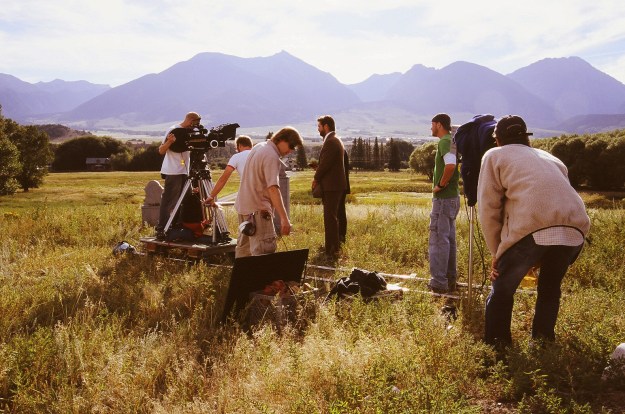
 THE LAST BEYOND was filmed in Livingston, the Gallatin National Forest, Paradise Valley and other locations familiar to the Gallatin Valley community.
  Husband and wife filmmakers, writer/director, Graham DuBose, and editor/producer, S.K. DuBose, will be attending the screening of THE LAST BEYOND, which will be having its premiere at the upcoming BZN International Film Festival on June 7, 2019 at 3pm in the Rialto Black Box.







 In this edition of Radio Goes to the Movies, Gale Anne Hurd tells us about her feature length film, MANKILLER, which recounts the life of Wilma Mankiller, who overcame rampant sexism and personal challenges to emerge as the Cherokee Nation’s first woman Principal Chief in 1985.


 .
. Forthright Radio