Category Archives: Politics

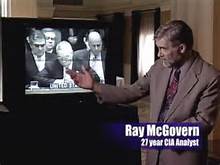
Ray McGovern, Veteran CIA Analyst Co-founder of Veteran Intelligence Professionals for Sanity

th-8.jpg

Ray McGovern was a CIA analyst for 27 years, from 1963 to 1990, where he chaired National Intelligence Estimates and prepared the President’s Daily Brief, which he briefed one-on-one to President Ronald Reagan’s five most senior national security advisers from 1981 to 1985.  He received the Intelligence Commendation Medal at his retirement, but he returned it in 2006 to protest the CIA’s involvement in torture.  In 2003 he co-found Veteran Intelligence Professionals for Sanity. He speaks fluent Russian and has studied Russia for more than 50 years.

In this interview originally broadcast on January 18, 2017, he discusses Obama’s commutation of Chelsea Manning’s sentence, the ethics of whistle-blowing, comparing her case with those of General David Petraeus, who became CIA Director, and General Cartwright.

th-4.jpg

Pre-emptive leaks by government agencies.

The Stuxnet Virus used against Iran, destroying 100s of their centrifuges, introducing a whole new kind of warfare: cyberwarfare. Russia’s proposals for a treaty to govern cyberwar, which have been rebuffed ever since.

th-2.jpg

Allegations of Russian interference in the 2016 elections vs. wikileaks revealing the efforts by the Democratic National Committee to sabotage Bernie Sanders’ campaign.

th-6.jpg

Director Colby’s testimony that the CIA controls just about everyone in the US media & his subsequent firing.

th-5.jpg

The popular vote vs the Electoral College.

Donald Trump’s relationship with the “Intelligence Community” & the rise of “The Deep State”.  “After 9/11 everything changed…” Syria as a proxy war… and more


Benjamin Madley – AN AMERICAN GENOCIDE: The United States and the California Indian Catastrophe 1846-1873


Benjamin Madley is an historian of Native America, the United States, and genocide in world history. Born in Redding, California, Professor Madley spent much of his childhood in Karuk Country near the Oregon border, where he became interested in the relationship between colonizers and indigenous peoples. He writes about American Indians, as well as colonial genocides in Africa, Australia, and Europe, often applying a transnational and comparative approach. He is a professor of history at the University of CA at Los Angeles.  An American Genocide: The United States and the California Indian Catastrophe, 1846-1873 is his first book.  It is published by Yale University Press.  Professor Benjamin Madley, We welcome you to Forthright Radio.

fire-drill-koskimo.jpgThe place we now call CA, was unknown to non-Indians until March 1543, when Spaniards first explored the coast, but it wasn’t until 226 years later, in 1769, that Spain sent soldiers and Franciscan missionaries north from Mexico to colonize it, to preempt British, Dutch and Russian expansion, and to protect northern Mexico’s silver mines.  At that time, there were about 310,000 native people living there, which seems small compared to California’s current population of almost 40 million, but he writes that it was actually the densest native population north of Mexico in North America. We began by discussing this pre-European CA population, and how they lived on the land.
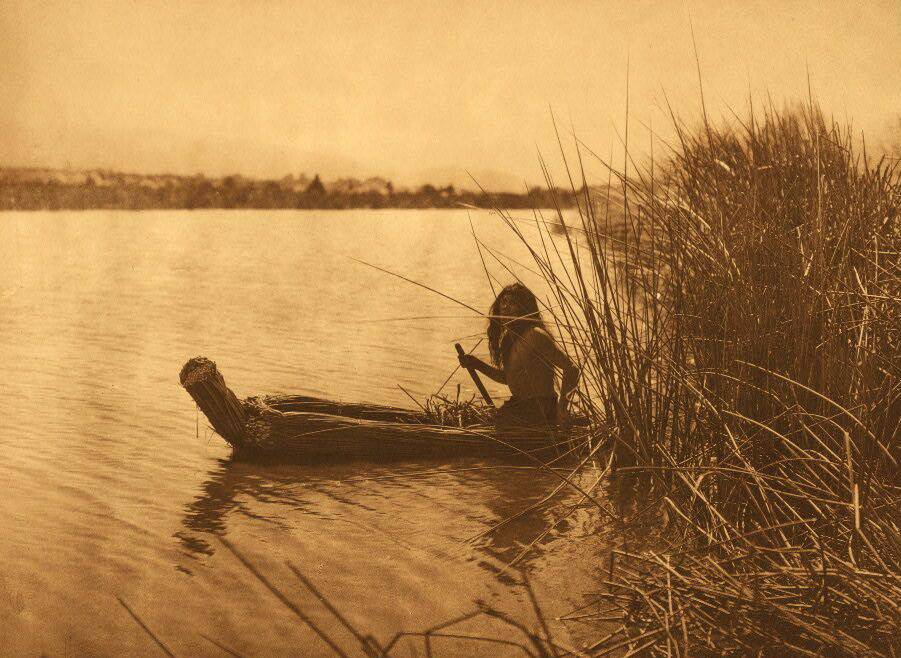
hunter-lake-pomo.jpg

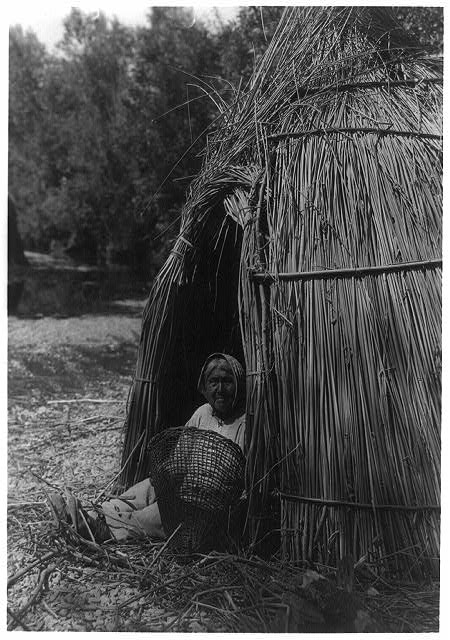
The Mendocino Indian Reservation was a former Indian reservation in Mendocino County, of the early ones to be established (Spring, 1856) in California by the Federal Government for the resettlement of California Indians, near modern day Noyo, which was the home of the Pomo Tribe. Its area was 25,000 acres (100km²), but Yuki, Yokiah, Wappo, Salan Pomo, Kianamaras, Whilkut and others were forced off their ancestral lands and removed there.tmp6C50.jpgThe Mendocino Indian Reservation was discontinued in March 1866 and the land opened for settlement 3 years later.
m11667b.jpg

3b44751r.jpg

nativa-american-pomo-woman-the-vault--edward-curtis.jpg

California and the Indian Wars The Mendocino War of 1859-1860 http://www.militarymuseum.org/Mendocino%20War.html#a http://www.militarymuseum.org/Mendocino%20War.html#c http://www.militarymuseum.org/Mendocino%20War.html#d

The ethno-geography of the Pomo and neighboring Indians https://oac.cdlib.org/ark:/13030/hb9779p385/?brand=oac4

A California Law School Reckons With the Shame of Native Massacres https://www.nytimes.com/2021/10/27/us/hastings-college-law-native-massacre.html

What Happened to the Tribes of Europe John Trudell https://www.youtube.com/watch?v=K2wGOlVDsRw

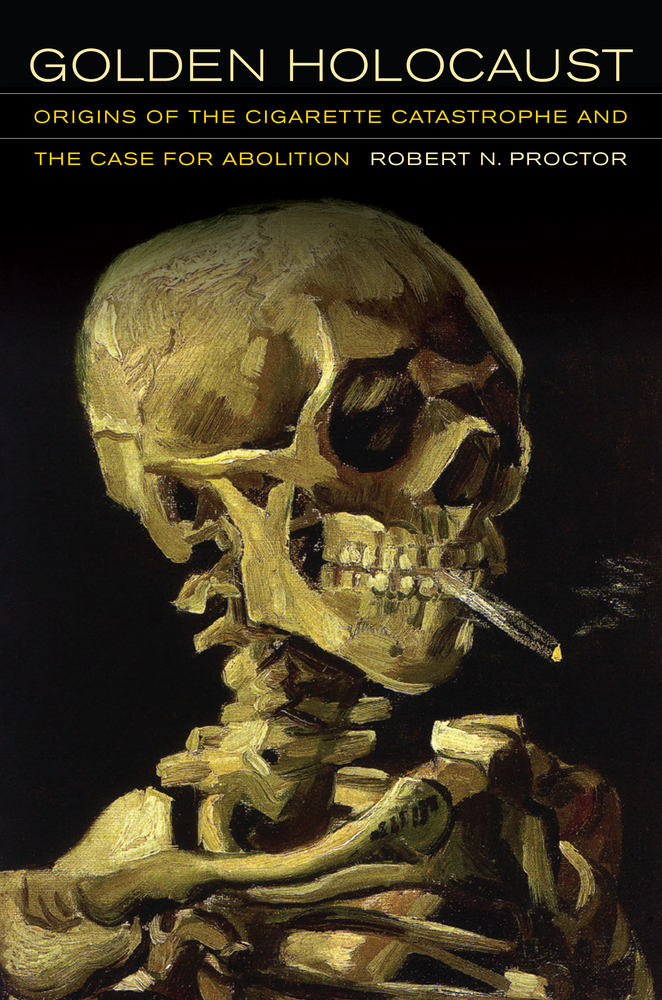
Robert Proctor Golden Holocaust: The Origins of the Cigarette Catastrophe and the Case for Abolition

Professor Robert Proctor specializes in 20th century science, technology, and medicine, especially the history of controversy in those fields, and projects on scientific rhetoric, the cultural production of ignorance (agnotology), and the history of expert witnessing. He also does work on human origins–including changing notions of the oldest tools, art and fire; changing body imagery, the history of molecular anthropology, changing archaeological techniques and images of “humaness,” etc. the history of global creationism and of Evo Devo, catastrophic geology, global climate change and environmental policy.

Some of his earlier books include RACIAL HYGIENE: MEDICINE UNDER THE NAZIS; CANCER WARS: HOW POLITICS SHAPES WHAT WE KNOW AND DON’T KNOW ABOUT CANCER; and VALUE-FREE SCIENCE? PURITY AND POWER IN MODERN KNOWLEDGE. He is a fellow of the American Academy of Arts and Sciences, and he was a senior scholar in residence at the U.S. Holocaust Research Institute.

This interview was originally broadcast on February 15, 2012.

Articles referred to or pertinent to this interview:

Big Tobacco is killing the planet with plastics. No smokescreen should be allowed to hide that https://www.theguardian.com/global-development/2022/may/26/big-tobacco-is-killing-the-planet-with-plastics-no-smokescreen-should-hide-that-acc

Humans used tobacco 12,300 years ago, new discovery suggests https://www.bbc.com/news/world-us-canada-58884119

Smoking linked to faster cognitive decline in men http://latimes.com/business/la-fi-tobacco-20120126,0,6096911.story